
The "Mid Range" Flagship That Eclipses the Competition
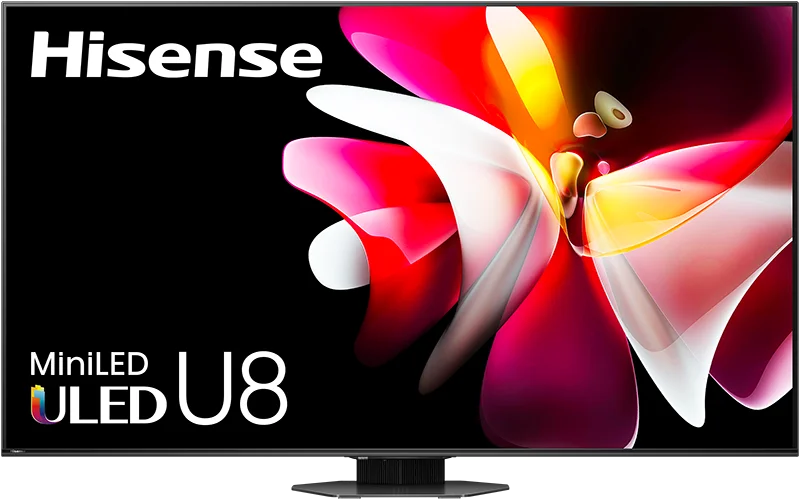
In the world of television technology, the battle lines used to be drawn simply: you either paid a fortune for an OLED to get perfect blacks, or you settled for an LED and accepted the greyish haze.
Then came Hisense.
Over the last few years, Hisense has been relentlessly chipping away at the dominance of the "Big Three" (Sony, Samsung, LG), and with the 2025 Hisense U8QG, they haven’t just chipped away—they’ve kicked the door down.
Hisense’s "Premium ULED" for 2025
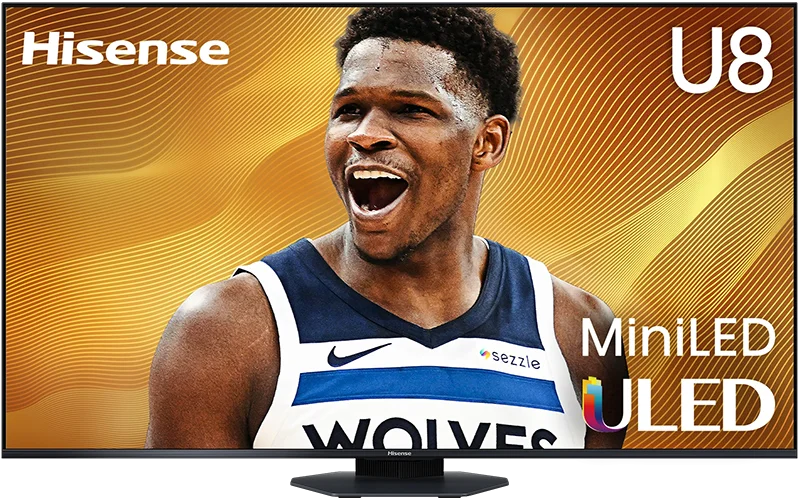
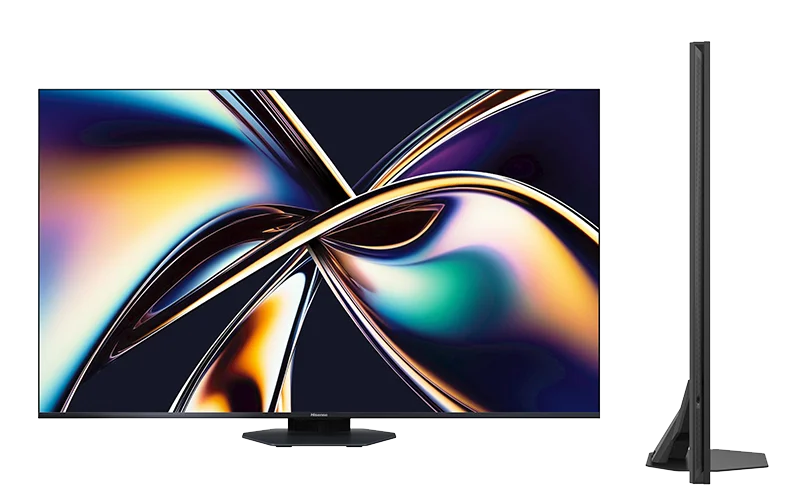
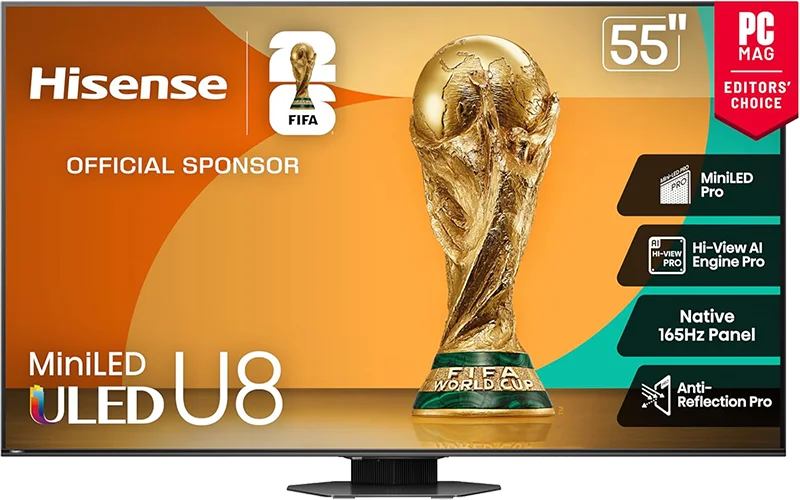
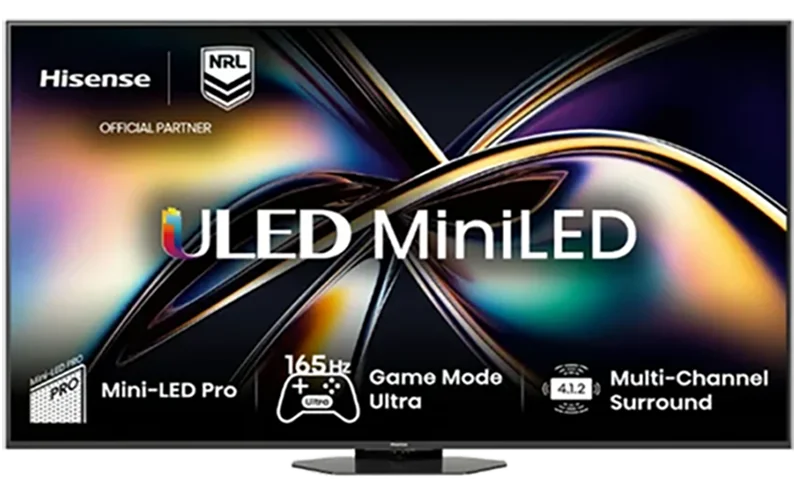
The U8QG sits comfortably at the top of Hisense’s "Premium ULED" lineup for this year, directly succeeding the highly acclaimed U8N.
It is positioned as the "Flagship for Everyone," offering specifications that rival $2,000 televisions for roughly half the price.
The Key Selling Point? Unapologetic, searing brightness. The U8QG is designed to be the ultimate "bright room" TV.
It leverages advanced Mini-LED technology to pump out light levels that can fight off the mid-day sun in a window-heavy living room, while keeping blacks surprisingly inky.
Panel Technology and Picture Quality
The Tech Stack: Mini-LED Meets Quantum Dot
The U8QG is a Mini-LED television. Unlike traditional LED TVs that use a few dozen lights to illuminate the screen, the U8QG uses thousands of microscopic LEDs.
- Dimming Zones: Depending on the screen size, the U8QG boasts between 1,500 and 2,000+ local dimming zones. This allows the TV to turn off the light behind a star in a space scene while blasting light for the explosion next to it.
- Panel Type: It uses a VA (Vertical Alignment) panel. VA panels are prized for their high native contrast (deep blacks) compared to IPS panels, though they have narrower viewing angles.
Resolution and Clarity
This is a pure 4K UHD (3840 x 2160) display. While 8K exists, 4K remains the gold standard for consumer content.
Processor: The Hi-View Engine Pro
Running the show is Hisense’s proprietary Hi-View Engine Pro. This AI-powered chip is the brain behind the beauty.
- AI Upscaling: It takes lower-resolution content (like 720p cable TV or 1080p streams) and intelligently adds detail to make it look sharp on a 4K screen.
- Scene Recognition: The processor analyzes the scene (e.g., "Sports," "Cinema," "Animation") and adjusts the picture settings in real-time for the best look.
Brightness: A Light Cannon
Here is the headline spec. The U8QG achieves a Peak Brightness of over 4,000 nits (in HDR windows). To put that in perspective, a standard OLED TV usually hits 800–1,000 nits.
- Bright Room Performance: This TV is a monster in bright environments. Reflections are powered through by sheer luminance.
- HDR Impact: In movies, flashes of light, headlights, and sparks look startlingly real.
Contrast and Black Levels
Thanks to the high zone count, the U8QG minimizes "blooming" (the halo effect around bright objects on dark backgrounds). While an OLED is still the king of absolute black, this Mini-LED gets 95% of the way there. In a dark room, letterbox bars remain convincingly black.
Color: Quantum Dot (QLED)
The "Q" in the name isn't just for show. It stands for Quantum Dot, a layer of microscopic particles that boosts color volume. The U8QG covers over 95% of the DCI-P3 color space, meaning reds are deeper and greens are more vibrant. It doesn't just show "red"; it shows "Ferrari red" versus "fire engine red."
HDR Support: The "Swiss Army Knife" Approach
Unlike Samsung (which refuses to support Dolby Vision) or LG (which avoids HDR10+), Hisense supports everything:
- Dolby Vision IQ (Standard for Netflix/Disney+)
- HDR10+ (Common on Prime Video)
- HDR10 & HLG (Standard broadcast/gaming)
- IMAX Enhanced
Why this matters: You never have to worry if you are getting the "best" version of the movie you are streaming. The TV plays it all.
Operating System and Smart TV Features
Platform: Google TV / Vidaa U
For the North American market, the U8QG runs on Google TV (an upgrade over the older Android TV interface).
- Interface: It is content-forward. Instead of just a row of apps, it shows you recommendations from all your services (Netflix, Max, Hulu) on the home screen.
- Performance: The menu system is snappy, thanks to the upgraded chipset. Apps load quickly, and lag is minimal.
(Note: In some international markets like the UK or Australia, this model may run VIDAA U, Hisense's own lightning-fast but app-limited OS. Always check your region.)


Smart Features
Voice Control: It has a built-in microphone for "Hands-Free" Google Assistant. You can say, "Hey Google, turn on the TV" without touching the remote. It also works with Alexa.
Casting: Built-in Chromecast and support for Apple AirPlay 2 make sharing photos or videos from your phone instant.
Audio System
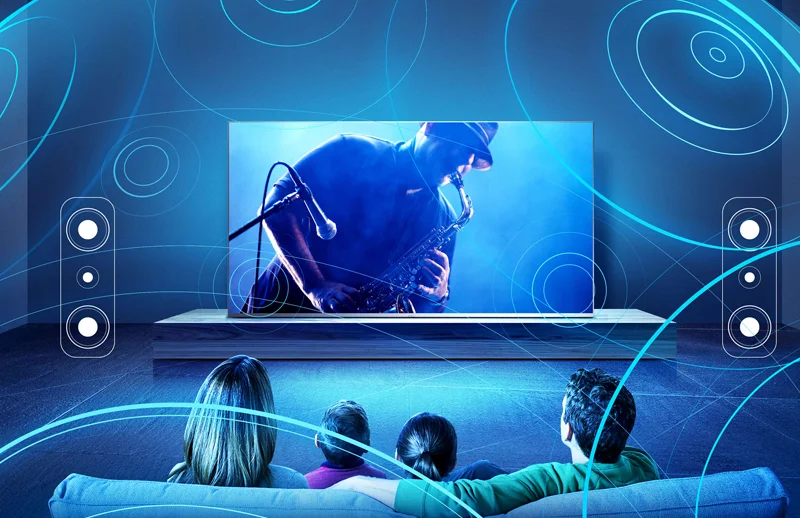
Configuration: 2.1.2 Multi-Channel
Hisense has put effort into the sound, equipping the U8QG with a 2.1.2 channel system. This includes:
- Built-in Subwoofer: Located on the back for added bass.
- Up-firing Speakers: Located on the top to bounce sound off the ceiling.
Performance and Formats
- Dolby Atmos: The up-firing speakers provide a genuine "height" effect for Atmos content.
- Power: The system outputs roughly 50-60W of power.
- Verdict: It sounds significantly better than the average slim TV, with clear dialogue and decent punch. However, for a cinematic bass rumble, you will still want a dedicated soundbar.
Gaming Performance
Is the U8QG good for gaming? It is exceptional.
Native Refresh Rate: 144Hz / 165Hz
While most TVs top out at 120Hz, the U8QG pushes the panel to 144Hz (and even 165Hz in specific PC modes). This makes it functionally identical to a high-end gaming monitor, providing ultra-fluid motion for shooters and racing games.
HDMI 2.1 and Inputs
- Ports: It features two full-bandwidth HDMI 2.1 ports capable of 4K@144Hz.
- The Catch: One of the HDMI 2.1 ports also doubles as the eARC port. If you use a soundbar, you only have one HDMI 2.1 port left for a console (PS5/Xbox Series X).
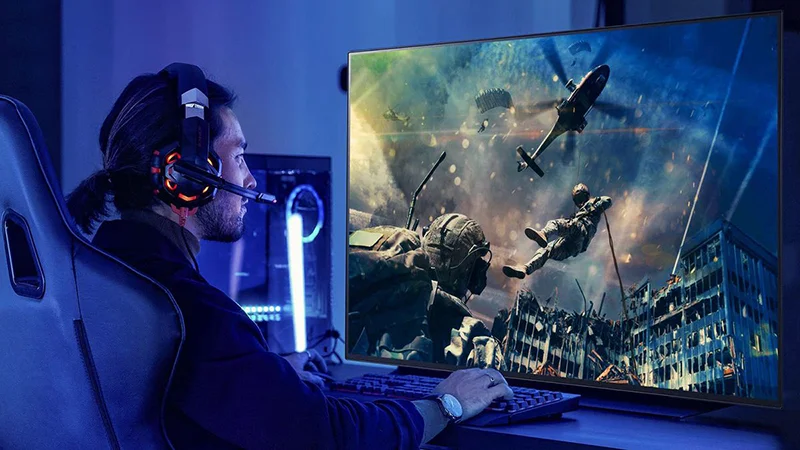
Gaming Features
- VRR (Variable Refresh Rate): Supports AMD FreeSync Premium Pro. This eliminates "screen tearing" (where the image looks sliced in half during fast movement).
- ALLM (Auto Low Latency Mode): Automatically detects your console and switches to "Game Mode" to minimize input lag (which is incredibly low, roughly 6ms at 120Hz).
- Game Bar: A quick-access menu lets you adjust screen ratios, brightness, and see your current FPS without leaving the game.
Design, Build Quality, and Remote Control
Design Aesthetic
The U8QG looks premium, though perhaps a bit utilitarian. It features ultra-thin metal bezels that vanish when the screen is on.
- Stand: It uses a heavy, central metal pedestal stand (on most sizes). This is fantastic because it allows you to place the TV on a narrow table, unlike TVs with wide-set "duck feet."
- Thickness: Because it uses a complex Mini-LED backlight, the chassis is slightly thicker than an OLED, but the rear is curved to hide the bulk.
Remote Control
The remote is backlit (a lifesaver in the dark) and connects via Bluetooth. It is functional, with dedicated buttons for major streaming services. It feels solid in the hand, moving away from the cheap "clicky" plastics of older models.
Connectivity
Here is the breakdown of the physical connections:
-
HDMI: 4x Total
-
2x HDMI 2.1 (4K @ 144Hz) — Note: Port 3 is usually eARC.
-
2x HDMI 2.0 (4K @ 60Hz) — Fine for streaming devices or older consoles.
-
-
USB: 2x (Including one USB 3.0 for fast media playback).
- Ethernet (LAN): Yes.
-
Digital Audio Out: Optical.
-
Headphone Jack: Yes (rare on modern TVs!).
-
Wireless: Wi-Fi 6E (Future-proofed for high-speed streaming) and Bluetooth 5.2.
Available Sizes
The U8QG is available in a wide range of sizes to fit anything from a bedroom to a home theater cavern:
-
55 inches
-
65 inches (The "Sweet Spot" for value)
-
75 inches
-
85 inches (Massive impact)
-
100 inches (Often available in the U8 series for wall-sized immersion)
Main Competitors and Comparison
1. TCL QM8 (The Arch-Rival)
- Comparison: TCL and Hisense are in a locked battle. The TCL QM8 often gets slightly brighter, but the Hisense U8QG generally has better upscaling and image processing for lower-quality content (like cable TV).
- Verdict: Go Hisense for sports/cable; go TCL for pure movie HDR impact.
2. Samsung QN90 Series (The Premium Choice)
- Comparison: The Samsung is the "name brand" equivalent. It has a slimmer design and slightly more refined software. However, it costs significantly more and lacks Dolby Vision support.
- Verdict: The Hisense offers 95% of the performance for 60% of the price.
3. Sony Bravia 7 or X90 Series
- Comparison: Sony wins on motion processing and color accuracy out of the box. However, the Sony will look dim compared to the light-cannon capability of the Hisense.
- Verdict: Choose Sony for dark-room cinema accuracy; choose Hisense for bright-room "pop."
Conclusion and Verdict
Overall Score: 9.0/10
The Hisense U8QG is a triumph of engineering and value.
It proves that you do not need to spend an exorbitant amount of money to get a "flagship" experience.
While it lacks the infinite contrast of an OLED, it makes up for it with blinding brightness and vibrant color that makes HDR content sing.
Pros:
- Incredible Brightness: Perfect for bright living rooms.
- Deep Blacks: Mini-LED local dimming works wonders.
- Gaming: 144Hz support and low input lag are top-tier.
- Format Support: Dolby Vision, Atmos, HDR10+ all included.
- Value: Unbeatable price-to-performance ratio.
Cons:
- Viewing Angles: The picture fades if you sit too far to the side (typical of VA panels).
- HDMI 2.1 Limitation: Only two high-speed ports (one shared with eARC) is annoying for multi-console gamers.
- Out-of-Box Accuracy: Requires a little tweaking in settings to get the colors perfect.
Final Recommendation: Who is this TV for?
- Buy it if: You have a bright living room, you are a gamer looking for 120Hz+ performance, or you want the most "pop" and "wow factor" for your dollar.
- Skip it if: You have a seating arrangement where people view the TV from the side, or you are a dedicated cinephile who watches movies in a pitch-black room (buy an OLED instead).

We earn a commission if you make a purchase, at no additional cost to you.