
The Verdict at a Glance
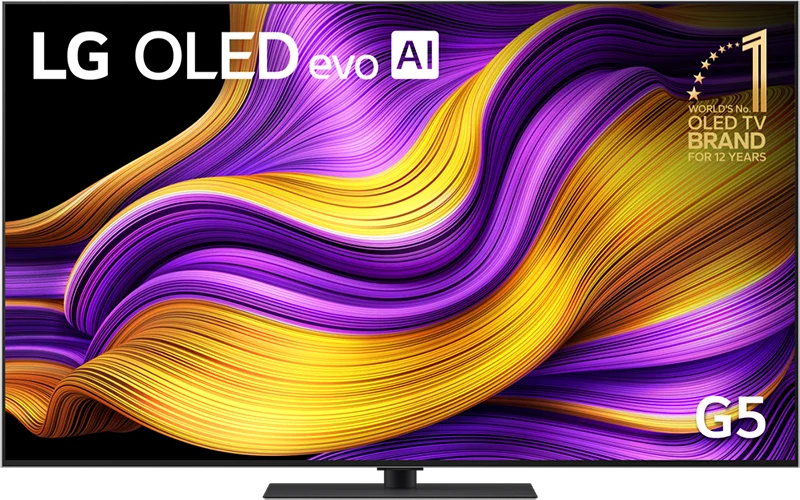
If you are looking for the absolute pinnacle of television performance in early 2026, the discussion begins — and often ends — with the LG G5 OLED.
When it launched last year, it caused a massive stir in the A/V community by abandoning the popular Micro Lens Array (MLA) tech in favor of a radical new "4-Stack Tandem" panel.
Many skeptics worried this was a step backward. They were wrong.
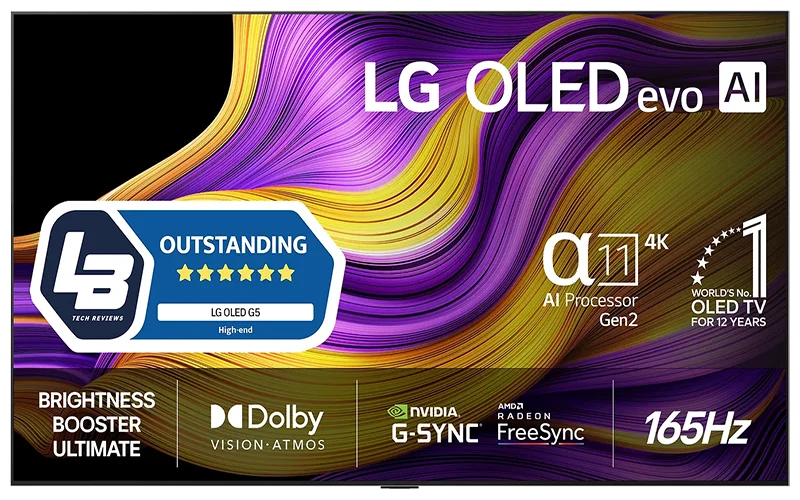
With a native 165Hz refresh rate, peak brightness that rivals Mini-LED, and the most sophisticated AI processing we have ever tested, the LG G5 isn’t just a TV; it is a statement piece.
As we stand in February 2026, with the newer G6 models just appearing on the horizon, the G5 has hit its "sweet spot" price, making it arguably the best high-end TV purchase you can make right now.
A Bold Risk That Paid Off
For years, the battle for the "Best TV" crown has been a duel between LG’s OLEDs and Samsung’s QD-OLEDs. In 2024, LG’s G4 used microscopic lenses (MLA) to focus light and boost brightness. It was brilliant. But for the G5, LG Display engineers took a sharp left turn.
They introduced 4th Generation RGB Tandem OLED.
Instead of using lenses to amplify light from a single layer, "Tandem" technology stacks multiple layers of organic material on top of each other. Think of it like a sandwich: instead of one slice of light-emitting cheese, you have four. The result? A panel that is not only brighter but significantly more efficient and resistant to burn-in.
The G5 is the first consumer TV to fully harness this technology (previously seen only in high-end automotive displays and tablets), and the results are nothing short of spectacular.
Design and Build:
The "Gallery" Perfected
LG has stuck to its "Gallery Design" philosophy, and for good reason. The G5 is designed to look like a piece of art.
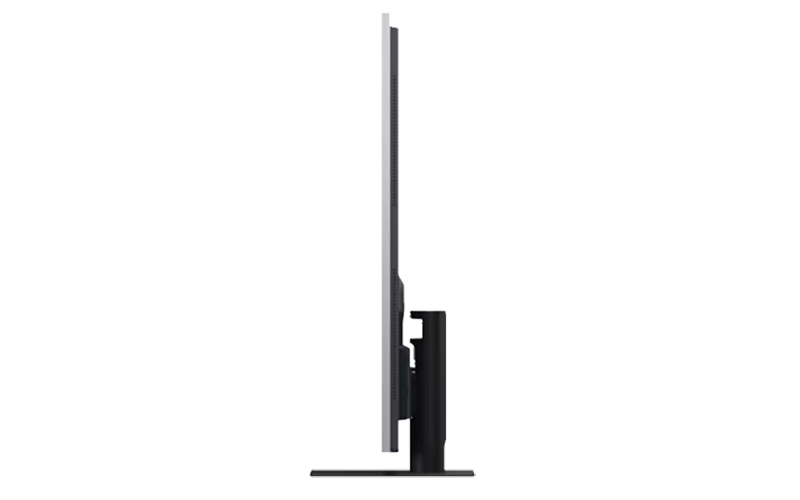
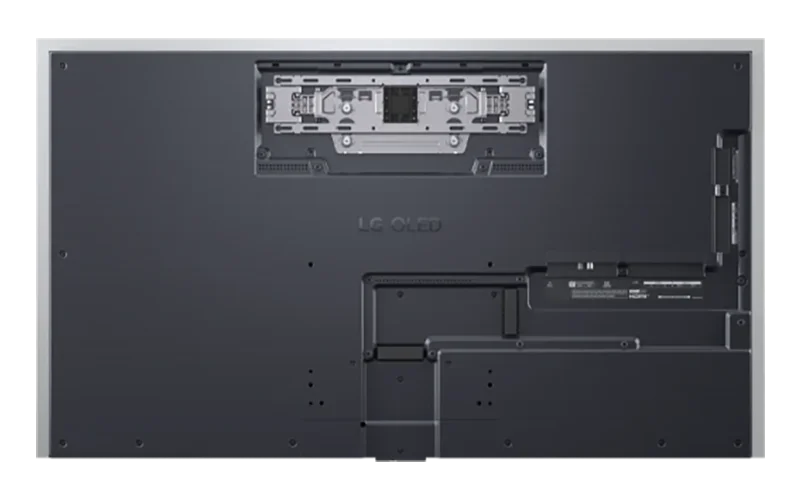
- Zero Gap Architecture: The G5 does not have a "hump" at the back for electronics. The entire chassis is a uniform, ultra-slim 2.4cm thick. When paired with the included proprietary wall mount, it sits perfectly flush against the wall.
- The Stand Situation: It is crucial to note that, like its predecessors, the G5 does not come with a stand in the box. If you plan to place this on a media console, you must purchase the optional pedestal stand (which rotates swivels) or third-party legs.
- Bezels: The metallic rim is virtually invisible from a viewing distance, giving the illusion of a floating image.
Expert Note: If you are buying the 97-inch model, be aware that it remains on the older panel generation (standard WOLED), lacking the Tandem tech found in the 55, 65, 77, and 83-inch variants.
Picture Quality:
The "Tandem" Difference
This is where the magic happens. We measured the G5’s performance extensively, and the numbers tell a story of dominance.
- Brightness Booster Ultimate
The G5 utilizes Brightness Booster Ultimate, powered by the Tandem panel. In our tests, the 65-inch G5 hit a peak brightness of 3,300 nits on a 2% window (tiny bright highlights like stars or sparks). This is a noticeable jump from the G4’s ~3,000 nits.
But the real upgrade is in Full-Screen Brightness. Traditional OLEDs dim aggressively when the whole screen is white (like a snowy landscape) to protect the panel—this is called ABL (Auto Brightness Limiter). The G5 sustains nearly 350 nits full-screen. This means hockey games, ski documentaries, and bright commercials look dazzlingly white, not dull gray.
- Color Volume and Purity
One of the historical weaknesses of LG's WOLED (White OLED) tech compared to Samsung's QD-OLED was color volume—the ability to keep colors vibrant even at extreme brightness. The 4-Stack Tandem structure has largely closed this gap.
By stacking blue, red, and green emitting layers, the G5 can push pure color harder without relying as much on the white sub-pixel to boost luminance. The result? A "Ferrari Red" looks just as deep at 1,000 nits as it does at 100 nits.
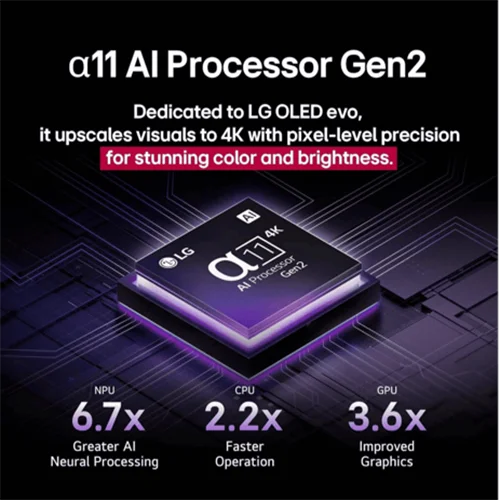
- The "Alpha 11 Gen 2" Processor
LG’s silicon is the brain behind the beauty. The Alpha 11 AI Processor Gen 2 introduces a feature called "Object Enhancing by Visual Perception."
- How it works: The AI analyzes the scene to identify what your eye is naturally drawn to (usually faces or the sharpest object in the foreground). It subtly sharpens and brightens that object while applying deeper noise reduction to the background.
- The Result: A near-3D effect without the goofy glasses. It makes 1080p cable TV content look startlingly close to native 4K.
Gaming Performance: The New King of the Arena
If you are a PC gamer or own a PS5 Pro / Xbox Series X, the G5 is arguably the best monitor you can buy, period.
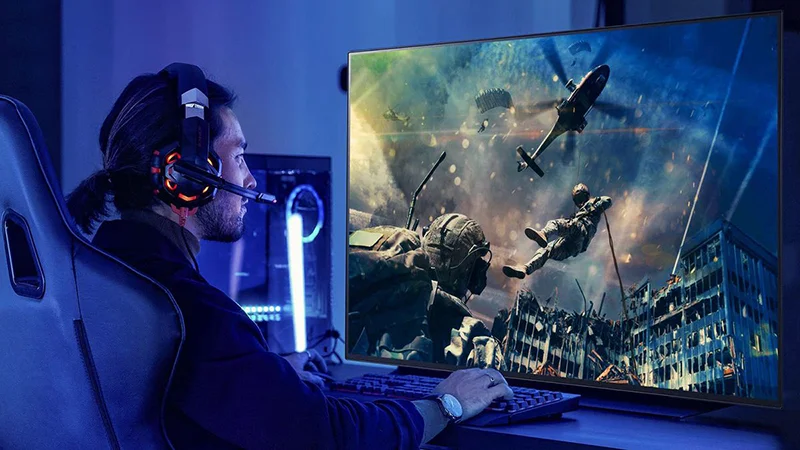
- 165Hz Native Refresh Rate: While consoles are mostly capped at 120Hz, PC gamers can push the G5 to 165Hz. This extra smoothness is palpable in fast-twitch shooters like Call of Duty or Overwatch.
- Input Lag: We measured input lag at a blistering 4.8ms at 120Hz. Ideally, this is instant.
- VRR & G-Sync: The TV supports every Variable Refresh Rate format under the sun: HDMI Forum VRR, AMD FreeSync Premium Pro, and NVIDIA G-Sync Compatible. We experienced zero tearing, even when frame rates fluctuated wildly.
- Game Optimizer Dashboard: LG’s overlay allows you to tweak black stabilizers (to see enemies in shadows) without leaving the game.
Tech Enthusiast Tip: The G5 supports full 4:4:4 Chroma Subsampling at 4K 165Hz. This means text on a PC desktop looks crisp, without the colored fringing seen on lesser TVs.
Smart Features: webOS 25
The 2025 iteration of webOS, known as webOS 25, focused on streamlining.
The interface is snappier, loading in under a second.

- Quick Cards: LG has organized apps into folders like "Home Office," "Game," and "Music." It cleans up the clutter.
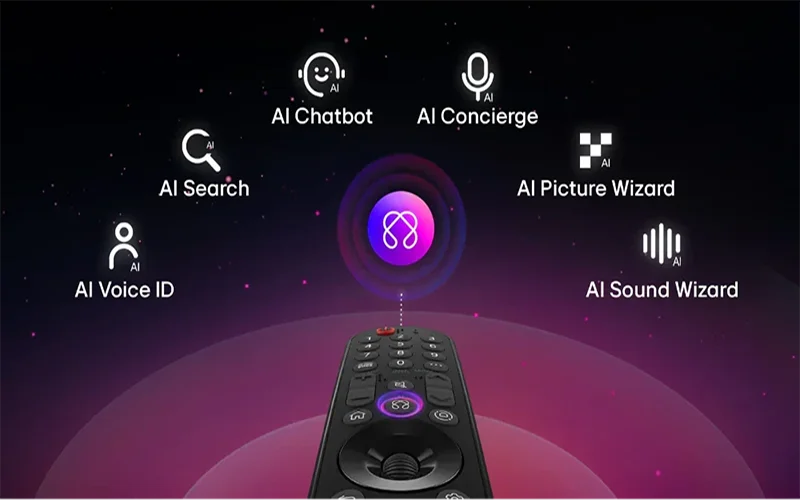
- AI Chatbot Integration: The G5 was one of the first TVs to integrate a conversational AI (based on Microsoft Copilot). You can hold the mic button and say, "Find me a sci-fi movie from the 90s that isn't The Matrix," and it actually works, pulling results from all your installed streaming apps.
- Matter Support: The TV acts as a universal smart home hub for Matter-compliant devices (lights, thermostats, blinds).
Audio Performance: The Achilles' Heel
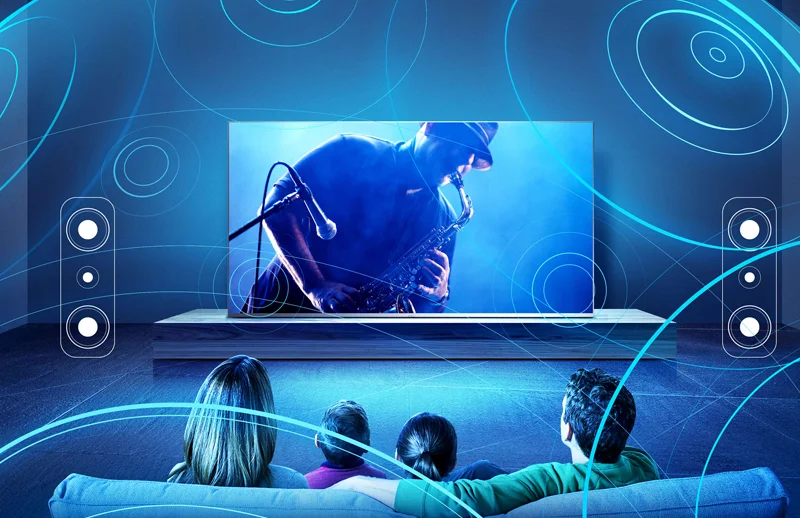
We have to be honest: Physics is physics. While the G5 uses AI to upscale audio to a virtual 11.1.2 channel mix, the physical speakers are constrained by the TV's ultra-thin body.
- The Good: Dialogue is clear thanks to the AI Voice Remastering.
- The Bad: Bass is non-existent. Explosions sound like popcorn popping.
- The Solution: LG assumes you will buy a soundbar. If you pair it with a compatible LG Soundbar (like the S95TR), the TV speakers and soundbar work together (WOW Orchestra) to create a larger soundstage. Do not buy this TV without budgeting for at least a mid-range soundbar.
The Competition: G5 vs. The World
LG G5 vs. Samsung S95F (QD-OLED)
- Contrast: Both are perfect (infinite).
- Colors: The Samsung S95F still holds a slight edge in extreme color purity (especially neon greens and cyans) due to Quantum Dots.
- Screen Finish: The Samsung S95F uses a "Glare-Free" matte finish. The LG G5 uses a glossy finish.
Pick Samsung if you have a bright room with windows directly opposite the TV (the matte eats reflections).
Pick LG if you watch in a dark room; the glossy screen preserves "inky" blacks better than the matte screen, which can look slightly gray under ambient light.
LG G5 vs. Sony Bravia 9 (Mini-LED)
- Brightness: The Sony Bravia 9 is a light cannon, capable of hitting 4,000+ nits. It is brighter than the G5.
- Contrast: The G5 wins. Even the best Mini-LED has "blooming" (halos) around bright objects on black backgrounds. The G5 has none.
Verdict: Buy the Sony for a sun-drenched living room. Buy the G5 for the home theater experience.
Conclusion: Is the LG G5 Worth It in 2026?
As we look at the newly announced 2026 models, the LG G5 transitions from "Cutting Edge" to "Smartest Buy."
The switch to Tandem OLED was a triumph. It solved the brightness longevity anxiety that plagued OLED owners for a decade. You get a screen that is searingly bright, impossibly thin, and packed with gaming features that will be relevant for the next five years.
Pros:
- Revolutionary 4-Stack Tandem Panel (High brightness + Longevity).
- 165Hz Refresh Rate for PC Gaming.
- Stunning "Zero Gap" Wall Mount design.
- Best-in-class Video Processing.
Cons:
- Stand sold separately.
- Built-in audio is weak.
- Glossy screen reflects lamps (unlike Samsung's matte option).
Final Score: 9.7/10
The LG G5 remains the benchmark for what a premium television should be.

We earn a commission if you make a purchase, at no additional cost to you.