
A Flagship Display for Every Viewer
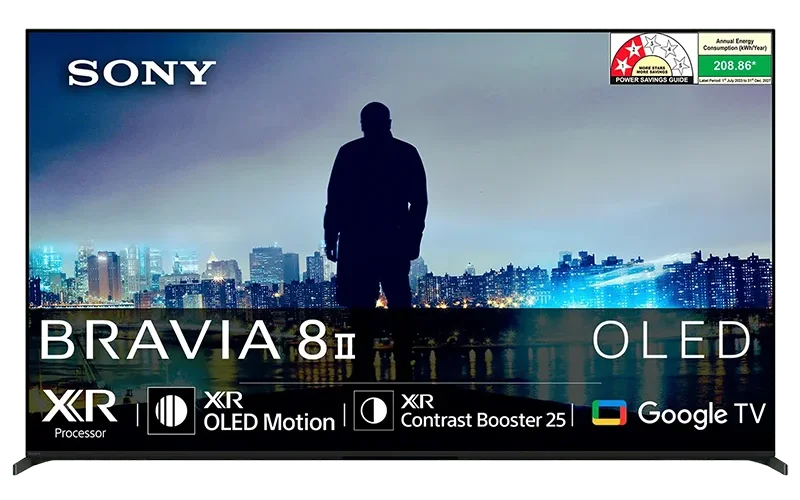
Sony has long been synonymous with cinematic accuracy in home entertainment.
While competitors often chase raw numbers — be it the highest nits of brightness or the lowest price — Sony focuses on delivering the creator's true intention, from the camera lens to your couch. The Sony Bravia 8 II is the latest expression of this philosophy, arriving as an absolute powerhouse of picture quality and refined processing.
The New QD-OLED Champion
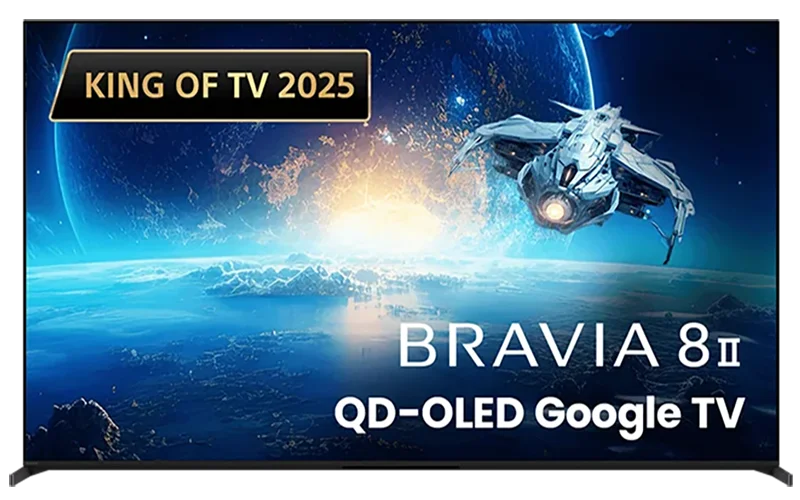
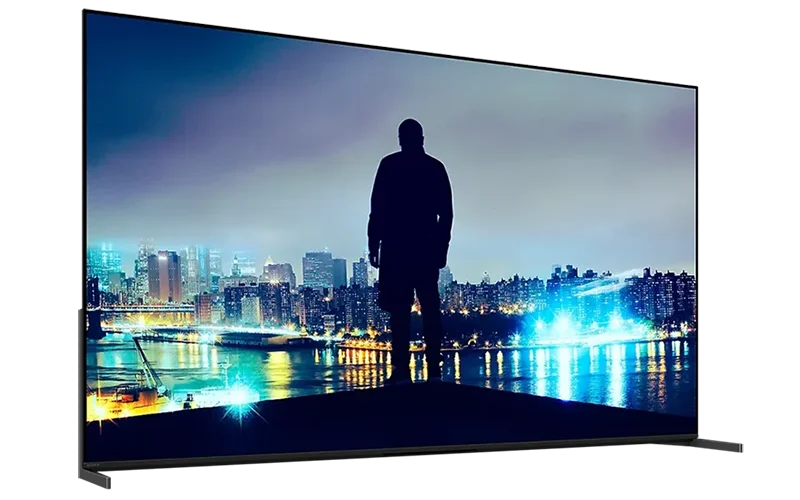
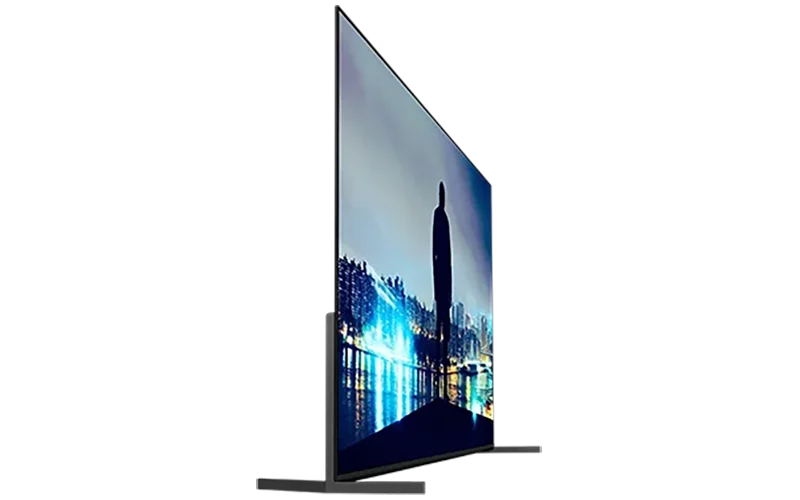
The Sony Bravia 8 II is a premium 4K OLED television in Sony's 2025 lineup. Bravia 8 II steps in as Sony's new mainstream, high-performance QD-OLED offering, effectively replacing the previous year's acclaimed A95L.
Its key selling point is a blend of next-generation QD-OLED panel technology and Sony's unmatched picture processing. This TV aims to deliver the perfect cinematic picture: the infinite contrast of OLED combined with the vibrant, color-saturated brightness of Quantum Dots, all expertly refined by the Cognitive Processor XR. It is positioned for the discerning movie lover and the passionate, but perhaps less frenetic, gamer.
Panel Technology and Picture Quality
A Masterclass in Visual Accuracy
The picture quality of the Bravia 8 II is, simply put, a masterclass in visual fidelity, achieving a rare balance of vibrancy and natural realism.
The Power of QD-OLED Technology
The Bravia 8 II utilizes a QD-OLED (Quantum Dot-Organic Light Emitting Diode) panel, specifically the latest third-generation version. This is a significant distinction from standard WOLED (White OLED) panels found in many competing models.
- OLED Explained: Unlike traditional LED/LCD TVs that use a backlight behind the screen, OLED pixels are self-illuminating. This means each of the over 8.3 million pixels can be turned on, dimmed, or turned off completely and individually.
- The QD-OLED Advantage: By adding a layer of Quantum Dots—nanoscopic semiconductor crystals that emit highly specific, pure colors when struck by the light from the blue OLED material—QD-OLED panels achieve a few things:
- Increased Color Volume: Colors remain fully saturated and pure even at high brightness levels, which is where traditional OLEDs sometimes struggle.
- True RGB Color Structure: Since the panel uses pure red, green, and blue sub-pixels (no white sub-pixel needed to boost brightness), the color output is incredibly accurate and natural.
- No Blooming: Because each pixel is its own light source, you get absolute, perfect black levels with literally infinite contrast. There is simply no way for light to "bleed" or "bloom" from a bright object (like a star or a title card) into an adjacent dark area, a common issue known as blooming on even the best Mini LED sets.
Resolution and Native Refresh Rate
The Bravia 8 II features 4K Ultra HD resolution (3840 x 2160 pixels), which is the current industry standard for premium TVs, ensuring a razor-sharp image packed with detail.
Its Native Refresh Rate is 120Hz. The refresh rate is the number of times per second the image on the screen is updated. For viewers, a 120Hz rate is critical:
- It provides smoother motion for fast-paced content like sports, action movies, and video games, minimizing motion blur.
- It allows for 4K/120fps gaming, which is the gold standard for next-gen console and PC gaming.
The Brain: Cognitive Processor XR with AI Scene Recognition
The TV is powered by Sony's proprietary Cognitive Processor XR, a technology that goes beyond conventional AI. Where traditional AI only analyzes elements like color, contrast, or clarity individually, the XR Processor is designed to mimic the human brain’s cognitive process by cross-analyzing all picture elements simultaneously.
- Focal Point Enhancement: The processor identifies the focal point—where the human eye is naturally drawn in a scene (e.g., a face, a central object)—and enhances that area with greater detail, depth, and contrast, just as our eyes do in the real world.
- XR 4K Upscaling: For content below 4K (which is still most cable, broadcast, and older streaming), it intelligently recreates lost textures and details, bringing it close to native 4K quality with reduced noise via XR Clear Image.
- AI Scene Recognition: New for this generation, the processor uses enhanced AI to flawlessly detect the type of content (e.g., a snowy landscape, a dark cave, a basketball game) and optimizes the picture settings in real-time for ultimate realism.
Brightness, Contrast, and Color
While OLED sets generally can’t match the raw, whole-screen brightness of flagship Mini LED rivals, the Bravia 8 II's third-generation QD-OLED panel delivers a substantial boost over previous Sony models.
- Brightness: It achieves a high peak brightness, often measured in the 1,500 nits range for small highlights (known as the 10% window test). This brightness, combined with the extreme efficiency of the QD-OLED color filter, ensures that HDR (High Dynamic Range) highlights have real impact and 'pop'.
- Handling Bright Rooms (The QD-OLED Caveat): The increased brightness certainly helps in well-lit rooms. However, QD-OLED panels can exhibit a phenomenon known as "black-level lifting" in very bright environments due to their glossy screen finish and inherent technology. If you watch a lot of content during the day with sunlight directly on the screen, the perfect blacks may appear slightly gray.
- Color: Featuring XR Triluminos Pro technology, the TV boasts a stunningly wide color gamut, reproducing over a billion shades. The colors are noted for their superb out-of-the-box accuracy and a natural, cinematic look that prioritizes subtlety and realism over oversaturated 'demo' colors.
- HDR Support: The Bravia 8 II supports the most essential HDR formats: HDR10, HLG (Hybrid Log Gamma), and the premium dynamic format, Dolby Vision. Crucially, it lacks support for the competing dynamic format, HDR10+.
Why Dolby Vision Matters: Dolby Vision is a superior HDR format because it uses dynamic metadata—it can instruct the TV how to optimize the picture frame-by-frame (or even scene-by-scene). This results in a much more accurate and impactful image, preserving details in both the brightest highlights and darkest shadows that are often lost in static HDR10. Since most premium streaming content (Netflix, Disney+, Max, Apple TV+) is offered in Dolby Vision, its inclusion is a must-have for cinephiles.
Operating System and Smart TV Features
Platform: Google TV
Google TV is an Android-based platform that is fast, robust, and content-forward. It aggregates movies and shows from all your installed streaming services into a single, personalized "For You" tab, making content discovery effortless.

- Interface and Usability: The interface is generally fast, intuitive, and modern, offering a smooth experience without the sluggishness of older smart TV systems. While it does feature promotional content/ads on the main home screen, they are typically limited to content recommendations rather than aggressive banner ads.
- Smart Features: The ecosystem is fully featured:
- Built-in Chromecast: Allows for easy streaming of content from any compatible Android or Chrome device.
- Apple AirPlay 2 and HomeKit: Provides seamless casting from Apple iPhones, iPads, and Macs, and allows integration into the Apple Home ecosystem.
- Voice Assistants: It supports hands-free Google Assistant via a far-field microphone array built into the TV itself (with a physical privacy switch) and also works with Amazon Alexa
- Streaming Services: All major streaming applications are available, including Netflix, Disney+, Prime Video, Max (HBO), YouTube, Hulu, Apple TV+, and Peacock.
- Sony Pictures Core: A significant value-add is Sony Pictures Core (formerly Bravia Core), an exclusive streaming service for Bravia TV owners. It allows streaming of select Sony films at a staggering bitrate of up to 80Mbps—a quality level that rivals or even exceeds a physical 4K UHD Blu-ray disc—ensuring the premium QD-OLED panel receives the highest possible quality content.
Audio System - When the Screen Becomes the Speaker
Sony continues to differentiate itself in the TV audio space with its unique and highly effective speaker technology.
Configuration: Acoustic Surface Audio+
The Bravia 8 II utilizes Acoustic Surface Audio+, which is Sony's innovation of turning the entire screen into a speaker. Actuators placed behind the panel vibrate the screen subtly to create sound. This results in a 2.2-channel system (left, right, and two subwoofers).
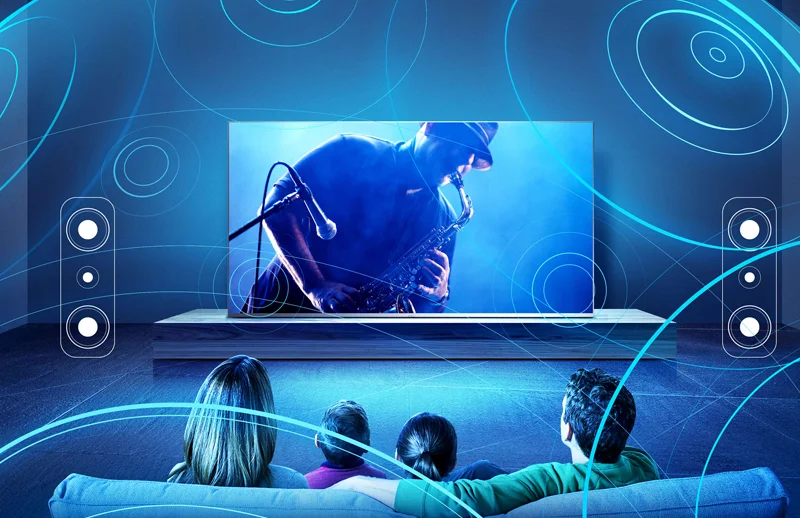
- Power and Immersion: With an estimated 50W of total power, the sound is powerful and well-spatialized. The key advantage of this technology is Sound-from-Picture Reality— dialogue emanates directly from the actors on screen, and effects follow the action precisely across the panel, creating a more cohesive and immersive experience.
- Audio Formats: It supports the leading immersive audio codecs, including Dolby Atmos and DTS:X, allowing the TV to decode and virtually reproduce a multi-dimensional sound field with overhead effects.
- AI and Integration: The TV includes the Acoustic Center Sync This allows the TV's built-in speakers to act as the center channel when connected to a compatible Sony soundbar or home theater system (like a Sony Bravia Theatre Bar), vastly improving vocal clarity and screen-matching. The Voice Zoom 3™ feature also uses AI to detect and enhance dialogue clarity, ensuring you never miss a word.
- Connectivity: A dedicated HDMI port supports eARC (Enhanced Audio Return Channel), which is essential for sending high-bitrate, uncompressed audio formats like Dolby Atmos and DTS:X to a connected soundbar or A/V receiver.
Gaming Performance
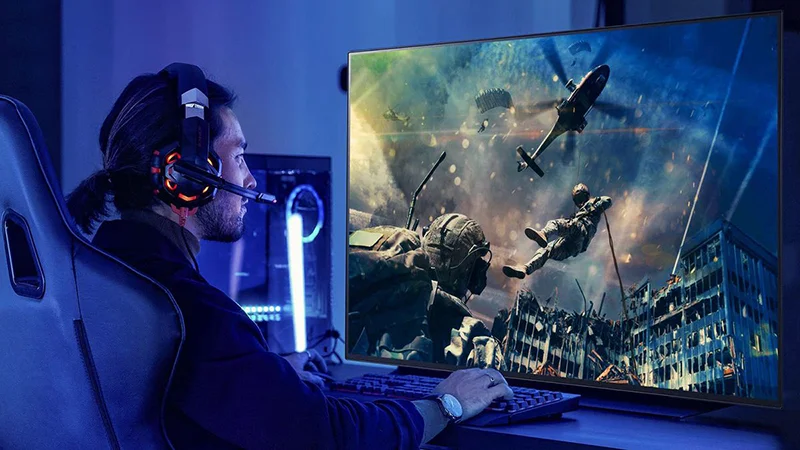
The Bravia 8 II is an excellent display for gaming, offering all the features necessary for a next-generation experience, making it a compelling option for both console players and PC users looking for a large, stunning monitor.
Essential Gaming Features
- Native 120Hz Refresh Rate: Essential for displaying the high frame rates output by the PlayStation 5 and Xbox Series X.
- HDMI 2.1: The TV is equipped with four HDMI ports, of which two are full-bandwidth HDMI 2.1 ports (48Gbps). This is crucial as HDMI 2.1 is required for 4K resolution at 120 frames per second (4K/120Hz).
- The Catch: One of the two HDMI 2.1 ports is also the eARC port used for your soundbar. This effectively leaves you with only one available full-spec HDMI 2.1 port for connecting a primary gaming console or PC. This can be a significant limitation for enthusiasts who own both a PS5 and an Xbox Series X.
| Gaming Feature | Supported? | Description |
| 4K/120Hz | Yes | Supports 4K resolution at 120fps via HDMI 2.1. |
| ALLM (Auto Low Latency Mode) | Yes | The TV automatically switches to a low-latency "Game Mode" when it detects a console, minimizing input lag (the delay between pressing a button and the action appearing on screen). The input lag is impressively low at ~7.9ms for 1080p/120Hz. |
| VRR (Variable Refresh Rate) | Yes | This feature dynamically adjusts the TV's refresh rate to match the frame rate output of the console, which eliminates screen tearing and reduces stuttering. |
| NVIDIA G-Sync / AMD FreeSync | No Formal Certification | While the VRR works, Sony does not formally list support for AMD FreeSync Premium or NVIDIA G-Sync. |
| Perfect for PlayStation 5 | Yes | This Sony-exclusive feature automatically calibrates the TV’s HDR settings specifically for the PS5, known as Auto HDR Tone Mapping, and ensures the TV switches into the low-lag Game Mode seamlessly. |
Game Menu: Sony includes a convenient Game Menu (or Game Dashboard) that provides quick access to key gaming settings like VRR status, motion blur reduction, and even an adjustable virtual Crosshair for first-person shooters.
Design, Build Quality, and Remote Control
The Bravia 8 II continues Sony's "One Slate" design philosophy, prioritizing the picture by minimizing distraction.
- Design: The aesthetic is minimalist and premium. It features ultra-thin, nearly imperceptible bezels that fuse the screen and frame into a single, sleek slab. The TV is relatively slim for a QD-OLED, though slightly thicker than some competitors due to the internal Acoustic Surface Audio+ actuators and custom cooling elements (like the heatsink) that enable its boosted brightness.
- Stand: It features slim metal blade feet that attach to the far ends of the screen. These feet offer a two-position height adjustment, allowing you to choose a lower, flush-to-the-surface look or a raised position to ensure a soundbar can fit neatly underneath without blocking the screen.
- Build Quality: The chassis is a mix of premium aluminum and high-quality plastics, giving it a solid and durable feel. It’s designed to look elegant whether on a stand or wall-mounted (VESA compatible).
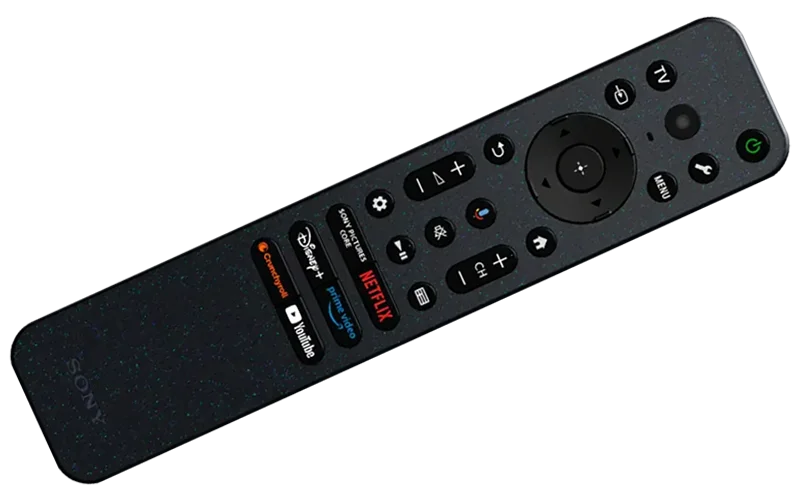
- Remote Control: Sony has introduced its new, simplified remote with this generation. It’s smaller, with fewer buttons, focusing on key streaming services and navigation. However, it often relies on AAA batteries and, in some regions, may lack the premium backlighting of previous flagship remotes—a small but notable downgrade for dark-room viewing. The remote is designed to be more eco-friendly and includes dedicated buttons for Netflix, Prime Video, Disney+, and Google TV voice control.
Available Sizes
The Sony Bravia 8 II is available in the three most popular premium sizes, catering to standard living room and home theater setups:
- 55 inches
- 65 inches
- 77 inches
Connectivity (Ports)
| Port Type | Key Specifications |
| 4 - HDMI | 2x HDMI 2.1 (4K/120Hz, VRR, ALLM), 2x HDMI 2.0. One of the HDMI 2.1 ports is dedicated for eARC/ARC. |
| 2 - USB | 1x USB 3.0 (for fast storage/recording), 1x USB 2.0. |
| Ethernet | RJ-45 port for a stable, hardwired internet connection. |
| Digital Audio Out | Optical (Toslink) port for legacy audio connections. |
| RF | Antenna/Cable input (supports ATSC 3.0 in the US). |
| Other | S-Center Speaker Input (for using the TV as a center channel with a Sony soundbar). |
| Wireless | Wi-Fi 6 (802.11ax), Bluetooth 5.3 |
Main Competitors and Comparison
The Sony Bravia 8 II sits in the fiercely competitive premium OLED segment. Its main rivals are the flagship OLEDs from its two biggest competitors.
|
Feature |
Sony Bravia 8 II (QD-OLED) |
LG G5 (WOLED) |
Samsung S95F (QD-OLED) |
|
Panel Technology |
QD-OLED (Gen 3) |
WOLED (MLA/Micro Lens Array) |
QD-OLED (Gen 3) |
|
Picture Processor |
Cognitive Processor XR |
Alpha 11 AI Processor |
NQ4 AI Gen 2 Processor |
|
Dynamic HDR Support |
Dolby Vision, HDR10, HLG |
Dolby Vision, HDR10, HLG |
HDR10+, HDR10, HLG |
|
HDMI 2.1 Ports |
2 (One is eARC) |
4 (All full-spec) |
4 (All full-spec) |
|
Audio System |
Acoustic Surface Audio+ |
4.2-channel system |
4.2.2-channel (Object Tracking Sound) |
|
Smart OS |
Google TV |
webOS |
Tizen OS |
|
Key Strength |
Cinematic Accuracy, Color Volume, Processing |
Gaming Features, All four HDMI 2.1 Ports, High Brightness |
Peak Brightness, Color Pop, Gaming Features |
The Comparison Breakdown
- LG G5: The LG G5 uses WOLED with MLA (Micro Lens Array) and typically wins the raw brightness contest for a full white screen. More importantly, the G5 offers four full HDMI 2.1 ports, making it the superior choice for gamers who need to connect multiple high-end consoles and a soundbar. However, the Sony offers superior picture processing and Dolby Vision gaming support.
- LG G5 Pro: More HDMI 2.1 ports, brighter whites.
- Sony Bravia 8 II Pro: Better motion handling, superior picture processing, Acoustic Surface Audio+.
- Samsung S95F: Both use the same-generation QD-OLED panel, giving them a similar color volume advantage over WOLED. The Samsung is often tuned to be brighter and more aggressively vibrant, which many users prefer for a 'wow' factor. Crucially, the Samsung supports HDR10+ but lacks Dolby Vision, which is a significant trade-off depending on your primary streaming service. It also provides four full HDMI 2.1 ports.
- Samsung S95F Pro: Brighter tuning, more HDMI 2.1 ports, HDR10+ support.
Sony Bravia 8 II Pro: Inclusion of Dolby Vision, more natural and accurate color calibration, superior sound system.
Conclusion and Verdict
Overall Score: 9.5/10 – A true masterpiece of cinematic television.
Pros and Cons
| 👍 Advantages (Pros) | 👎 Disadvantages (Cons) |
| QD-OLED Panel: Perfect black levels, infinite contrast, and exceptional color volume. | Only Two HDMI 2.1 Ports: Limits connectivity for multiple next-gen consoles/PCs and a soundbar. |
| Cognitive Processor XR: Unmatched picture processing, upscaling, and motion handling. | No HDR10+ Support: Lacks the competing dynamic HDR format. |
| Acoustic Surface Audio+: Sound emanates directly from the screen for superior immersion and clarity. | Glossy Panel in Bright Rooms: Blacks can appear slightly lifted/gray with significant direct ambient light. |
| Dolby Vision Support: Best-in-class dynamic HDR experience for streaming content. | Remote Control Downgrade: Lacks the backlighting and premium feel of previous models. |
| "Perfect for PS5" Features: Seamless setup and performance for PlayStation users. |
The Sony Bravia 8 II is a triumph of thoughtful engineering and cinematic refinement. It doesn't scream with the highest brightness numbers, but it whispers with an authenticity and depth that few rivals can match. This TV prioritizes an organic, natural image that is faithful to the filmmaker's intent. The QD-OLED panel delivers rich, saturated colors and perfect blacks, while the Cognitive Processor XR elevates every piece of content, from low-resolution streaming to high-bitrate 4K Blu-ray.
The inclusion of Dolby Vision and the unique, immersive Acoustic Surface Audio+ system cement its place as a top choice for dedicated movie lovers. The two main drawbacks—the limited two HDMI 2.1 ports and the lack of HDR10+ support—are the only things holding it back from being a flawless product for every consumer.
Final Recommendation: Who is this TV for?
This TV is ideal for the Movie Purist and the Cinephile who prioritizes image accuracy, perfect contrast, and natural motion above all else. It is the best TV for a dedicated, dark-room viewing environment.
It is also an excellent choice for the PlayStation 5 Gamer who is a heavy movie watcher, provided they only need one high-speed HDMI port for their console.

We earn a commission if you make a purchase, at no additional cost to you.