
LG 2026 TV Lineup: Models, Sizes & Which One to Buy
Then there is the W6 Wallpaper OLED, which puts installation and design front and center, plus a growing collection of RGB and QNED LCD TVs for shoppers who want a seriously big screen.
This LG 2026 TV lineup guide explains where the main families fit, which sizes LG lists for the U.S., and which upgrades deserve your attention. At TelevisionCafe, our starting point is the room you actually watch in: a movie setup with the lights down, a sunny family room, or a gaming space.
The quick recommendation: Start by comparing the C6 or C6H with the B6 at your preferred size. Step up to the G6 when its display upgrades justify the price, or choose the W6 when a clean wall installation is a major part of the purchase. For a giant LCD screen, investigate Micro RGB and the appropriate QNED model.
LG 2026 TV Models and Sizes at a Glance
The table below summarizes the main families with sizes verified in LG's U.S. listings. It is not an exhaustive inventory of every retailer variant. QNED and additional Mini RGB announcements are covered separately below.
| Model family | U.S. sizes verified | What sets it apart |
|---|---|---|
| B6 OLED | 65, 77, 83 inches* | Entry OLED tier; Alpha 8 AI Processor Gen3 |
| C6 OLED evo | 42, 48, 55, 65 inches | Broad size choice; Alpha 11 AI Processor Gen3 |
| C6H OLED evo | 77, 83 inches | Hyper Radiant Color and Brightness Booster Pro |
| G6 OLED evo | 55, 65, 77, 83, 97 inches | Premium OLED family; important 97-inch exceptions |
| W6 Wallpaper OLED | 77, 83 inches | 9.9mm design with a separate Zero Connect Box |
| MRGB95B Micro RGB evo | 75, 86, 100 inches | Premium LCD with dedicated red, green and blue backlights |
| LX7B Gallery TV | 55, 65 inches | Mini LED LCD with a matte display and included white frame |
*These B6 sizes are confirmed by LG's U.S. B6AUA listing. This is not a claim that smaller B6 versions are unavailable everywhere. Check the exact U.S. model number before importing a size or specification from an overseas listing.
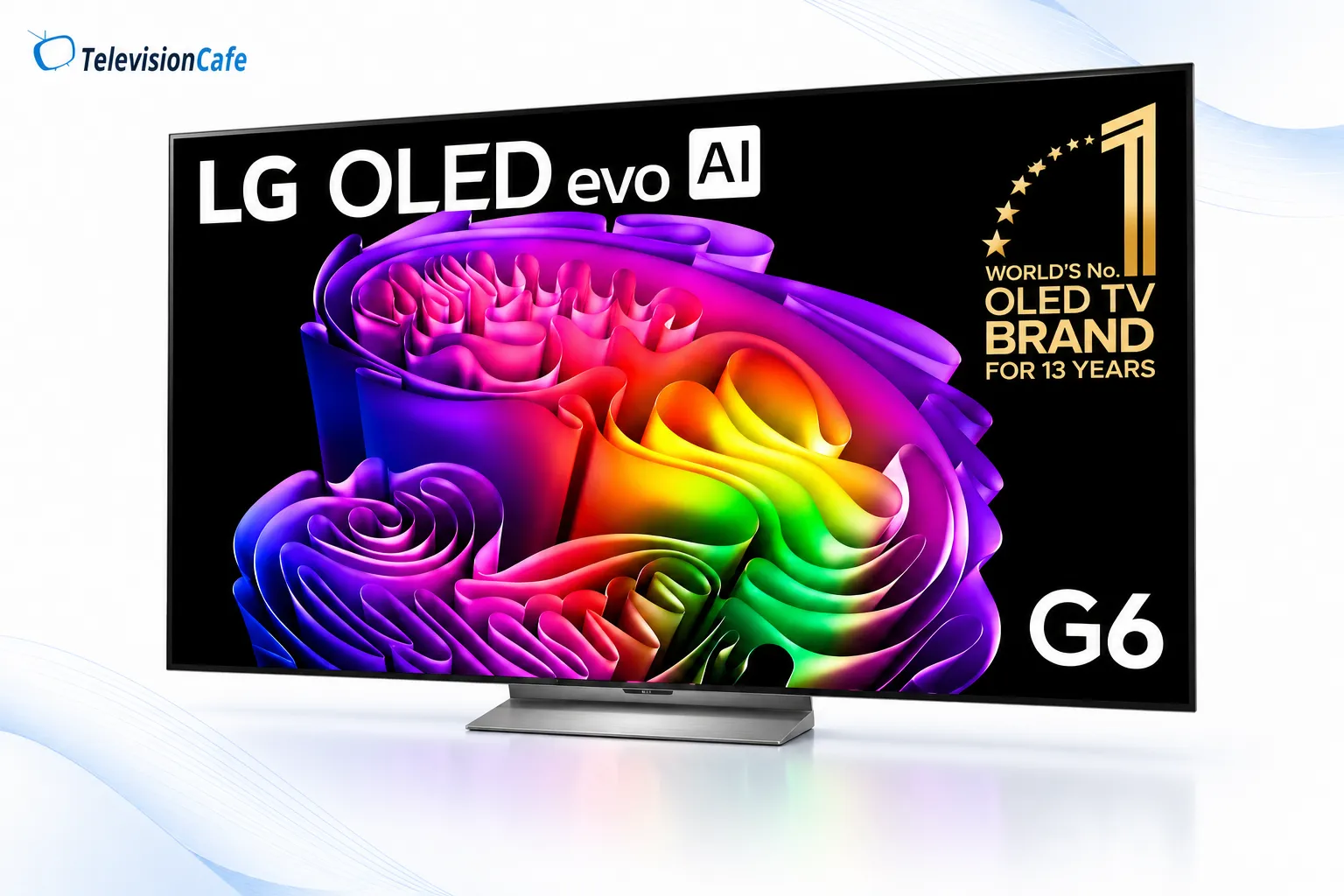
LG G6: The Premium OLED Upgrade, With a 97-Inch Catch
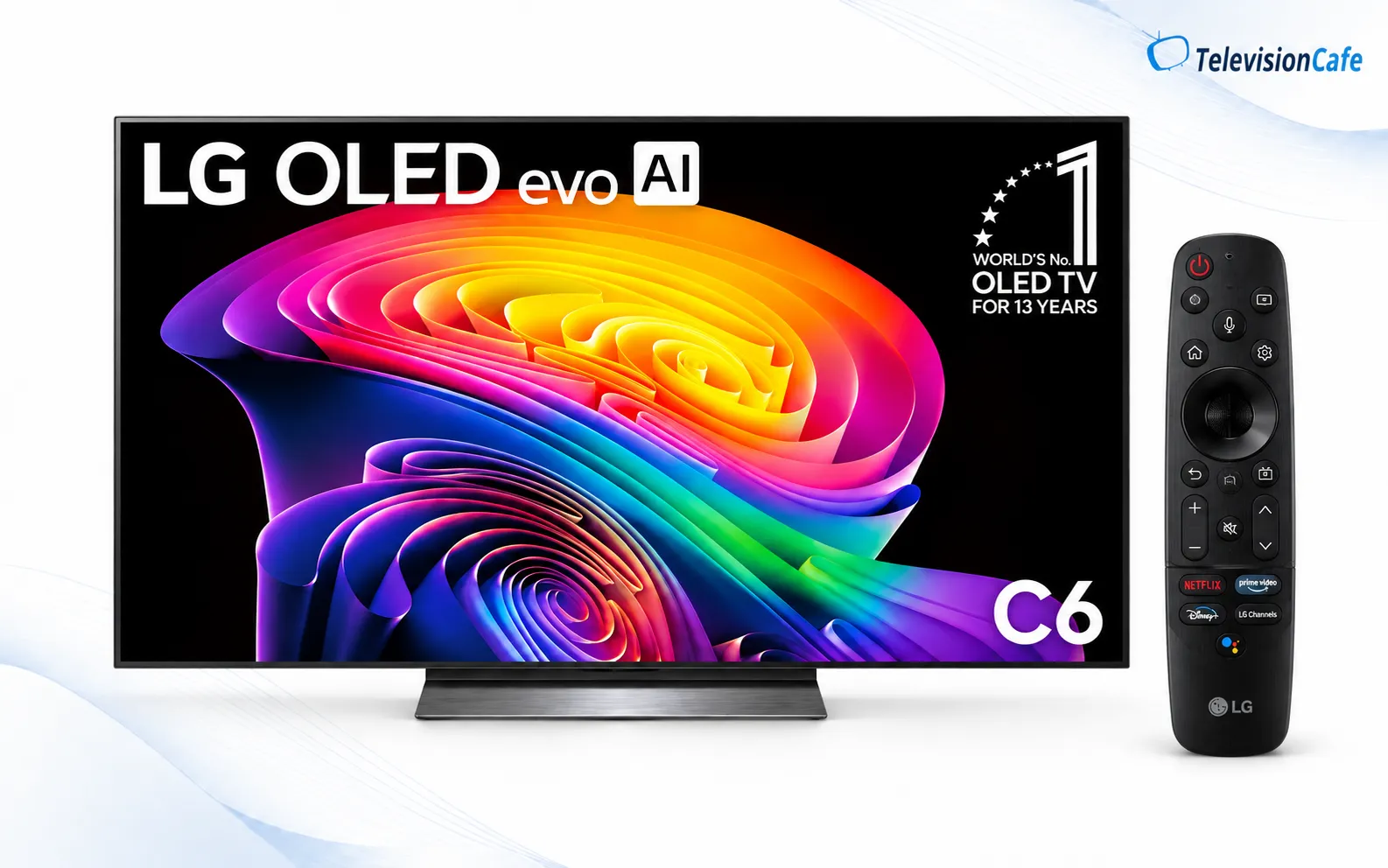
The LG G6 is where the comparison shifts toward premium display features and a wall-focused design. The 55-, 65-, 77- and 83-inch versions feature Hyper Radiant Color, Brightness Booster Ultra and Reflection Free Premium technology.
That makes these G6 sizes particularly interesting if reflections are a recurring frustration. It is worth evaluating the screen treatment in lighting similar to your room before paying the premium.
The 97-inch G6 is a separate case. LG lists ordinary Brightness Booster for that size, and its global OLED announcement excludes the 97-inch version from key Hyper Radiant Color and reflection-treatment claims. Do not assume it is an enlarged 83-inch G6.
LG also offers a five-year limited panel warranty on the G series. Under the published U.S. terms, coverage in years two through five is for the panel; labor is charged. That distinction belongs in the price comparison too.
LG B6: The OLED to Check When Price Comes First
The LG B6 is the starting point in this OLED comparison. Its appeal is straightforward: self-lit pixels and deep blacks without paying for the display features of LG's higher tiers.
LG's U.S. B6AUA listing specifies the Alpha 8 AI Processor Gen3, Dolby Vision, Dolby Atmos and Filmmaker Mode with Ambient Light Technology. The C6 steps up to the Alpha 11 processor, so these are not simply the same TV in different packaging.
For evening movies, the B6 deserves a place on the shortlist. But the value argument depends on the price gap. If a discounted C6 costs only a little more at the same size, compare the upgrade before automatically choosing the entry model.
Who should consider it? Buyers who want OLED contrast and would rather put the remaining budget toward sound, a larger screen, or both.
LG C6: The Sensible Starting Point for an OLED Upgrade
The LG C6 covers 42-, 48-, 55- and 65-inch sizes before the range moves into C6H territory. That makes it particularly relevant if you want a smaller OLED for a bedroom or gaming setup as well as a conventional living-room screen.
Its Alpha 11 AI Processor Gen3 is a meaningful distinction from the B6 on the specification sheet. LG also lists support for up to 4K 165Hz gaming with compatible PC hardware, alongside NVIDIA G-SYNC compatibility and AMD FreeSync Premium.
Brightness claims still need a size check. The 65-inch U.S. listing advertises Brightness Booster, while the 42-inch listing does not carry that same headline feature. A review of one size should not become a promise about every C6.
Our buying approach would be to price the C6 first, then ask what a more expensive model would actually improve in your room. For more detail, read our LG C6 OLED review.
LG C6 vs. C6H: The Size Difference That Changes the Comparison
The 77- and 83-inch C6H models deserve their own line in any serious LG buying guide. LG's U.S. pages identify them with model numbers such as OLED77C6HUP and OLED83C6HUP.
The important upgrade is the display feature package: Hyper Radiant Color Technology and Brightness Booster Pro. Both sizes also use the Alpha 11 AI Processor Gen3 and advertise up to 165Hz gaming with a compatible PC.
This matters when you are comparing a larger C-series TV with a smaller G-series model. The decision is not just more inches versus a higher model number. The C6H has its own display upgrades, so it deserves a fresh comparison.
Check the full model number: Retailers may shorten the name to “C6.” At 77 or 83 inches, look for the C6H identification and read that model's specifications. Do not use a 65-inch C6 review as a complete description of the larger TV.
LG W6 Wallpaper TV: Built Around a Cleaner Installation
The LG W6 is the design-led OLED choice, offered in 77 and 83 inches. Its 9.9mm body and separate Zero Connect Box let you move source connections away from the screen.
This is not merely a decorative TV. LG lists Hyper Radiant Color, Brightness Booster Ultra, Reflection Free Premium and wireless video transmission at up to 4K 165Hz.
The practical question is whether that installation flexibility solves a real problem. If your equipment cabinet is away from the screen, or you want a particularly clean wall, the W6 has a clear purpose. If every device already sits directly beneath the TV, compare the total cost with a G6 installation.
Wireless does not mean cordless: Both the W6 screen and Zero Connect Box need power. LG's U.S. guidance specifies placing the box within 30 feet. Plan outlet locations and follow the installation requirements before arranging the room.
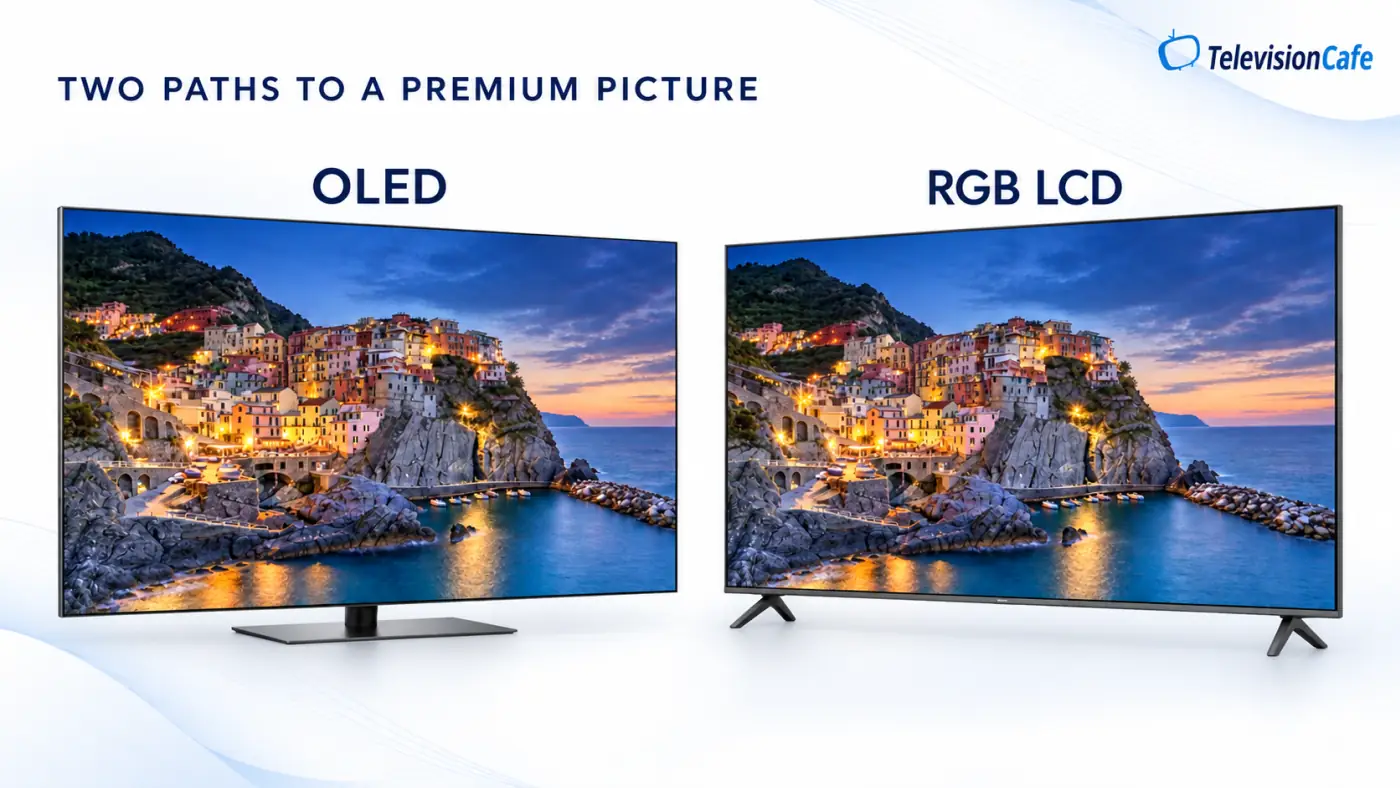
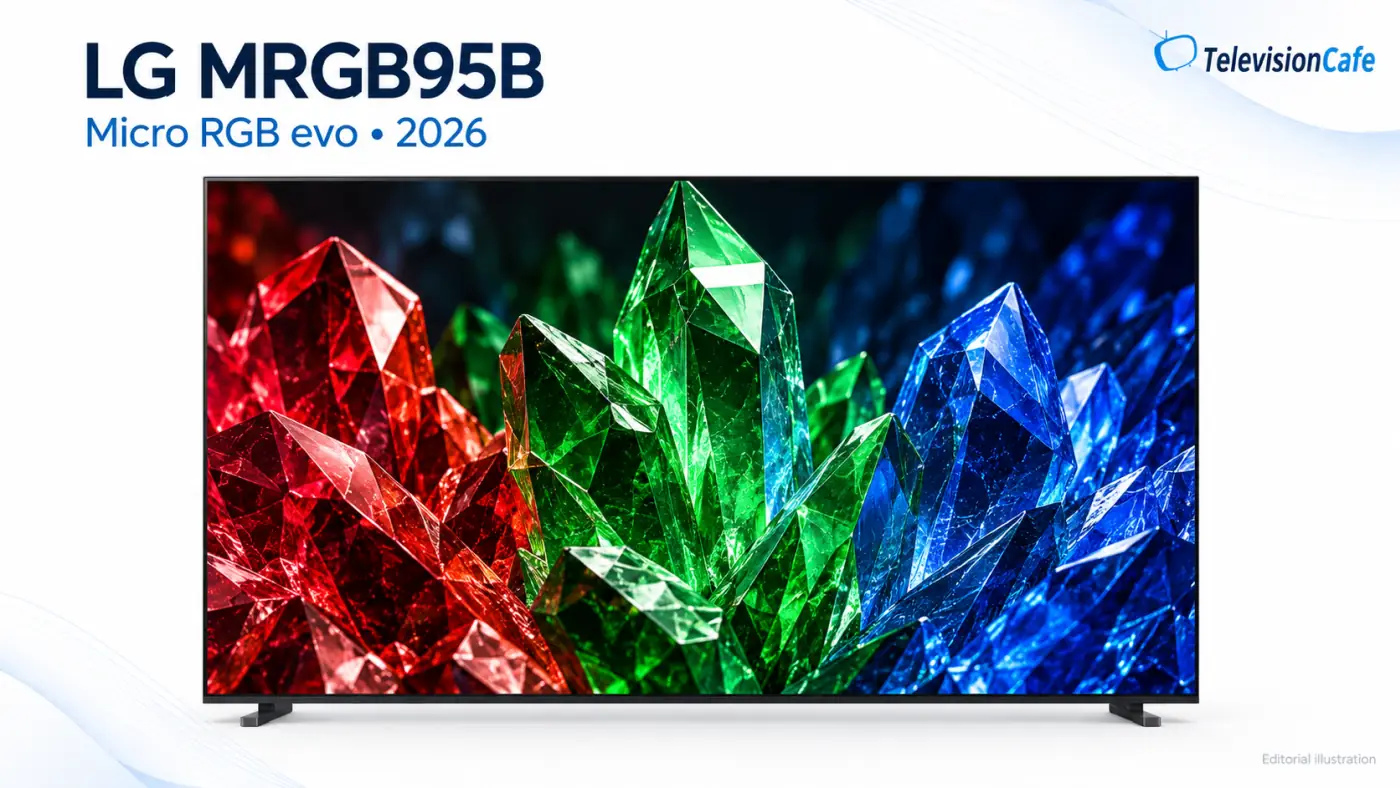
LG Micro RGB evo MRGB95B: A Different Route to a Premium Picture
The MRGB95B moves the discussion from OLED to premium LCD. LG lists 75-, 86- and 100-inch versions in the U.S., with dedicated red, green and blue backlights, the Alpha 11 AI Processor Gen3 and Micro Dimming Technology Ultra.
The RGB backlight is the distinguishing feature. It gives LG another way to pursue richer color, rather than using OLED's self-emitting pixels. LG also lists Dolby Vision and up to 165Hz VRR for compatible PC gaming.
For a large family room, this is a model worth comparing directly with a similarly priced OLED. Look at daylight visibility, dark-scene control and seating angles, not just colorful demonstration footage.
Micro RGB is still LCD. The name does not mean that each image pixel is a self-emitting MicroLED. Backlight control remains important, and the name alone cannot tell you how well a particular scene will look.
LG Mini RGB evo: How MRGB9M and MRGB85 Fit In
LG's global RGB announcement also introduces MRGB9M and MRGB85 under the Mini RGB evo name. They sit alongside the flagship Micro RGB offering, but the similar names should not be treated as proof of identical hardware.
LG describes Mini RGB evo as using Tandem LED technology and the Alpha 8 AI Processor Gen3. Its own footnote explains that these Mini RGB models do not use independent red LED chips in the same way as Micro RGB. The MRGB9M also adds wireless picture transmission.
These are global lineup announcements. A complete U.S. size and retail configuration list for these two families was not verified for this guide. U.S. shoppers should match the exact product listing before making a price comparison with MRGB95B.
LG QNED 2026: Mini LED Options, Including a 115-Inch Flagship
LG's global 2026 QNED announcement identifies QNED90, QNED85, QNED82, QNED8M, QNED80 and QNED70. These are Mini LED LCD families, with features that vary by model.
The headline screen is the 115-inch QNED90, featuring the Alpha 8 AI Processor Gen3, Precision Dimming Ultra and support for 165Hz VRR. LG also highlights a 100-inch QNED85. Those sizes illustrate the range's appeal: a huge viewing area for sports and home entertainment.
Further down the lineup, focus on the exact backlight, refresh-rate and gaming specifications. LG's launch footnotes reserve the 165Hz VRR claim for the 115-inch QNED90; it is not a specification for every QNED.
U.S. availability note: LG names the U.S. among the rollout markets, but its global release is not a complete American size list. The models and headline sizes above are announced globally; verify the U.S. SKU and local availability before ordering.
LG Gallery TV LX7B: The Choice for an Art-Focused Room
The LG Gallery TV LX7B is available in 55- and 65-inch U.S. versions. It combines a Mini LED LCD screen, a matte display and an included attachable white frame.
Its priorities are different from those of a conventional movie-first OLED. The appeal is a screen that looks more at home among framed pictures and furniture, with LG Gallery+ providing artwork and other visual content. Select Gallery+ features require a subscription.
Do not confuse this with the G6's Gallery Design. The LX7B is an LCD art TV; the G6 is an OLED TV. Similar design language does not make their picture hardware interchangeable.
If the TV spends much of the day displaying artwork, the LX7B deserves attention. If the main event is a dark-room movie every evening, compare the OLED alternatives before letting the frame make the decision.
webOS 26 and AI Features: Useful Extras, but Keep the Screen First
LG's 2026 smart TV story centers on webOS 26, personalized profiles and AI-assisted navigation. Depending on the model and market, features include Voice ID, AI Concierge and integrations with Google Gemini and Microsoft Copilot.
These can help with finding content or adjusting settings, but they do not erase the differences between panels, backlights and processors. Two TVs can have similar menus and produce quite different pictures.
LG advertises up to five years of webOS upgrades for its AI TVs. Check the exact product's terms, along with any account, internet or subscription requirements for the services you plan to use.
We would put picture quality, screen size and room suitability ahead of the AI feature list. A voice assistant is convenient; a screen that handles your afternoon window reflections is something you will appreciate every day.

Gaming Features: Read Beyond the Biggest Hertz Number
LG advertises up to 4K 165Hz on the C6, C6H and selected premium OLED models, but reaching that mode requires compatible PC hardware. Do not assume your source device or every game will output the TV's maximum refresh rate.
For a useful comparison, check the resolution and refresh rate together, then confirm VRR support and the capabilities of the HDMI inputs you will actually use. If you connect an audio system through eARC, include that occupied port in your setup plan.
Also keep pixel response time separate from input lag. A quoted 0.1ms response time describes pixel transitions; it does not mean a button press reaches the screen in 0.1ms.
The same caution applies to Motion Booster branding on LCD models. Treat the advertised mode as a specific feature to investigate, rather than assuming the largest number represents native 4K input support.
Which LG 2026 TV Should You Buy?
For an everyday OLED upgrade, compare C6 and C6H first. They provide a useful reference point for deciding whether to save with a B6 or spend more on a G6. Use the model that actually exists at your preferred size, rather than comparing entire series as if they were uniform.
For a room with difficult lighting, evaluate the screen in context. The relevant G6 sizes and W6 advertise LG's premium reflection treatment. The Micro RGB LCD is another candidate to investigate. A showroom's bright demo loop will not tell you which handles your particular windows best.
For the biggest movie-night upgrade, compare size before climbing the range. A larger TV at a lower tier may be more satisfying from a distant couch. In a small room, a smaller premium model may make more sense.
A useful size fact: A 77-inch 16:9 screen has about 40% more display area than a 65-inch 16:9 screen. That is why a “12-inch upgrade” can feel much bigger than the number suggests.
For design, decide what you want the screen to do. Choose the W6 shortlist for a thin OLED installation with remote connections, or the LX7B shortlist for framed artwork. They solve different room-design problems.
Finally, compare current same-size prices and the full installed cost. A stand, mounting work and better audio can change which package offers the best value. A premium model is worth the extra money when its advantages match the way you watch.
LG 2026 TV Lineup FAQ
- Is the LG C6H the same TV as the C6?
- No. LG's 77- and 83-inch C6H listings include Hyper Radiant Color and Brightness Booster Pro. Treat them separately from the smaller C6 models when comparing display features.
- Is every LG G6 size identical apart from screen size?
- No. The 97-inch G6 has important display-feature exceptions. Check its own specifications instead of applying a review of a smaller G6 to it.
- Is the LG W6 completely wireless?
- No. The connection carrying video and audio from the Zero Connect Box is wireless, but the television and box still require power.
- Is Micro RGB the same as OLED?
- No. LG's Micro RGB evo is an LCD TV with an RGB backlight. OLED uses self-emitting pixels and does not need that backlight.
- Does QNED automatically mean 165Hz?
- No. Refresh-rate capabilities vary. LG's global 2026 QNED launch specifically assigns its 165Hz VRR claim to the 115-inch QNED90.
- Should I buy the most expensive LG TV I can afford?
- Only if its advantages are useful to you. The right screen size, suitable reflection handling and good audio can be more rewarding than moving up a model tier for features you rarely use.