
LG C5 vs C6: Is the New OLED Worth Paying More For?
The LG C5 vs C6 decision looks straightforward: buy last year's OLED at a discount, or pay more for the latest model. But this year, screen size changes the answer almost as much as price.
The C6 brings a newer processor and a higher PC gaming refresh-rate ceiling. More unusually, there are meaningful panel differences within the C6 family. A 48-inch C6, a 65-inch C6 and a 77-inch C6H should not be treated as the same television in different boxes.
Our buying recommendation: Choose the C6 when the same-size price gap is small. A substantially cheaper C5 can still be the better purchase, especially at 55 or 65 inches. At 48, 77 and 83 inches, look more closely at the C6's panel upgrade before deciding that the older TV is the bargain.
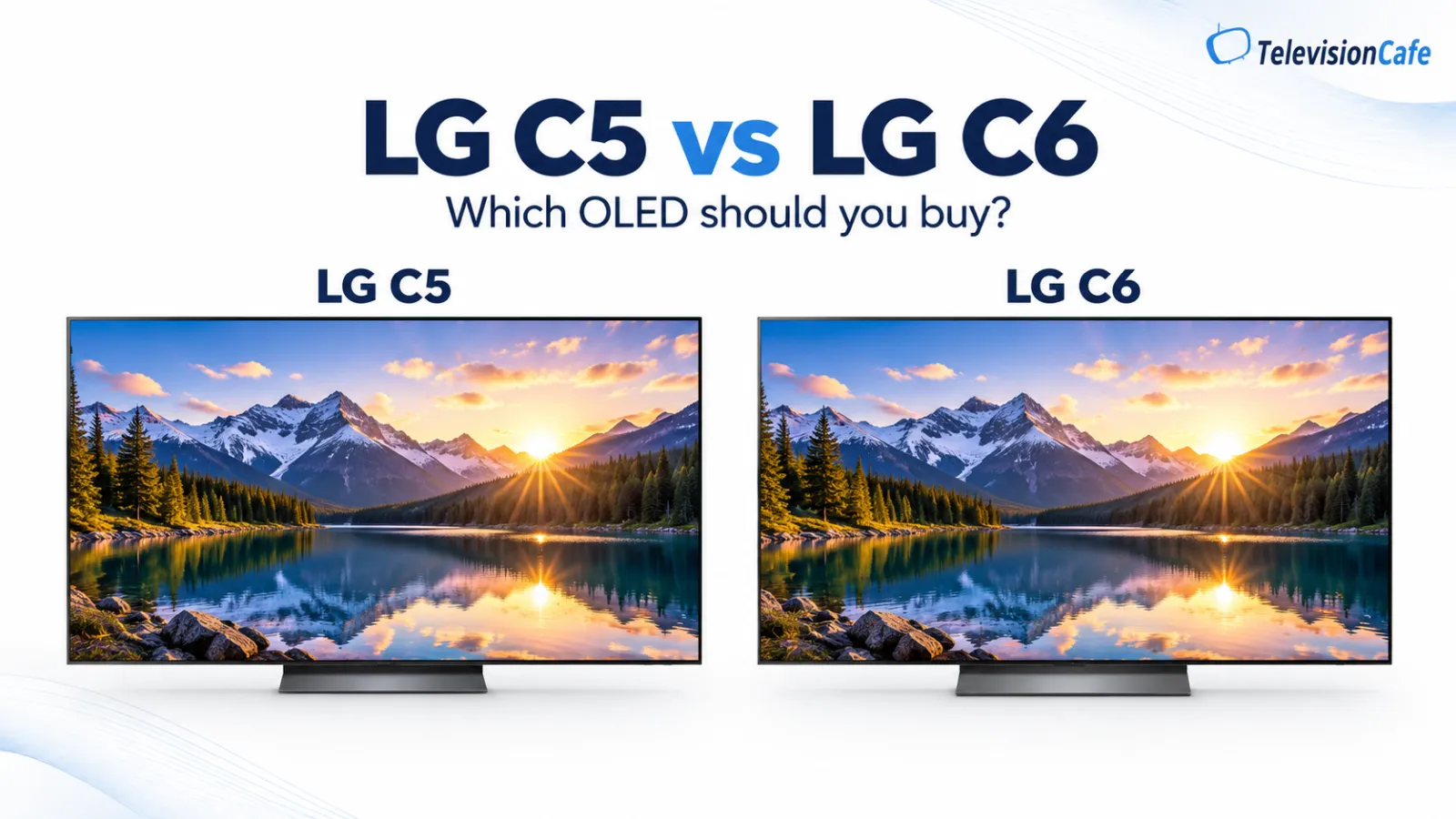
Comparison checked: September 16, 2026. This guide combines LG specifications with published independent testing; it is not a hands-on comparison conducted by TelevisionCafe. US model numbers and prices are used where specified. Regional configurations and offers can differ.
LG C5 vs C6: The Key Differences at a Glance
| Feature | LG C5 | LG C6 / C6H |
|---|---|---|
| Model year | 2025 | 2026 |
| Resolution | 4K UHD | 4K UHD |
| Processor | Alpha 9 AI Gen8 | Alpha 11 AI Gen3 |
| Maximum PC refresh rate | Up to 144Hz | Up to 165Hz |
| 4K 120Hz gaming, VRR and ALLM | Yes | Yes |
| HDMI inputs | 4; eARC on HDMI 2 | 4; eARC on HDMI 2 |
| HDR formats | Dolby Vision, HDR10, HLG | Dolby Vision, HDR10, HLG |
| Launch smart TV platform | webOS 25 | webOS 26 |
Refresh-rate terminology needs a little care. LG's regional specification sheets list the 65-inch C5 as 120Hz native with VRR up to 144Hz, and the 65-inch C6 as 120Hz native with VRR up to 165Hz. The higher figures describe supported gaming operation with suitable hardware, not the frame rate of everything you watch.
Choose Your Screen Size First: The C6 Panel Difference
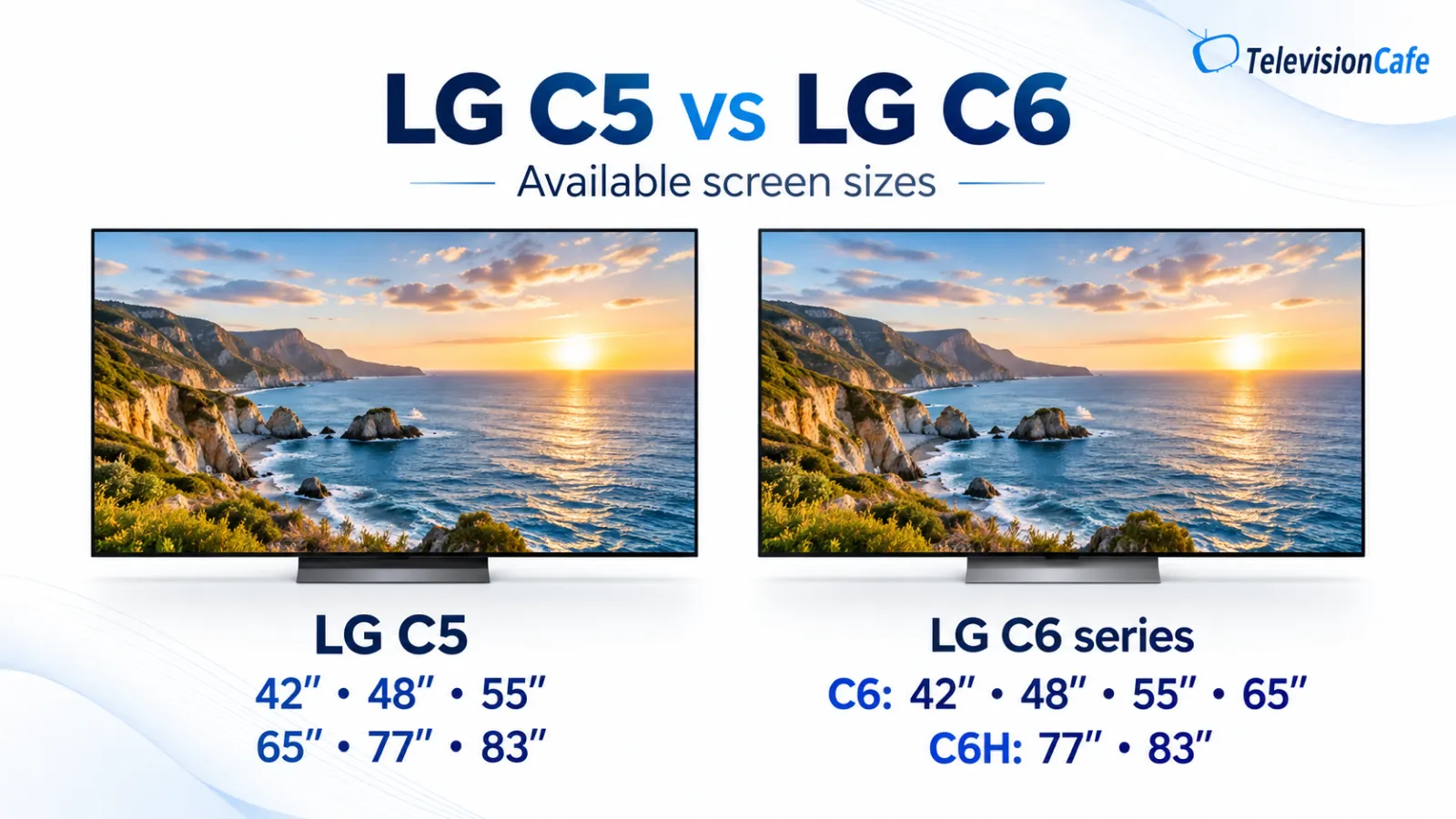
For this comparison, the most useful starting point is the exact television you intend to buy. Here is the C6 family breakdown for the US models covered by the cited independent tests.
| Screen size | US model | Panel distinction |
|---|---|---|
| 42 inches | OLED42C6PUA | Conventional WOLED; no Brightness Booster |
| 48 inches | OLED48C6PUA | Tandem OLED; Brightness Booster |
| 55 and 65 inches | OLED55C6PUA / OLED65C6PUA | OLED EX WOLED; Brightness Booster |
| 77 and 83 inches | OLED77C6HUP / OLED83C6HUP | Tandem OLED; Hyper Radiant Color and Brightness Booster Pro |
The 48-inch model deserves special attention. RTINGS' dedicated test identifies a Tandem OLED panel in that size, so early descriptions that group every 42-to-65-inch C6 together miss an important exception.
For shoppers, that changes the research process: use a review of your intended size, then compare prices. A glowing assessment of the 77-inch C6H does not establish how the 65-inch C6 performs.
Buying a 48-inch OLED? Put the 48-inch C6 on your shortlist separately. It deserves a closer look than a blanket “buy the cheaper C5” recommendation allows.
Picture Quality: How Much Better Is the LG C6?
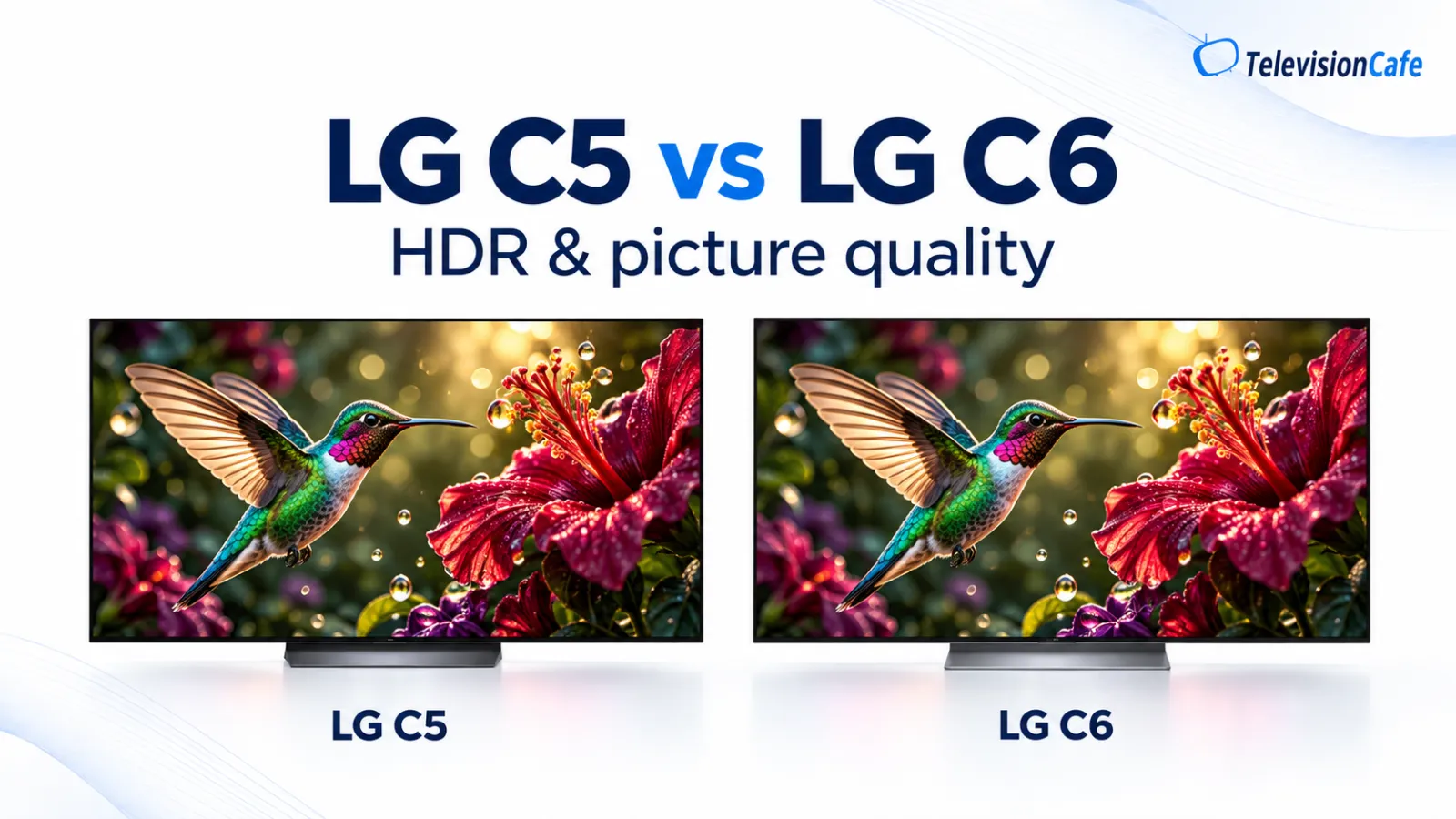
At 55 and 65 inches, think refinement rather than a reason to replace a perfectly good C5. RTINGS' comparison describes relatively small overall differences, with the C6 improving brightness in some scenes and producing smoother color gradients. AVForums' separate 65-inch test reported a larger peak-brightness gain under its test conditions.
Those findings are a good reason to avoid reducing the upgrade to one universal percentage. Picture mode, firmware, test pattern and scene brightness all affect the result. A small HDR highlight and a screen full of bright snow ask different things of an OLED panel.
Better gradients can be useful in everyday viewing. Think of a sunset that should fade smoothly from orange to blue: visible steps between shades can distract more than a modest difference in maximum brightness.
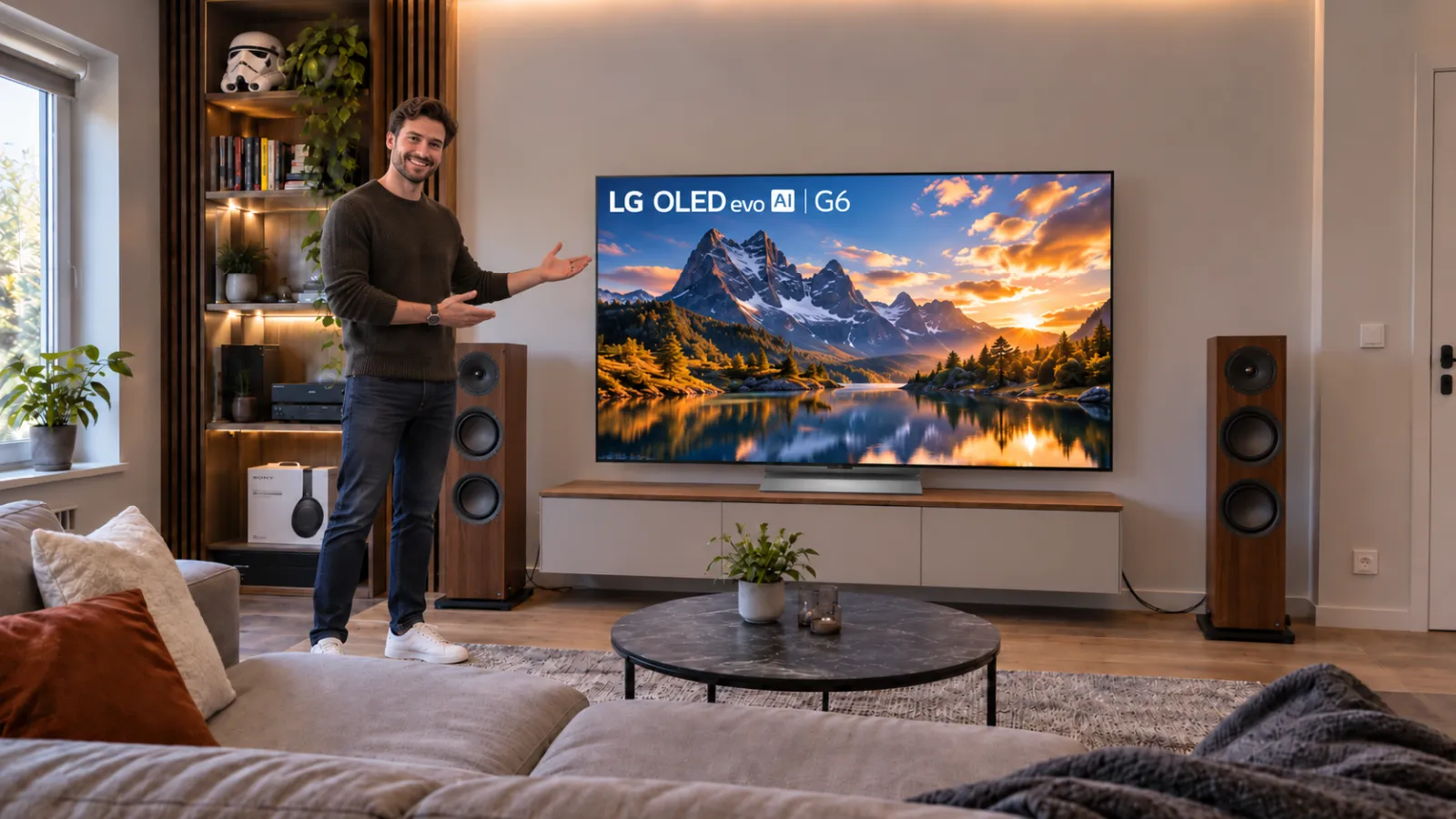
The larger C6H makes a stronger picture-quality case. RTINGS' testing found a clearer brightness and color improvement over the C5. That gives a movie enthusiast a more concrete reason to consider the premium at 77 or 83 inches.
Our assessment: If you watch films in a dark room and the 65-inch C5 costs substantially less, it remains a sensible choice. If HDR impact is your priority at a larger size, investigate the C6H before settling for the saving.
Bright Rooms and Sports: Think Beyond Peak Brightness
Before spending more, look at the room. Is there a window directly opposite the screen? Do you watch football on sunny afternoons, or mostly stream after dinner? The answer can matter more than a processor upgrade.
RTINGS identifies direct reflections as a limitation of the standard C6. Extra brightness does not make a reflected window disappear. We would first consider the TV's position and light control, then decide whether the newer model addresses the actual problem.
For sports, try to judge the source you will really use. A pristine demo clip tells you little about a compressed live broadcast. Look at pitch detail, camera pans and score graphics, ideally with comparable picture settings on both TVs.
Also resist choosing the C6 for sports simply because its specification mentions 165Hz. That figure is aimed at compatible PC gaming; it does not turn a sports broadcast into a 165-frame-per-second feed.
Gaming: Does 165Hz Make the C6 Worth It?
The C6 raises the maximum supported PC refresh rate from the C5's 144Hz to 165Hz. Both offer VRR, NVIDIA G-SYNC compatibility and AMD FreeSync Premium, so choosing the C5 does not mean abandoning the key features of a modern gaming OLED.
For PS5 and Xbox Series X users, the headline refresh-rate difference is not a deciding advantage: those consoles target output up to 120Hz, with game-dependent frame rates and resolution. Both TVs already support 4K 120Hz input.
A powerful gaming PC can make use of the C6's extra headroom. Even then, keep the scale of the upgrade in perspective. At a steady 144fps, a frame lasts about 6.94 milliseconds; at 165fps, about 6.06 milliseconds. That is roughly 0.88 milliseconds less per frame, not a measurement of either TV's total input lag.
Ask what you play. If your favorite game runs at 80fps on your PC, a 165Hz ceiling will not magically produce the missing frames. Competitive players who can sustain very high frame rates have a better reason to pay for it.
Gaming recommendation: For console-only use, prioritize the price and screen size. For a fast gaming PC, count 165Hz as a useful C6 advantage, but weigh it against the games and frame rates you actually run.
Smart Features, Sound and Connections
The C5 launched with webOS 25, while the C6 launched with webOS 26. Treat those as launch versions, not a promise that the older television's software will remain frozen. Check current regional app support if one particular service is essential to you.
Our advice is to put specific functions ahead of broad AI branding. Will you use voice search? Do you mainly watch through an external streaming box? A feature you never open should carry little weight in the price comparison.
Both sets provide four HDMI inputs, with eARC on HDMI 2. Plan your connections before buying: a soundbar using that connection leaves three HDMI inputs for other devices.
For a movie-focused setup, consider the entire budget. A worthwhile saving on the C5 could contribute toward dedicated audio. We would rather evaluate the TV and sound system together than spend the whole budget on a newer model number without considering the listening experience.
For more detail on each television, read our LG C5 review and LG C6 review.

LG C5 vs C6 Prices: The Discount Changes the Verdict
Compare actual selling prices on the same day. Comparing a discounted C5 with the C6's original launch price can make the newer television look much more expensive than it is.
On September 16, 2026, LG's US product pages displayed the following prices. These are a dated manufacturer-store snapshot, not a claim about the lowest available price.
| Size | C5 | C6 / C6H | Extra cost |
|---|---|---|---|
| 65 inches | $1,499.99 | $1,599.99 | $100 |
| 77 inches | $2,199.99 | $2,599.99 | $400 |
| 83 inches | $3,499.99 | $4,299.99 | $800 |
Prices are in US dollars and exclude any applicable sales tax. Offers, availability and bundles can change. Check local prices separately outside the US.
At that 65-inch price gap, we would buy the C6, assuming comparable warranty, condition and delivery terms. Saving $100 would not be enough to steer us toward the older model.
At 77 inches, the extra $400 deserves consideration because the C6H introduces a more substantial display upgrade. At 83 inches, $800 is a bigger budget decision. A buyer building a complete home theater may prefer to keep that money for audio, installation or other priorities.
If a retailer offers a much deeper C5 discount, reassess. Check whether the offer is for a new, open-box or display unit, and compare the warranty and return policy before treating two prices as equivalent.
Should You Upgrade If You Already Own an LG C5?
Our recommendation is to keep a C5 you are happy with. Choosing between two TVs when you need one is a different decision from replacing a television you already own.
Write down the improvement you want before shopping. Is the screen too small? Are reflections bothering you? Do you have a PC capable of exploiting a higher refresh rate? A specific problem gives you something useful to evaluate.
If the only answer is “the C6 is newer,” we would wait. Consider an upgrade when it also delivers something substantial for your setup, such as a larger screen that suits your viewing distance. Account for the cost of replacement, installation and selling the old set, not just the difference between two retail listings.
Which Should You Buy: LG C5 or LG C6?
Buy the LG C6 when prices are close. That is our recommendation for the 65-inch models at the dated US prices above. You avoid paying almost the same amount for the previous generation.
Buy the LG C5 when the saving is substantial and useful to you. It is especially appealing when the discount makes your preferred screen size affordable or leaves room for a better sound system.
Give the 48-inch C6 and larger C6H models their own comparison. Their panel differences mean a verdict based solely on the 65-inch sets is incomplete.
The purchase we would avoid is the one made from a model year alone. Choose the size, compare the exact versions and check the final prices. That is how you find the better television for your money.
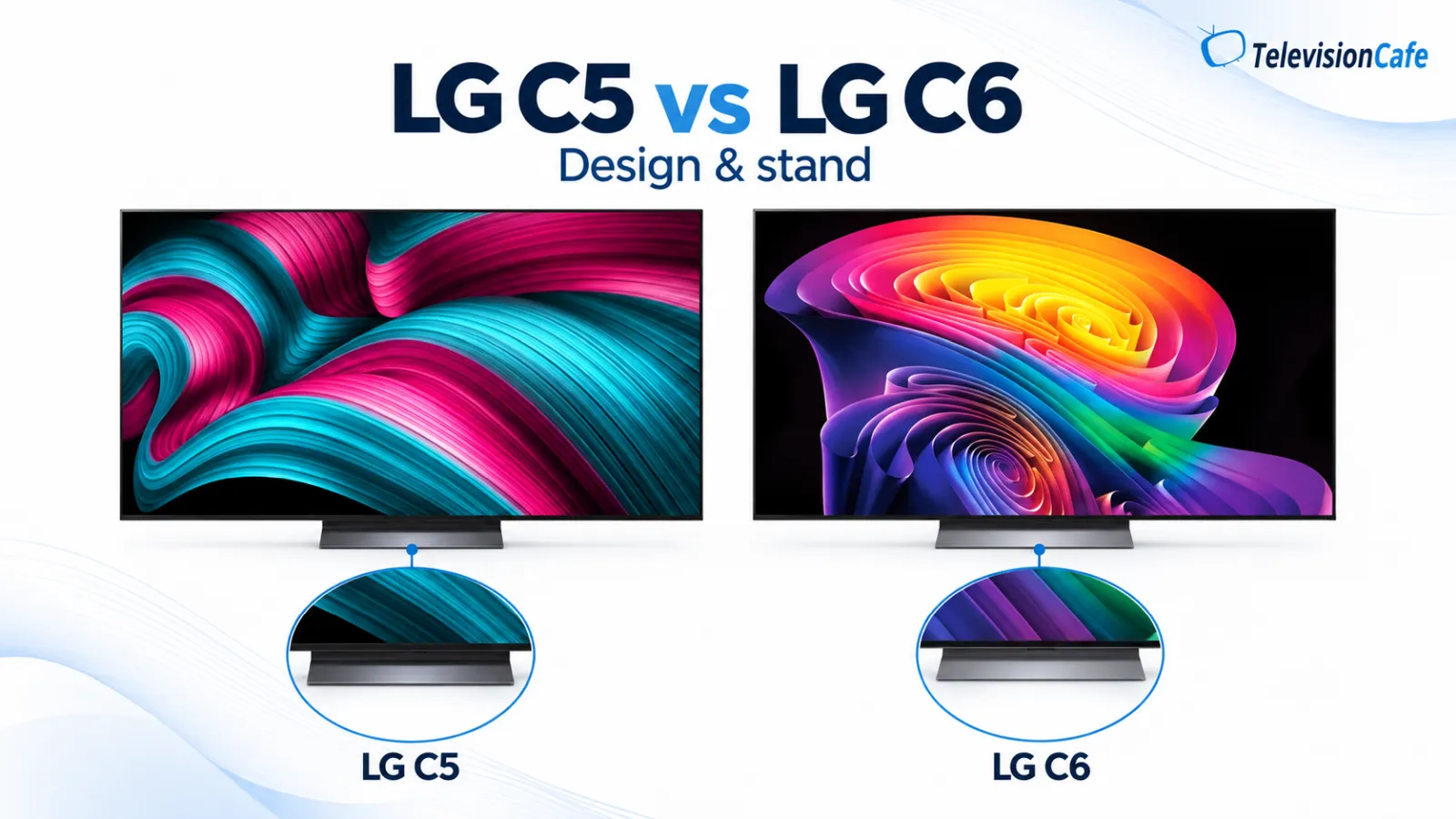
Is the LG C6 Better Than the LG C5?
The C6 adds a newer processor and a higher maximum PC refresh rate, but the extent of the picture upgrade depends on screen size. Our buying advice is to favor the C6 at a small price premium and reconsider the C5 when its discount is substantial.
Do All LG C6 TVs Have a Tandem OLED Panel?
No. The tested US 48-inch C6 uses Tandem OLED, as do the 77- and 83-inch C6H models. The 42-, 55- and 65-inch C6 models in the cited size breakdown use a different panel configuration. Check the exact model and region before buying.
Is the LG C6's 165Hz Refresh Rate Better for PS5?
It does not raise the PS5's output beyond its supported 120Hz ceiling. Both the C5 and C6 accept 4K 120Hz input. For a PS5 setup, compare picture quality, size and price instead of paying extra solely for 165Hz.