
LG G6 vs Samsung S95H: Which OLED TV Wins in 2026?
LG G6 vs Samsung S95H: Two Very Different Flagship OLEDs
The LG G6 and Samsung S95H are two of the most advanced OLED TVs available in 2026, but they reach the same goal in very different ways.
LG's G6 uses the company's latest Primary RGB Tandem OLED technology on most screen sizes, paired with a glossy screen, Dolby Vision support and LG's Alpha 11 AI Processor Gen3.
Samsung takes a different approach with the S95H. Its most common 55-, 65- and 77-inch versions use QD-OLED, a matte Glare Free screen and Samsung's NQ4 AI Gen3 processor. It also supports HDR10+ rather than Dolby Vision.
Both TVs deliver perfect OLED blacks, excellent HDR performance, four HDMI 2.1 connections and gaming at up to 165Hz. The important differences appear in color, reflections, processing, HDR format support and how each screen behaves in a bright room.
If you are deciding between the LG G6 and Samsung S95H, this comparison breaks down where each TV wins and which one makes more sense for your room and viewing habits.
LG G6 vs Samsung S95H: Quick Verdict
The Samsung S95H has a slight overall advantage, but the LG G6 is the better TV for several important types of buyers.
The Samsung produces brighter, more saturated HDR colors and has one of the most effective anti-reflection coatings available on an OLED TV. It also offers exceptional gaming performance and very wide viewing angles.
The LG G6 counters with a glossy OLED image that maintains deeper-looking blacks in ambient light, better processing for lower-quality content and Dolby Vision support.
In a dark home theater, the two TVs are extremely close. In a room with troublesome direct reflections, the Samsung is easier to watch. For movies, streaming and mixed-quality sources, the LG's processing and Dolby Vision support can make it the more attractive choice.
Overall winner: Samsung S95H — by a very small margin.
LG G6 vs Samsung S95H Specifications
| Feature | LG G6 | Samsung S95H |
|---|---|---|
| Model year | 2026 | 2026 |
| Panel technology | Primary RGB Tandem OLED on 55–83" | QD-OLED on selected 55–77" models |
| Resolution | 3840 × 2160 | 3840 × 2160 |
| Maximum refresh rate | Up to 165Hz VRR | Up to 165Hz VRR |
| Processor | Alpha 11 AI Processor Gen3 | NQ4 AI Gen3 Processor |
| HDR | Dolby Vision, HDR10, HLG | HDR10+, HDR10, HLG |
| Dolby Vision | Yes | No |
| HDR10+ | No | Yes |
| Screen finish | Glossy | Matte Glare Free |
| HDMI | 4 × HDMI 2.1 | 4 × HDMI 2.1 |
| Gaming | 4K/120Hz, up to 165Hz VRR, G-Sync, FreeSync | 4K/120Hz, up to 165Hz VRR, FreeSync |
| Smart platform | webOS 26 | One UI Tizen |
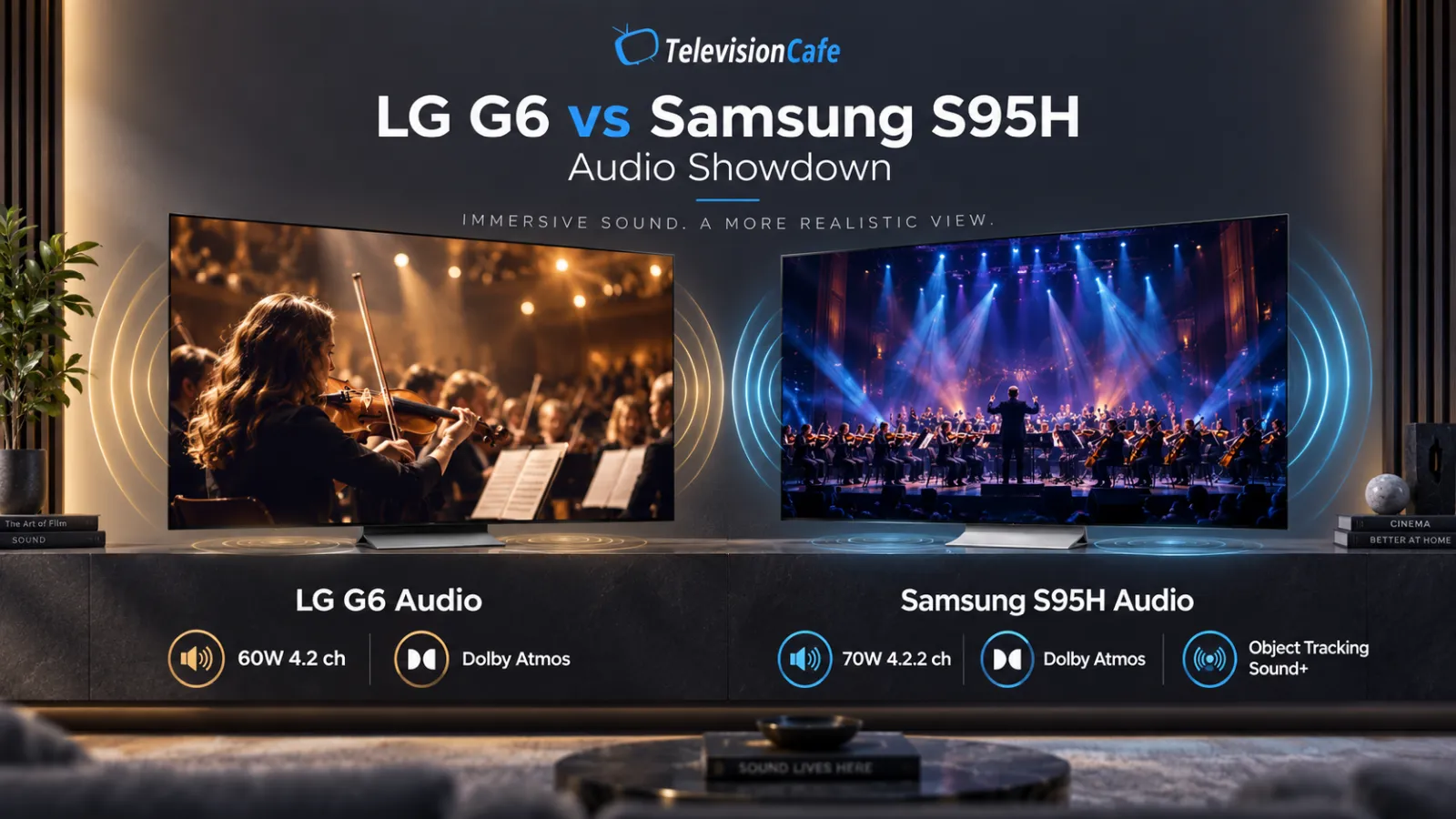
| Audio | 60W, 4.2-channel, Dolby Atmos | 70W, 4.2.2-channel, Dolby Atmos |
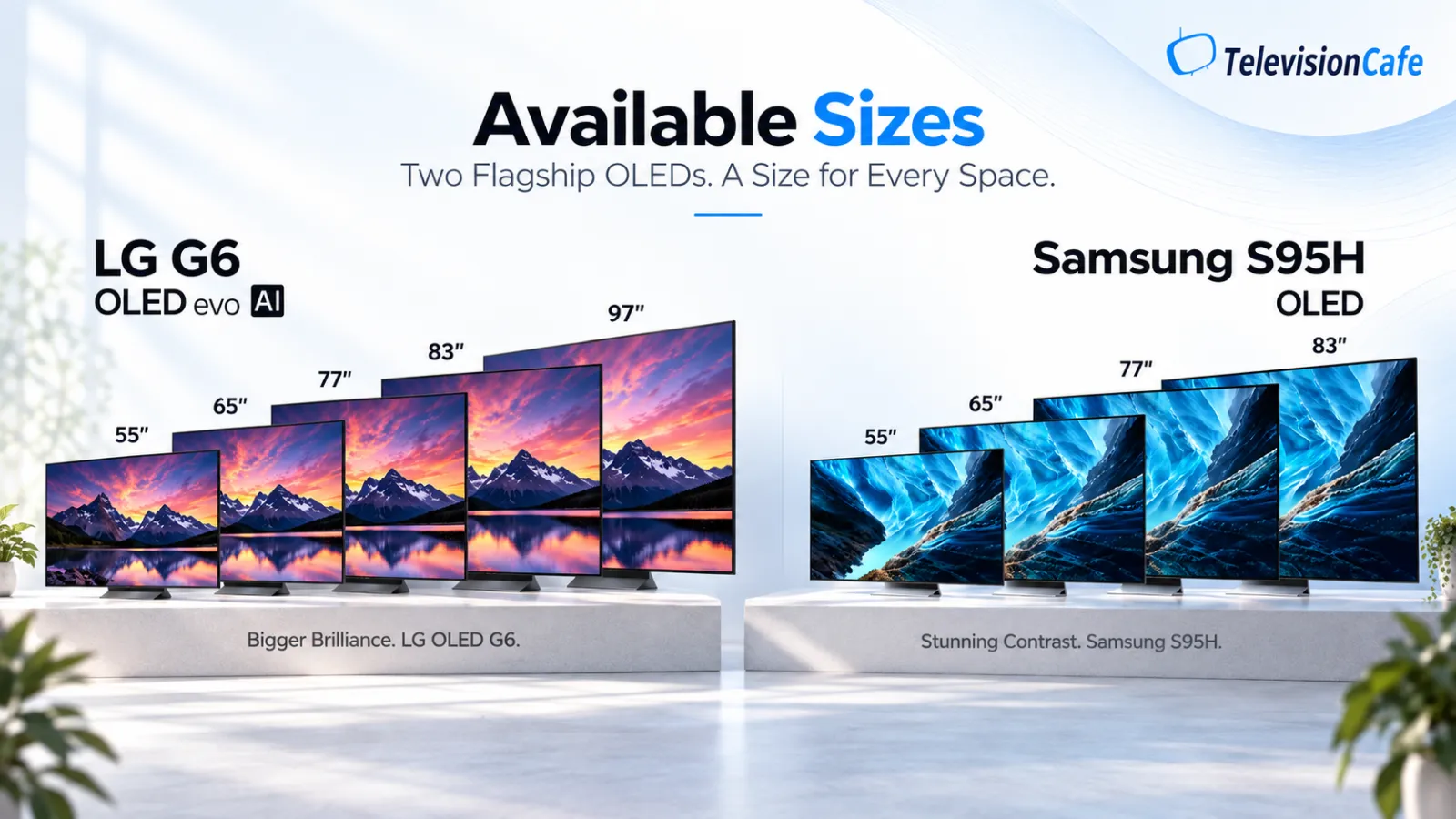
| Typical sizes | 55, 65, 77, 83, 97" | 55, 65, 77, 83" |
Panel technology and model naming can vary by screen size and region. Always check the exact model code before buying.
QD-OLED vs RGB Tandem OLED: The Biggest Technical Difference
The biggest difference between these TVs begins with the panel itself.
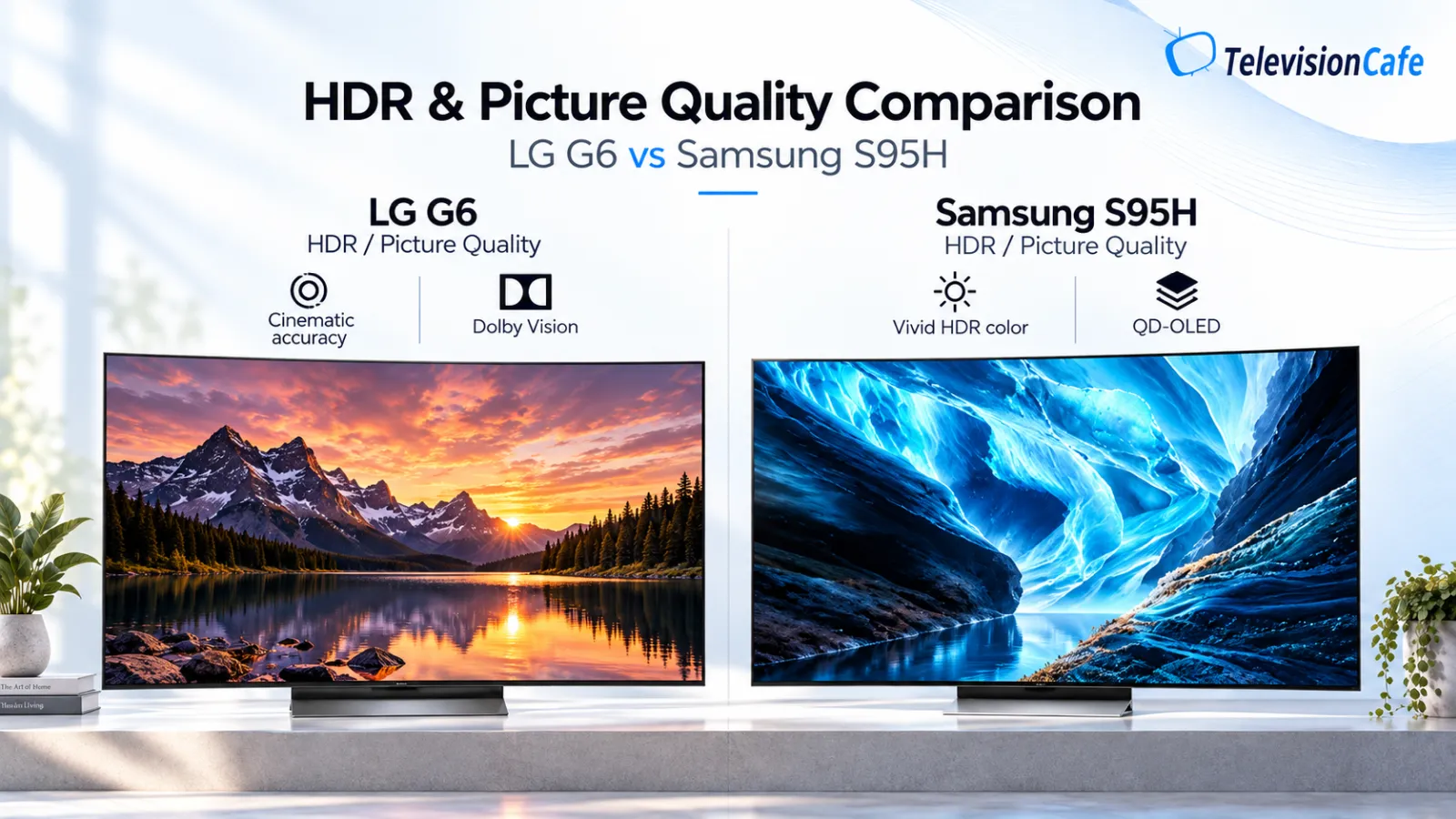
The Samsung S95H uses QD-OLED technology on its main 55-, 65- and 77-inch North American versions. QD-OLED is particularly good at producing extremely bright, saturated colors because it does not rely on the same white subpixel approach used by many traditional OLED panels.
The LG G6 uses a newer Primary RGB Tandem OLED architecture on its 55-, 65-, 77- and 83-inch models. LG stacks multiple OLED layers to increase efficiency and brightness while maintaining the deep blacks and pixel-level control OLED is known for.
In real-world HDR content, the Samsung often produces more intense reds, greens and other saturated colors. The LG still looks extremely colorful, but its biggest advantage is the combination of high brightness with a more traditional glossy OLED presentation.
Neither technology is universally better. Samsung emphasizes maximum color volume, while LG delivers a more familiar cinematic OLED look with excellent highlight brightness and strong processing.
HDR Performance: Samsung Wins Color, LG Holds Brightness Better
HDR is where the personality of these two OLED TVs becomes much more obvious.
The Samsung S95H can produce exceptionally bright saturated colors. Neon signs, colorful reflections, fire, animated movies and vivid game worlds can appear more intense than on the LG.
The G6 is also a very bright OLED, and its new panel can sustain bright highlights extremely well. In some demanding scenes, the LG can maintain peak brightness for longer than the Samsung.
In normal HDR viewing, however, that sustained-brightness advantage is unlikely to be obvious very often.
If your definition of great HDR is maximum color impact, the Samsung has the edge. If you prefer a slightly more controlled, cinematic presentation, the LG remains extremely impressive.
Winner: Samsung S95H.
Dark Room Performance: Almost Impossible to Separate
If you mainly watch movies at night, both televisions are outstanding.
Because every OLED pixel produces its own light, black pixels can switch completely off. There is no local-dimming backlight, so stars, subtitles and bright objects can appear directly beside pure black without visible blooming.
The LG G6's glossy coating gives dark scenes a rich, high-contrast appearance that many home-theater fans will immediately recognize as the classic premium OLED look.
The Samsung S95H produces equally deep blacks when the room is dark, while its QD-OLED panel can add extra intensity to highly saturated HDR colors.
For black level alone, there is effectively no meaningful winner in a dark room.
Winner: Tie.
Bright Room Performance: Two Different Ways to Fight Reflections
This category is more complicated than simply asking which TV gets brighter.
The Samsung S95H uses a matte Glare Free coating that does an exceptional job of diffusing reflections from windows and lamps. Direct reflections are far less distracting than they are on a conventional glossy screen.
The disadvantage is that strong ambient light can raise the apparent black level of the QD-OLED panel. Black areas may look slightly gray or purple instead of maintaining the deep black appearance seen in a dark room.
The LG G6 uses a glossy coating. Reflections are more visible, but the panel maintains its black level and image depth better as ambient light increases.
That creates an unusual choice. If you have a window or lamp directly reflected in the screen, the Samsung is usually better. If your room is bright but does not have severe direct reflections, the LG can preserve the richer OLED look more effectively.
Reflection handling winner: Samsung S95H.
Ambient black-level winner: LG G6.
Upscaling and Processing: LG G6 Takes the Lead
Perfect 4K demo footage looks excellent on almost every premium television. Picture processing becomes much more important when the source is not perfect.
The LG G6 performs particularly well with lower-resolution television broadcasts, compressed streaming video and content that contains visible compression artifacts.
Its Alpha 11 AI Processor Gen3 does a strong job of smoothing poor-quality material without excessively removing real detail.
Samsung's NQ4 AI Gen3 processor also produces very sharp 4K images and strong upscaling, but it is less effective at cleaning up some heavily compressed streaming content.
If you spend most of your time watching premium 4K streams or Ultra HD Blu-rays, the difference will be small. If you also watch cable TV, YouTube or lower-quality streaming sources, the LG has the advantage.
Winner: LG G6.
Dolby Vision vs HDR10+: LG and Samsung Still Disagree on HDR
HDR format support remains one of the easiest ways to choose between these TVs.
The LG G6 supports Dolby Vision, HDR10 and HLG. Dolby Vision is widely used by streaming platforms and Ultra HD Blu-ray releases, making the G6 particularly attractive to movie collectors and home-theater enthusiasts.
Samsung continues to skip Dolby Vision. The S95H instead supports HDR10+, HDR10 and HLG.
Both Dolby Vision and HDR10+ can use dynamic metadata to optimize HDR scene by scene, but Dolby Vision remains more widely associated with premium streaming and physical movie releases.
If Dolby Vision is important to your setup, the decision is simple.
Winner for format compatibility: LG G6.
Gaming: Both Are Among the Best TVs You Can Buy
Gamers are unlikely to be disappointed by either model.
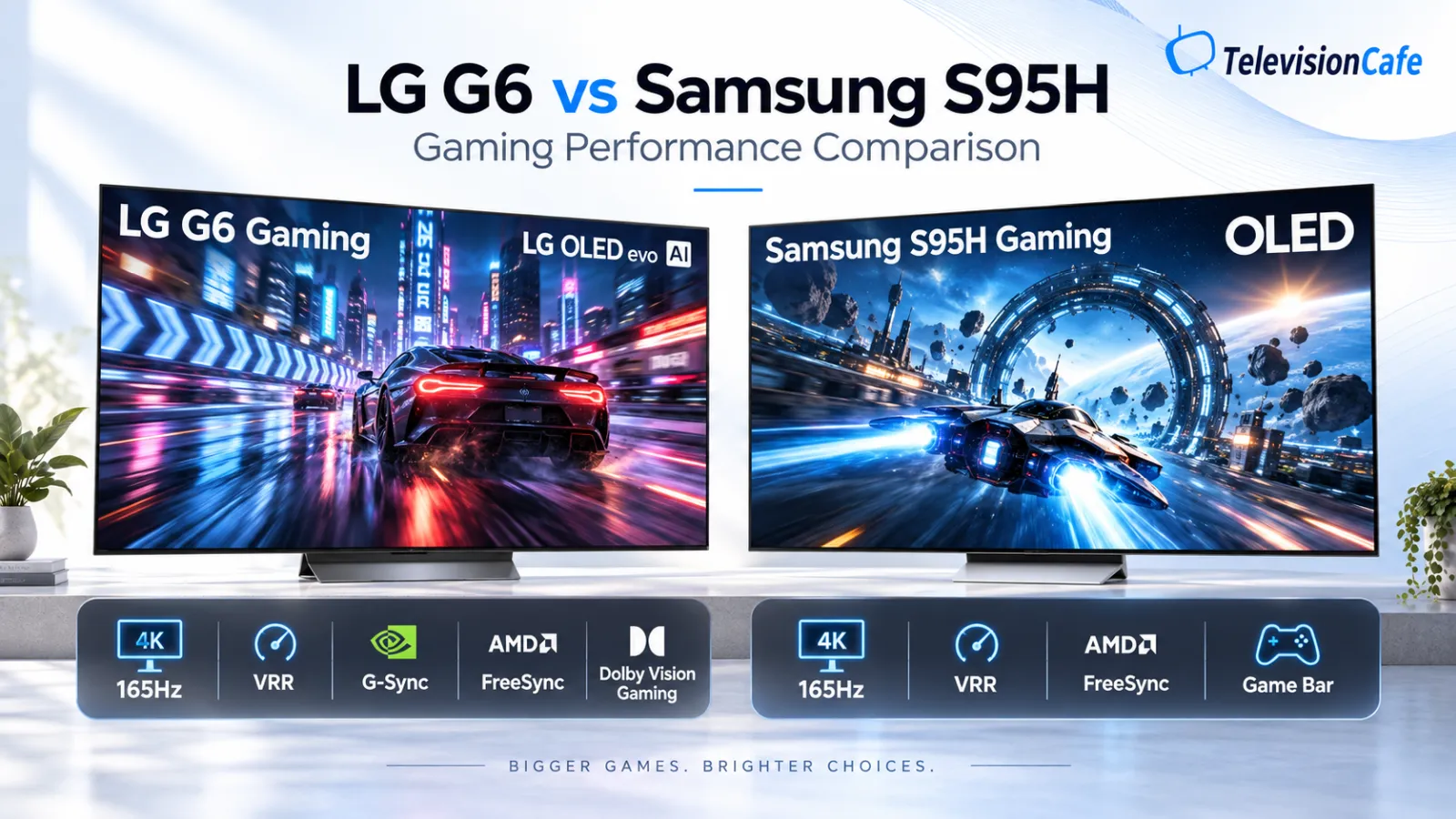
Both televisions provide four high-bandwidth HDMI inputs and support modern gaming features including 4K/120Hz, VRR and Auto Low Latency Mode.
With a compatible gaming PC, both can reach refresh rates up to 165Hz.
The LG G6 supports NVIDIA G-Sync compatibility, AMD FreeSync and Dolby Vision gaming at up to 4K/120Hz.
The Samsung S95H supports VRR and FreeSync and combines extremely low input lag with an almost instantaneous OLED response time. Samsung's Game Bar also provides convenient access to gaming settings.
For PS5 gaming, the difference is tiny. Xbox users who specifically want Dolby Vision gaming will prefer the LG. PC gamers will be happy with either.
Winner: Tie, with a small LG advantage for Dolby Vision gaming.
Sports and Wide Seating: Samsung Has a Small Advantage
OLED technology already provides much wider viewing angles than many conventional LCD televisions, so both TVs work well when several people are watching from different parts of the room.
The Samsung S95H is particularly strong in this area. Colors and contrast remain remarkably consistent even when viewed well away from the center of the screen.
Fast sports also benefit from the OLED panel's extremely quick pixel response, which keeps motion clear during football, racing, hockey and other fast-moving content.
The LG is also excellent, but Samsung holds a small advantage for very wide seating arrangements.
Winner: Samsung S95H.
webOS 26 vs One UI Tizen: Which Smart Platform Is Better?
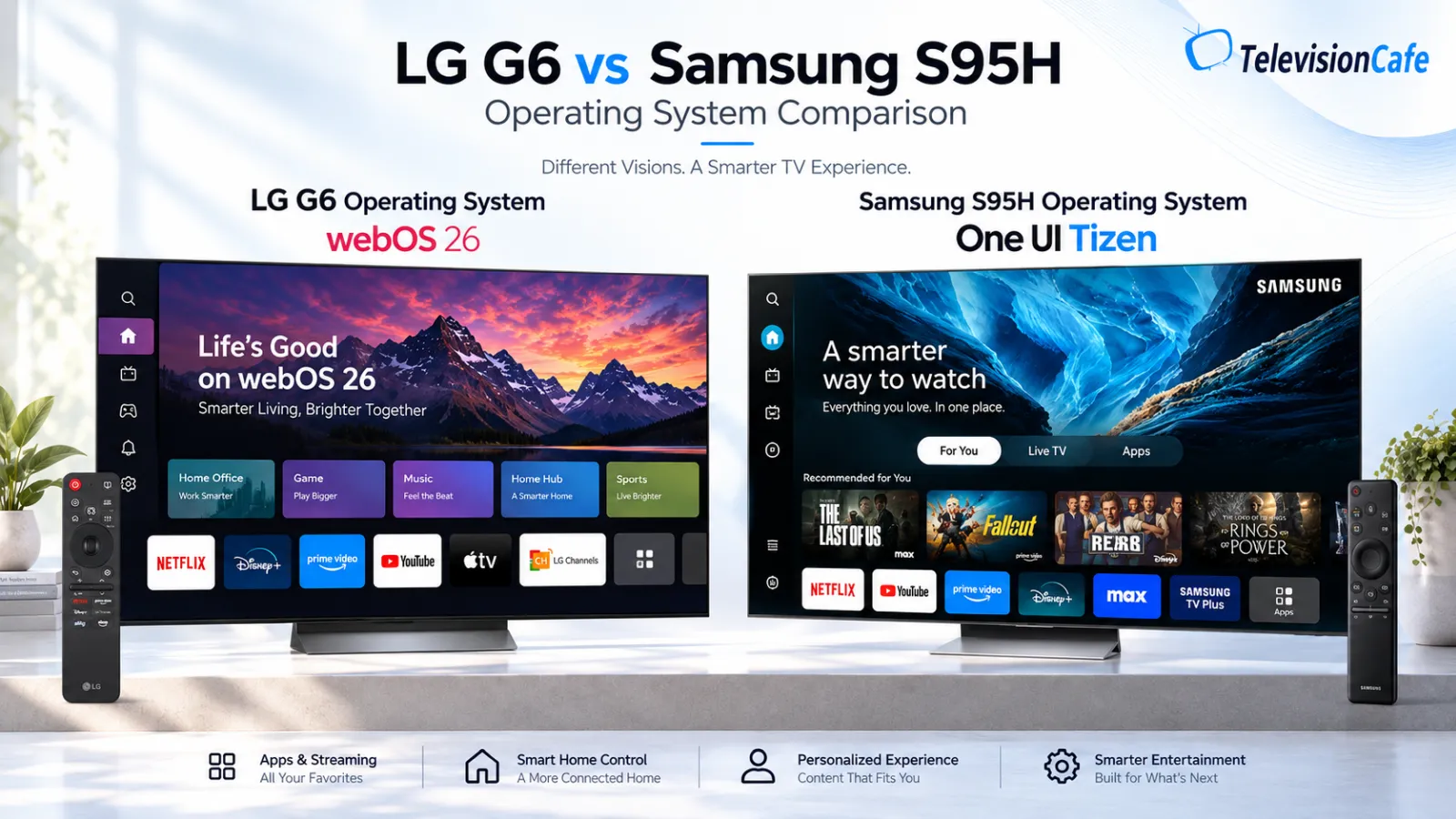
The LG G6 uses webOS 26, while the Samsung S95H uses Samsung's One UI Tizen platform.
Both provide the major streaming services, smart-home features, voice functions and extensive personalization.
LG's interface is relatively easy to understand and supports Apple AirPlay, Google Cast and LG ThinQ integration. LG also promises multiple years of operating-system upgrades through its webOS Re:New program.
Samsung's Tizen platform is highly feature-rich and integrates especially well with SmartThings and Samsung devices. Samsung also continues to expand its Art Store and gaming features.
Neither platform is a clear reason to choose one TV over the other. Buyers already using Samsung phones and SmartThings may prefer Tizen, while LG users may find webOS more familiar.
Winner: Personal preference.


Built-In Sound: Samsung Has More Power on Paper
Neither television can fully replace a serious home-theater audio system, but both have better built-in sound than most thin OLED TVs.
The 65-inch LG G6 uses a 60W 4.2-channel system with Dolby Atmos and LG's Alpha 11 AI Sound Pro processing.
Samsung's comparable flagship configuration uses a 70W 4.2.2-channel system with Dolby Atmos, Object Tracking Sound+ and Q-Symphony.
Samsung therefore has the stronger specification on paper and can create a more spacious built-in presentation.
For movies, however, both TVs deserve a good soundbar or dedicated speaker system.
Winner: Samsung S95H.
Design: Gallery Style vs FloatLayer
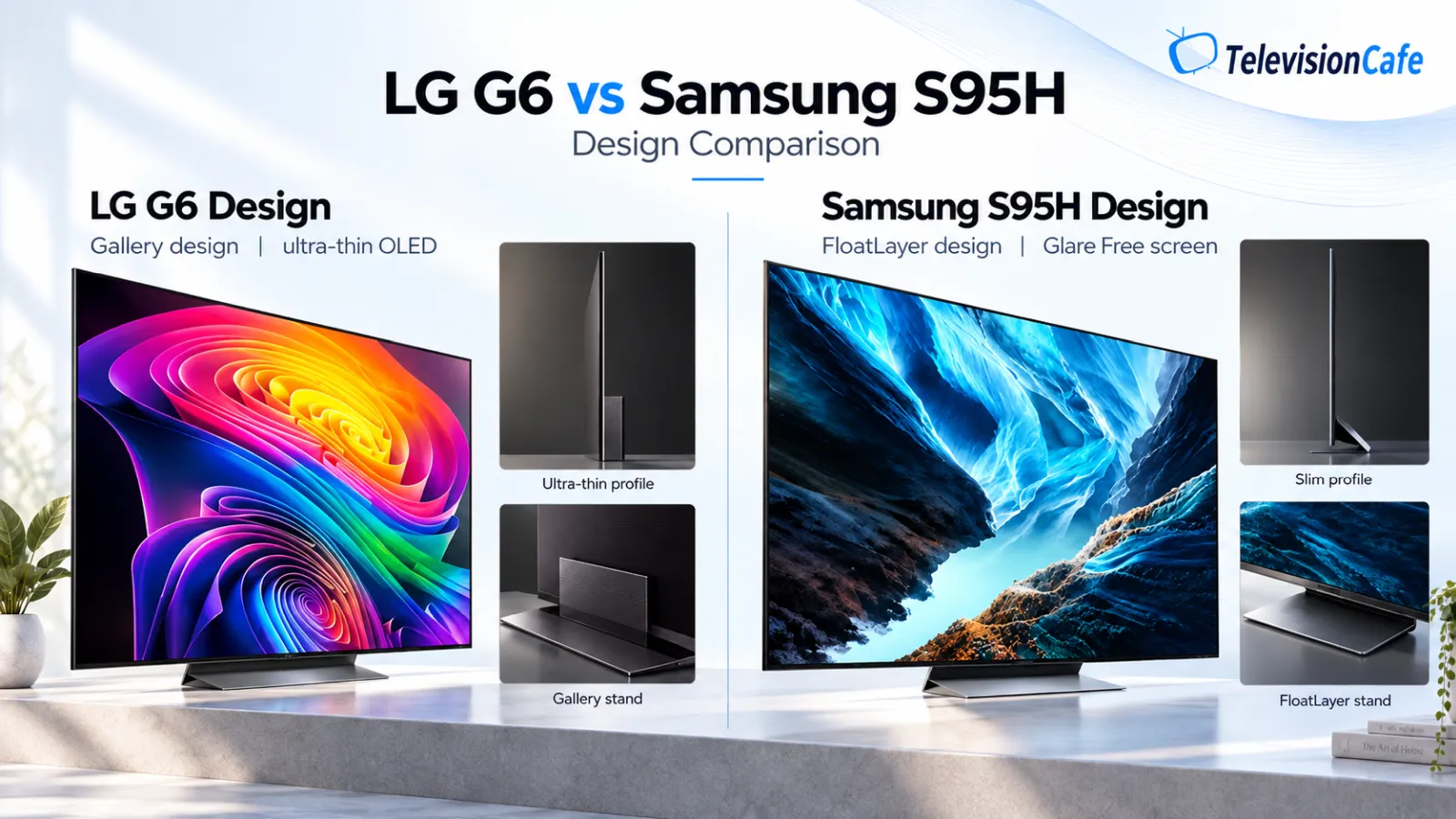
The LG G-Series has always been designed around wall mounting, and the G6 continues that philosophy. It has an extremely thin, premium appearance and looks particularly clean when mounted close to the wall.
The Samsung S95H uses Samsung's newer FloatLayer design, which gives the screen a more architectural appearance and makes it look visually separated from the structural layer behind it.
Samsung's matte screen also gives the TV a completely different appearance when switched off. It reflects far less like a mirror, which can make it blend into a bright room more naturally.
The LG looks more like a traditional premium OLED with its glossy surface, while the Samsung leans further toward a lifestyle display.
Winner: Personal preference.
Important: Screen Size Can Change the TV You Are Buying
Do not assume every G6 or S95H uses exactly the same panel.
On the LG G6, the 55-, 65-, 77- and 83-inch models use the newer Primary RGB Tandem OLED panel. The 97-inch version does not use the same tandem panel and therefore does not deliver identical brightness or color performance.
The Samsung situation is even more complicated. In North America, the 55-, 65- and 77-inch S95H models use QD-OLED, while the 83-inch version uses an RGB Tandem WOLED panel.
Outside North America, Samsung's flagship naming also changes. Some markets sell the equivalent premium model as the S99H, while separate S95H variants can have different stands, designs and panel configurations.
For both brands, always check the complete model number rather than relying only on the series name.
LG G6 vs Samsung S95H: Category Winners
| Category | Winner |
|---|---|
| Dark room movies | Tie |
| HDR color | Samsung S95H |
| Sustained HDR highlights | LG G6 |
| Direct reflection handling | Samsung S95H |
| Black levels in ambient light | LG G6 |
| Picture processing | LG G6 |
| Dolby Vision | LG G6 |
| HDR10+ | Samsung S95H |
| Console gaming | Tie |
| PC gaming | Tie |
| Viewing angles | Samsung S95H |
| Built-in audio | Samsung S95H |
| Low-quality streaming | LG G6 |
| Overall | Samsung S95H by a small margin |
Choose the LG G6 If...
The LG G6 is the better choice if movies and general picture quality are your highest priorities.
Its Dolby Vision support makes it particularly attractive for streaming and Ultra HD Blu-ray fans, while its superior processing helps lower-quality content look cleaner.
The glossy screen also retains the deep OLED look more effectively in rooms with ambient light, provided you do not have a strong direct reflection hitting the screen.
The G6 is also a great choice for Xbox owners who want Dolby Vision gaming and for buyers already invested in LG's webOS ecosystem.
Choose the G6 if you value Dolby Vision, processing, glossy OLED contrast and a more traditional cinematic presentation.
Choose the Samsung S95H If...
The Samsung S95H is the stronger option if you want maximum visual impact.
Its QD-OLED versions deliver exceptionally vivid HDR color, while the Glare Free matte coating dramatically reduces distracting reflections.
It is also one of the best gaming TVs available thanks to 165Hz support, four HDMI 2.1 connections, extremely low input lag and nearly instantaneous pixel response.
The very wide viewing angle makes it particularly attractive for sports and large seating areas.
Choose the S95H if you prioritize HDR color, reflection handling, gaming and wide-angle viewing.
LG G6 vs Samsung S95H Frequently Asked Questions
Which is better, LG G6 or Samsung S95H?
The Samsung S95H has a small overall advantage thanks to brighter HDR colors, excellent reflection handling and very wide viewing angles. The LG G6 is better for Dolby Vision, picture processing and maintaining deeper-looking blacks under ambient light.
Which TV is better for movies?
The LG G6 has a slight advantage for movie enthusiasts because it supports Dolby Vision and has stronger low-quality content processing. In a completely dark room, however, both TVs deliver outstanding OLED picture quality.
Which is better for HDR?
The Samsung S95H produces brighter and more saturated HDR colors, while the LG G6 can sustain some bright highlights for longer. Samsung has the stronger overall HDR color impact.
Which TV is better for a bright room?
The Samsung S95H handles direct reflections better thanks to its matte Glare Free coating. The LG G6 maintains deeper-looking blacks and image depth better when ambient light is present.
Does the LG G6 support Dolby Vision?
Yes. The LG G6 supports Dolby Vision, HDR10 and HLG.
Does the Samsung S95H support Dolby Vision?
No. The Samsung S95H supports HDR10, HDR10+ and HLG instead.
Which is better for PS5?
Both are excellent PS5 TVs with 4K/120Hz, VRR and low input lag. There is very little practical difference for most PlayStation 5 users.
Which is better for Xbox Series X?
Both support 4K/120Hz and VRR, but the LG G6 additionally supports Dolby Vision gaming.
Can the LG G6 and Samsung S95H run at 165Hz?
Yes. Both TVs support refresh rates up to 165Hz with compatible PC hardware.
Which TV has better viewing angles?
Both are excellent, but the Samsung S95H maintains its image slightly better at very wide viewing angles.
Which is better for sports?
The Samsung S95H has a small advantage because of its wide viewing angles and superb reflection handling. The LG G6 remains an excellent sports TV.
Which one should most people buy?
If prices are similar, the Samsung S95H is the slightly stronger all-round choice. Movie enthusiasts and buyers who specifically want Dolby Vision may prefer the LG G6.
LG G6 vs Samsung S95H Final Verdict: Which Flagship OLED Wins?
The LG G6 and Samsung S95H are close enough that there is no bad choice.
The Samsung wins on spectacle. Its QD-OLED panel produces exceptionally bright and vivid colors, the matte screen handles direct reflections better, and its extremely wide viewing angle makes it a fantastic television for gaming, sports and large living rooms.
The LG wins on refinement. Dolby Vision support, stronger picture processing and a glossy panel that retains more of the traditional OLED depth under ambient light make it particularly compelling for movie fans.
If both televisions cost roughly the same, we would give the Samsung S95H a narrow overall win. Its combination of HDR color, gaming performance and reflection handling makes it slightly more versatile for the widest range of buyers.
But this is not a case where the runner-up is clearly worse.
Choose the Samsung S95H for vivid HDR, gaming and glare control. Choose the LG G6 for Dolby Vision, processing and a richer glossy OLED presentation.
That distinction matters more than any single benchmark score — and it is ultimately what should determine which flagship OLED belongs in your living room.