
LG G6 OLED Review: Is It the Best TV of 2026?
The LG G6 OLED enters 2026 with an unusually difficult job. It has to improve on the already excellent G5, justify a serious flagship price premium over the LG C6, and fight off Samsung’s S95H at a time when premium OLED TVs have never been more competitive.
Fortunately for LG, the G6 is not just a routine yearly refresh. It combines a new-generation OLED panel, significantly improved bright-room performance, excellent reflection handling, LG’s latest Alpha 11 processor, Dolby Vision, four HDMI 2.1 ports, and gaming support up to 4K at 165Hz.
That creates a TV with very few obvious weaknesses. Movies look spectacular in a dark room, HDR has considerably more impact than on older OLED generations, daytime viewing is much easier, and gamers get one of the most complete feature sets currently available on a television.
But there is an important catch: the LG C6 is considerably cheaper, while Samsung’s S95H can deliver even more vibrant HDR color. So the real question is not whether the LG G6 is excellent. It clearly is.
The real question is whether the LG G6 is good enough to be called the best all-round TV of 2026.
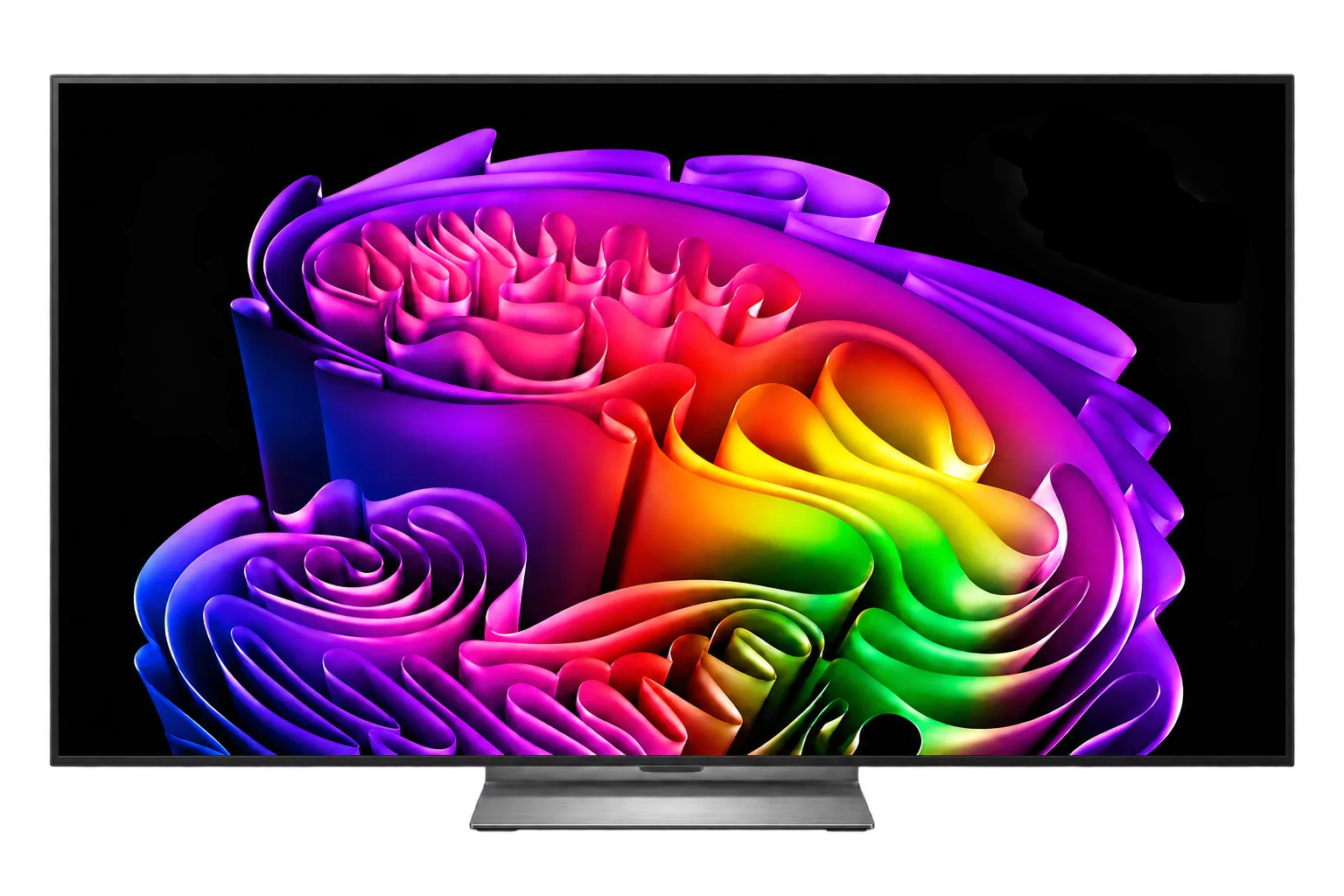
LG G6 OLED Review: Quick Verdict
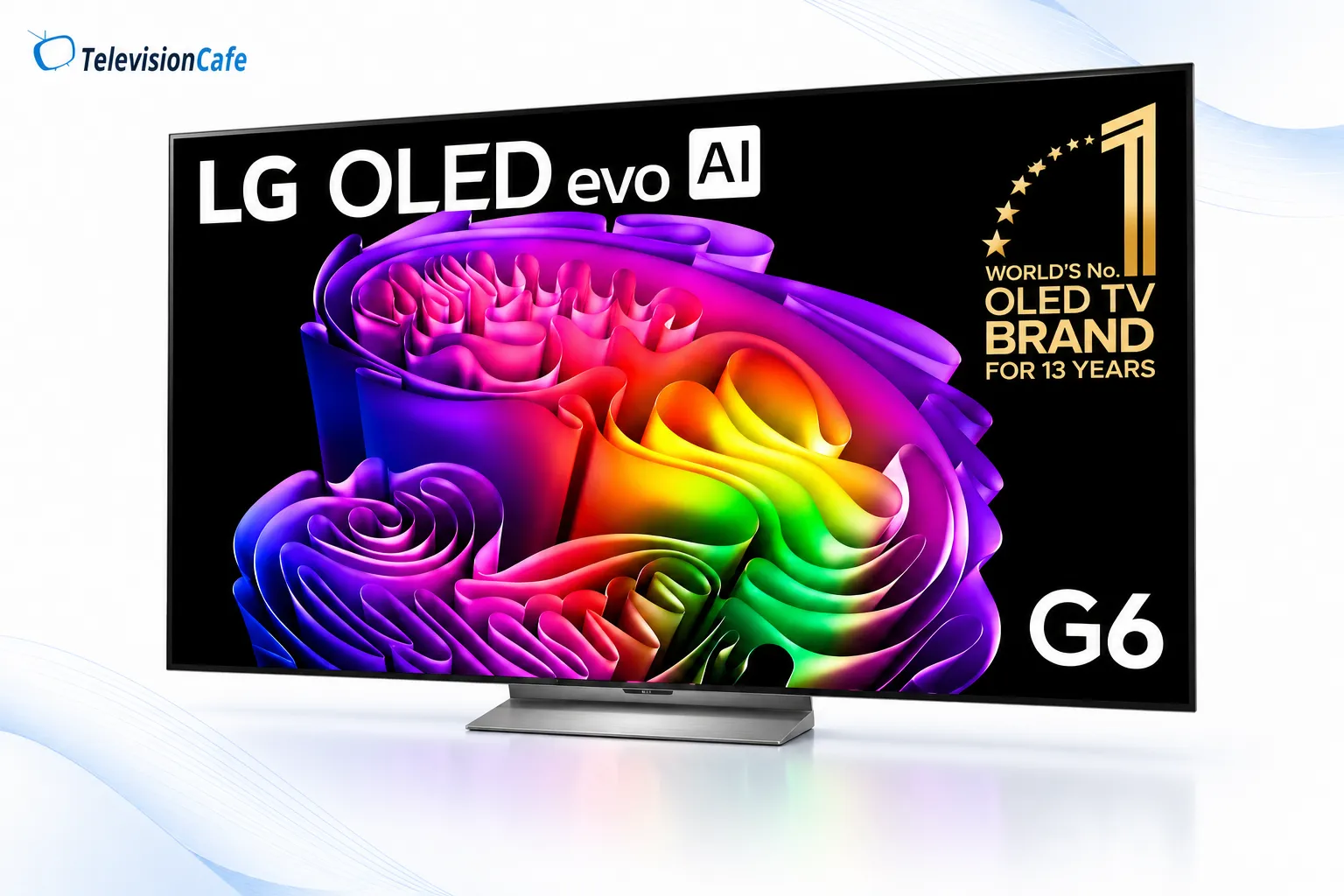
TelevisionCafe Verdict: The LG G6 is one of the strongest all-round TVs of 2026 and our current pick for Best Overall TV. It combines exceptional OLED contrast with unusually strong bright-room performance, excellent processing, Dolby Vision, and class-leading gaming features.
It is not automatically the best value. Buyers who want most of the LG OLED experience for less should look closely at the C6, while Samsung’s S95H remains a serious alternative for viewers who prioritize maximum HDR color impact.
Best for: Movies, HDR, gaming, PS5 Pro, mixed bright/dark rooms and premium home theaters.
Skip it if: Value is your top priority or you already own a recent high-end OLED such as the LG G5.
LG G6 Pros and Cons
What We Like
- Outstanding OLED black levels and contrast
- Excellent HDR brightness and color
- Much better bright-room performance than older OLED TVs
- Very effective reflection handling
- Dolby Vision support
- Four HDMI 2.1 ports
- Up to 4K at 165Hz for compatible gaming PCs
- VRR, NVIDIA G-SYNC and AMD FreeSync Premium
- Excellent PS5, PS5 Pro and Xbox gaming support
- Strong image processing and upscaling
- Wide viewing angles
- Flush-fit Gallery Design
- Five-year limited panel warranty
What Could Be Better
- Expensive compared with the LG C6
- Samsung S95H can produce more vibrant HDR colors
- No HDR10+ support
- No DTS audio passthrough
- 24fps movies can show some OLED-style stutter
- Built-in sound is good rather than flagship-level
- The 97-inch model is different from the smaller G6 sizes
LG G6 Specs at a Glance
| Feature | LG G6 OLED |
|---|---|
| Resolution | 4K Ultra HD |
| Display Type | OLED evo |
| Panel Technology | Primary RGB Tandem 2.0 on main sizes |
| Processor | Alpha 11 AI Processor Gen3 |
| Maximum Refresh Rate | Up to 165Hz |
| HDMI Ports | 4 x HDMI 2.1 |
| VRR | Yes |
| NVIDIA G-SYNC | Yes |
| AMD FreeSync Premium | Yes |
| HDR Formats | Dolby Vision, HDR10, HLG |
| HDR10+ | No |
| Smart TV Platform | webOS 26 |
| Audio | Dolby Atmos |
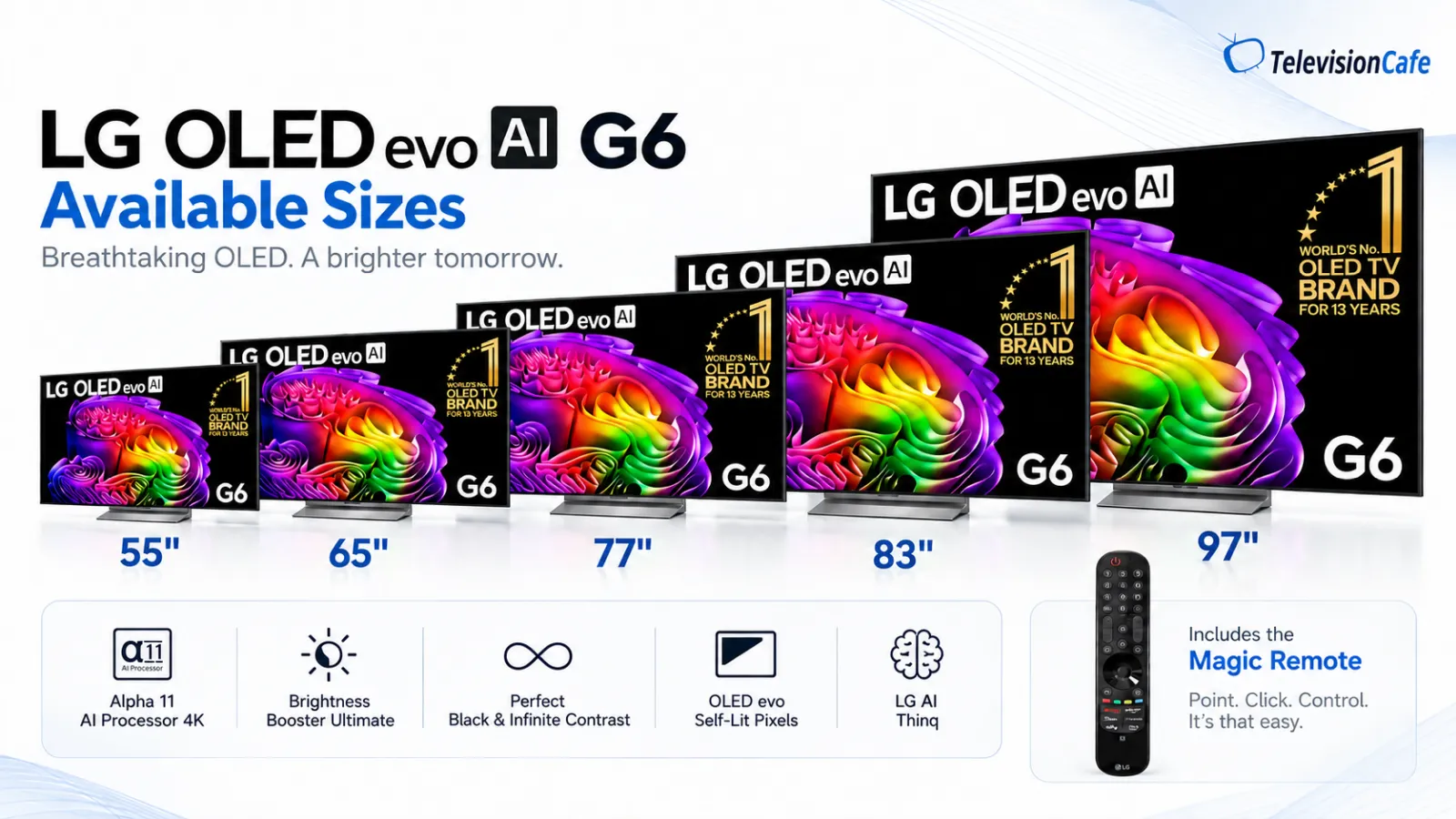
| US Screen Sizes | 55, 65, 77, 83 and 97 inches |
| Panel Warranty | 5-year limited panel warranty |
Note: The 97-inch G6 differs from the smaller models in important ways, so buyers considering that version should not assume every performance characteristic is identical.
Design: The G6 Still Looks Like a Proper Flagship
The G6 continues one of the best ideas LG ever had for its premium G-series: make the television look as impressive when it is turned off as it does when it is turned on.
LG’s Gallery Design is intended primarily for wall mounting. When installed correctly, the television sits almost flush against the wall, giving it a cleaner, more built-in appearance than most conventional TVs.
That makes the G6 particularly attractive if your television is going into a modern living room rather than sitting on a large entertainment unit.
There is one detail buyers should know before ordering: LG supplies the wall mount with the main US G6 models, while a conventional tabletop stand may not be included depending on the model and market.
If you already know the TV will be wall-mounted, that is an advantage. If it will sit on furniture, check exactly what is included with the size you are buying before the delivery truck arrives.
Picture Quality: This Is Why You Buy the G6
The biggest reason to spend G6 money is still the picture.
Like every good OLED, the LG G6 can control light at the individual pixel level. A pixel that needs to be black can simply turn off. That gives the television essentially perfect black without the halos and blooming that can appear around bright objects on Mini LED TVs.
Dark scenes are therefore one of the G6’s greatest strengths. Stars appear against genuinely black skies, subtitles do not create obvious glowing zones around themselves, and movie letterbox bars effectively disappear into a dark room.
What separates the G6 from older OLED generations is that the picture no longer relies as heavily on darkness to impress.
The newer panel and LG’s Hyper Radiant approach allow highlights to hit harder, colors to maintain more intensity, and HDR scenes to look more energetic without giving up the black-level advantage that made OLED popular in the first place.
The result is a TV that feels less specialized. Older OLED buying advice often sounded like, “Buy OLED for a dark room.” The G6 makes that recommendation feel increasingly outdated.
Is the LG G6 Good for Bright Rooms?
Yes. In fact, bright-room performance is one of the biggest reasons to choose the G6 over a cheaper OLED.
Brightness alone does not determine how well a television performs during the day. Reflections can destroy perceived contrast even on an extremely bright screen.
The G6 attacks both problems.
Its panel can get very bright for an OLED, while LG’s Reflection Free Premium treatment significantly reduces distracting reflections compared with previous G-series models.
That means windows, lamps and other light sources are less likely to dominate the picture when you watch during the day.
High-end Mini LED TVs can still be the right choice for extremely bright rooms, but the old assumption that premium OLED automatically means “dark room only” simply does not apply to the G6.
For someone who watches movies at night but also sports or regular TV during the day, this versatility is one of the G6’s strongest selling points.
HDR and Dolby Vision: One Big Advantage Over Samsung
The LG G6 supports Dolby Vision, HDR10 and HLG. It does not support HDR10+.
For many premium-TV buyers, Dolby Vision support is more important than the missing HDR10+ format because Dolby Vision remains widely used by major streaming services and UHD Blu-ray releases.
This is also one of the clearest differences between LG and Samsung’s flagship OLED strategies.
Samsung’s S95H does not support Dolby Vision, while the LG G6 does.
HDR on the G6 combines OLED’s perfect blacks with enough brightness to make small highlights such as headlights, sunlight, fire, reflections and explosions stand out dramatically.
The Samsung S95H can still produce more saturated and vibrant colors in some HDR material, but the G6 counters with Dolby Vision, excellent processing and less black-level elevation under ambient light.
LG G6 for Movies: One of Its Strongest Use Cases
If movies are your priority, the G6 is difficult to criticize.
OLED’s perfect blacks are especially valuable in darker films, space scenes and movies with lots of shadow detail. Add strong HDR performance, Dolby Vision and wide viewing angles, and you have an extremely capable home-theater display.
LG also includes Filmmaker Mode with Ambient Light Compensation, which is designed to preserve a more accurate presentation while accounting for changes in room lighting.
The only issue worth mentioning is motion.
OLED pixels respond incredibly quickly. That is fantastic for games and fast action, but it means 24fps movies receive very little natural pixel blur between frames. During slow camera pans, some viewers may notice stutter.
If you are sensitive to it, LG’s motion controls can reduce the effect. Just avoid pushing motion smoothing so far that every Hollywood movie suddenly looks like daytime television.
Is the LG G6 Good for Sports?
The G6 is also an excellent sports TV, especially for larger rooms.
Fast pixel response keeps moving players and objects sharp, while the improved screen coating makes afternoon games much easier to watch in a room with windows.
Wide viewing angles are another major OLED advantage.
If several people are watching football, basketball, hockey or motorsports from different positions around the room, the picture remains much more consistent than it does on many LCD-based TVs when viewed from the side.
The combination of brightness, motion clarity and viewing angles makes the G6 particularly good for a living room that needs to handle both serious movie nights and casual weekend sports.
LG G6 Gaming Performance: Almost Everything a Gamer Could Want
LG has been one of the strongest TV brands for gaming for several generations, and the G6 continues that trend.
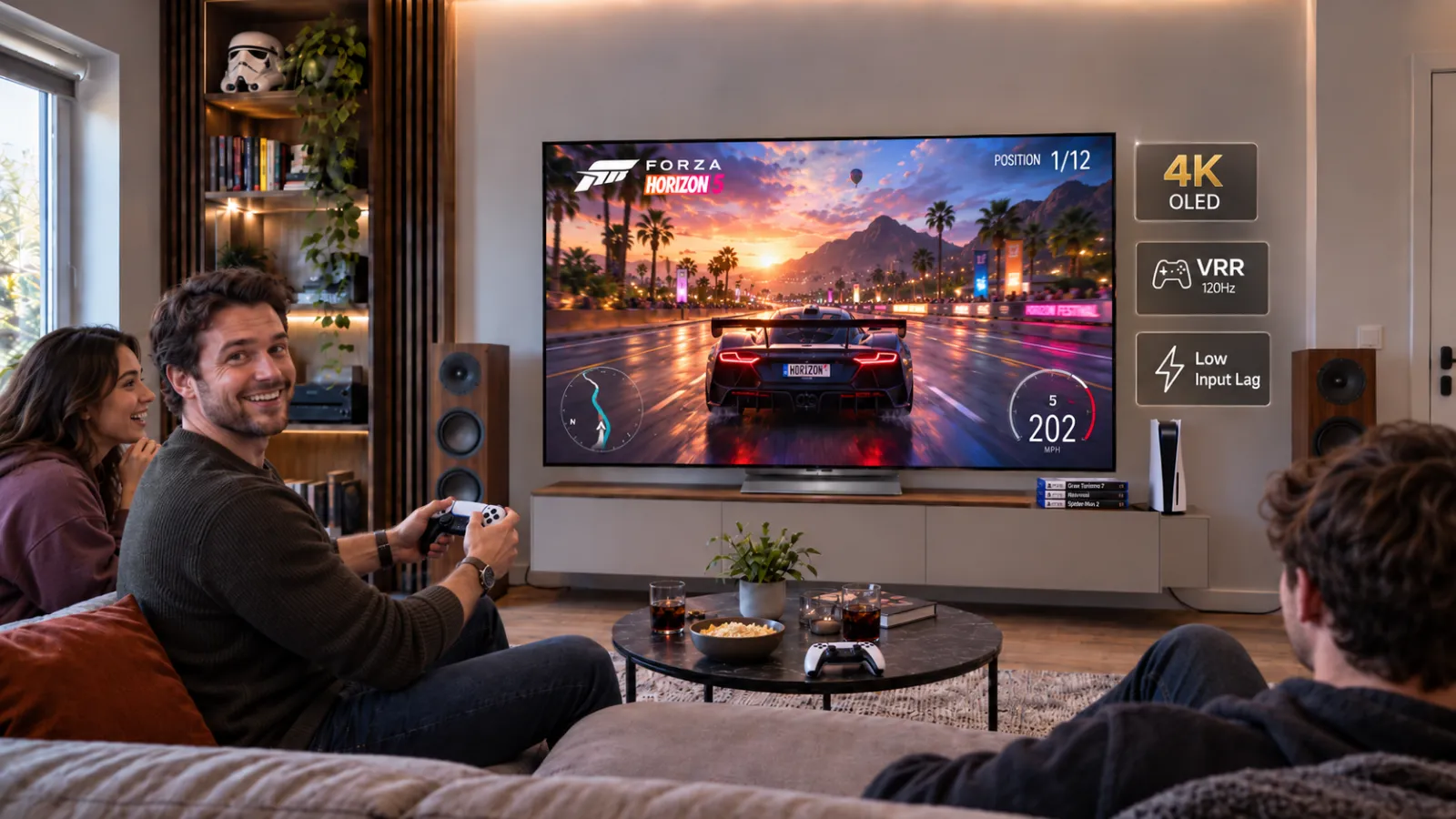
All four HDMI inputs support HDMI 2.1 features, and compatible PCs can run the G6 at up to 4K 165Hz.
The gaming feature list includes:
- 4K at 120Hz for modern consoles
- Up to 4K at 165Hz for compatible PCs
- Variable Refresh Rate (VRR)
- Auto Low Latency Mode (ALLM)
- NVIDIA G-SYNC
- AMD FreeSync Premium
- Dolby Vision gaming
- LG Game Optimizer
Independent testing has also measured very low input lag, making the G6 feel extremely responsive.
The combination is particularly useful for people with several gaming devices. You can connect a PS5 Pro, Xbox Series X, gaming PC and an eARC sound system without immediately running out of high-bandwidth HDMI connections.
For gaming, there are cheaper TVs that are excellent. There are very few that are clearly better.
Is the LG G6 Good for PS5 and PS5 Pro?
Yes. The LG G6 is an excellent match for both PS5 and PS5 Pro.
Sony’s consoles cannot take advantage of the television’s full 165Hz PC capability, but they can use the features that actually matter for console gaming: 4K at 120Hz, VRR, HDR, ALLM and low-latency gaming.
OLED’s near-instant pixel response also gives fast games excellent motion clarity.
For PS5 Pro owners who want a premium TV that is equally good for games and movies, the G6 belongs near the top of the shortlist.
The only real question is value. If gaming is your only priority, the cheaper LG C6 can provide many of the same gaming features for considerably less money.
webOS 26: Familiar, Fast and Feature-Packed
The G6 uses webOS 26, the latest generation of LG’s smart TV platform.
The interface gives you access to the major streaming services, customizable quick menus, smart-home features and LG’s growing collection of AI-based recommendations and personalization tools.
LG also continues its Re:New software program, with software updates promised for multiple years.
Whether webOS is better than Google TV, Roku TV or Samsung’s Tizen ultimately comes down to personal preference. The important part is that it is mature, responsive and well integrated with the television’s picture and gaming settings.
The increasingly prominent recommendations and advertising on smart TV home screens will not appeal to everyone, but that is unfortunately becoming an industry-wide problem rather than something unique to LG.

LG G6 Sound Quality: Good TV Speakers, but Buy a Soundbar
The G6’s built-in audio is perfectly usable for everyday television, dialogue and casual viewing.
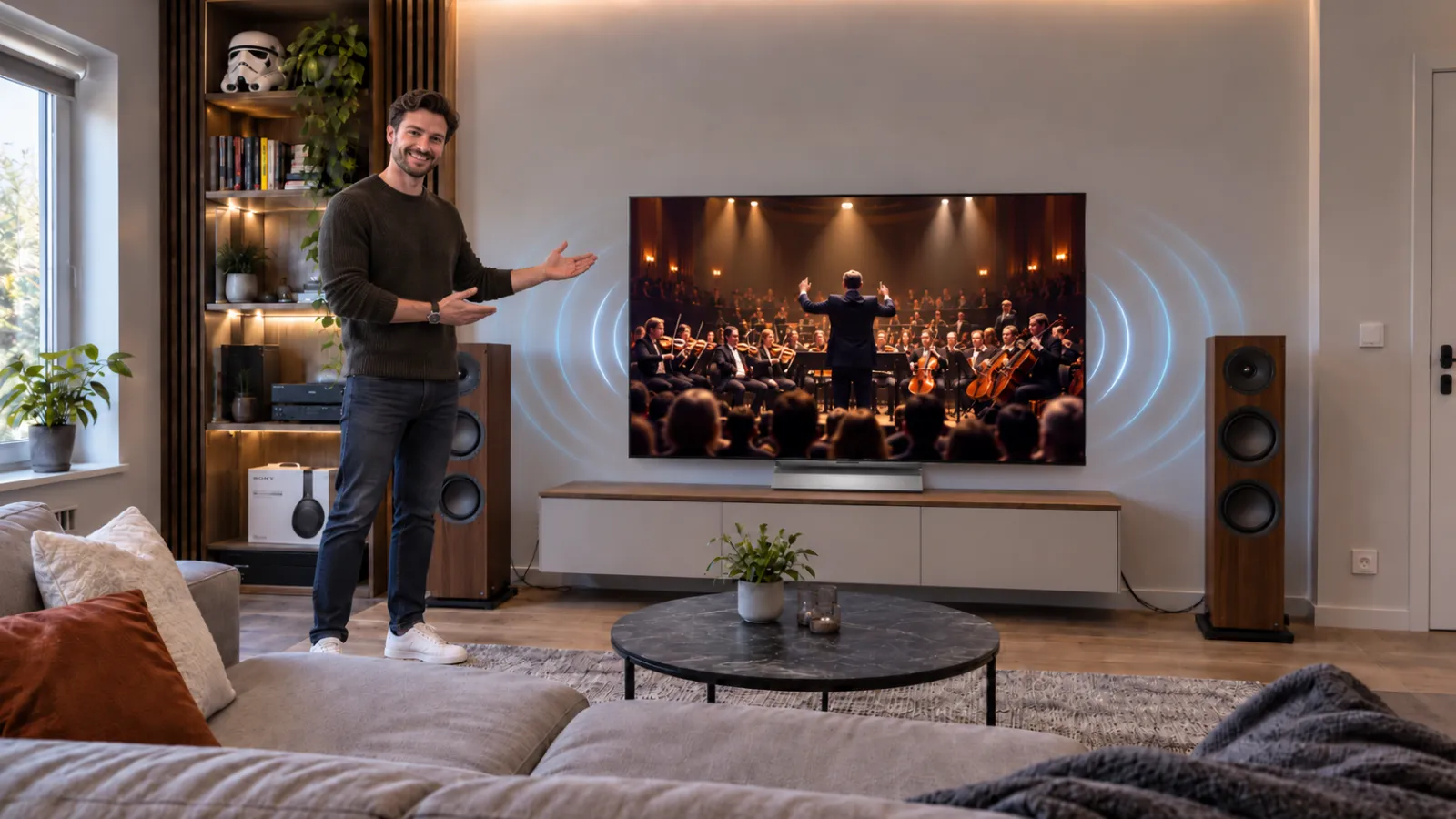
Dolby Atmos is supported, and LG’s AI Sound processing attempts to create a larger soundstage than the physical speakers would suggest.
But this is still a premium television trying to produce cinema sound from a very thin chassis.
If you are spending flagship money on a G6 for movies, games and home theater, a good soundbar or dedicated speaker system is one of the easiest upgrades you can make.
The G6’s picture is capable of making a movie feel cinematic. The built-in speakers are not quite capable of doing the same thing on their own.
LG G6 vs G5: Is the Upgrade Worth It?
The G6 is a meaningful improvement over the G5, but that does not automatically mean G5 owners should upgrade.
The biggest gains come from the newer display technology, improved color performance and especially better reflection handling. The G6 is simply easier to enjoy in rooms with significant ambient light.
Processing also moves forward with LG’s newer Alpha 11 generation.
If you are choosing between a heavily discounted G5 and a full-price G6, however, the decision becomes more complicated.
The G5 remains an excellent television. If the price difference is large, it can still be the smarter value purchase.
If you already own a G5, we would normally keep it. If you are buying a flagship OLED from scratch and the prices are reasonably close, the G6 is the better TV.
LG G6 vs C6: Better TV vs Better Value
This might be the most important comparison for most LG buyers.
The G6 is the better TV.
The C6 may be the better purchase.
The G6 produces a brighter image, handles reflections better and can deliver more vibrant HDR color. It is also designed as LG’s premium Gallery-series television.
But the C6 still gives you OLED blacks, Dolby Vision, excellent gaming features, HDMI 2.1 and LG’s smart platform at a lower price.
For a premium home theater or a living room where bright-room performance matters, the G6 earns its advantage.
For buyers looking for the point where price and performance meet, the C6 is extremely difficult to beat.
Choose the G6 for the best picture. Choose the C6 for the better value.
LG G6 vs Samsung S95H: Which Flagship OLED Is Better?
The Samsung S95H is probably the G6’s most dangerous direct competitor.
Samsung’s QD-OLED panel can produce brighter, more vibrant colors, which can give HDR material additional intensity.
The LG G6 fights back with several practical advantages.
Choose the LG G6 if you want:
- Dolby Vision
- Excellent image processing
- Strong bright-room black levels
- webOS
- LG’s Gallery Design
Choose the Samsung S95H if you want:
- Maximum HDR color volume
- More aggressive glare reduction
- QD-OLED color performance
- Samsung’s ecosystem and Tizen
There is no embarrassing loser here.
For pure HDR color performance, the S95H has a strong argument. For versatility, Dolby Vision, processing and an excellent balance between dark-room and bright-room viewing, the G6 remains exceptionally compelling.
LG G6 Problems and Weaknesses You Should Know About
No television is perfect, and buyers considering the G6 should know about several limitations before spending flagship money.
1. It Is Expensive
The G6 sits near the top of LG’s OLED range. The C6 costs less and delivers many of the same core features, which makes value the G6’s biggest weakness.
2. There Is No HDR10+
LG supports Dolby Vision but continues to omit HDR10+. For most buyers this will not be a deal-breaker, but it is worth knowing.
3. DTS Support Is Missing
The lack of DTS passthrough may matter if you have a large Blu-ray collection or a home-theater setup that relies on DTS-based audio tracks.
4. OLED Motion Can Look Stuttery
The extremely fast pixel response that makes OLED excellent for gaming can make slow 24fps camera pans appear slightly stuttery.
5. Burn-In Is Not Physically Impossible
Modern OLED protection systems are far more sophisticated than they once were, but OLED remains an emissive technology. Users who display static elements for very long periods should still use sensible precautions.
6. The 97-Inch Model Is Different
The gigantic 97-inch G6 should not be treated as simply a larger version of the 55, 65, 77 and 83-inch models. Its panel implementation differs, so reviews and measurements from the smaller G6 sizes should not automatically be assumed to apply to it.
LG G6 Sizes: 55 vs 65 vs 77 vs 83 vs 97 Inches
In the United States, the LG G6 is available in 55, 65, 77, 83 and 97-inch sizes.
55-Inch LG G6
Best suited to smaller living rooms, bedrooms and shorter viewing distances. It is also the least expensive way into the G6 range.
65-Inch LG G6
The sweet spot for many living rooms. Large enough to deliver a cinematic image without requiring the space or budget of the 77-inch model.
77-Inch LG G6
Our favorite size for a serious movie and gaming setup if your room and budget can accommodate it. The jump from 65 to 77 inches is more dramatic than the numbers suggest.
83-Inch LG G6
A true home-theater display. It delivers enormous immersion but comes with a substantial price premium.
97-Inch LG G6
A specialty luxury product rather than the default choice for enthusiasts. Buyers should also remember that its panel implementation differs from the smaller G6 models.
For most buyers, the 65-inch and 77-inch versions are the models we would look at first.
LG G6 Price: Should You Pay Full Price?
The LG G6 launched in the United States at premium prices:
| Size | Launch MSRP |
|---|---|
| 55-inch | $2,499 |
| 65-inch | $3,399 |
| 77-inch | $4,499 |
| 83-inch | $6,499 |
| 97-inch | $24,999 |
Those are launch prices, not necessarily what you should pay today.
TV prices can fall dramatically during the model year, and the G6 has already appeared below its original MSRP. For that reason, we would judge its value based on the current difference between the G6, C6 and Samsung S95H rather than the original sticker price.
If the G6 is only moderately more expensive than a comparable C6, the upgrade becomes attractive. If the gap is huge, the C6 starts looking like the smarter buy.
Who Should Buy the LG G6?
Buy the LG G6 if:
- You want one of the best OLED pictures available in 2026.
- You watch movies in both dark and bright rooms.
- You care about Dolby Vision.
- You want a premium TV for PS5 Pro, Xbox or PC gaming.
- You need wide viewing angles.
- You plan to wall-mount the TV and like LG’s Gallery Design.
- You want flagship performance and are willing to pay for it.
Consider something else if:
- You want the best possible price-to-performance ratio.
- You already own an LG G5 or another recent flagship OLED.
- Your room is extremely bright and maximum daytime brightness is your only priority.
- You specifically need HDR10+ or DTS passthrough.
- You only need a TV for casual streaming and regular television.
LG G6 OLED Review Verdict: Is It the Best TV of 2026?
Calling any television “the best” is dangerous because different buyers care about different things.
The Samsung S95H can produce more vibrant HDR color. The LG C6 offers better value. High-end Mini LED and RGB Mini LED TVs can make compelling arguments in extremely bright rooms.
But the LG G6 has something arguably more useful than winning every individual specification battle:
It has remarkably few serious weaknesses.
Its black levels are exceptional. HDR is bright and impactful. Reflection handling is dramatically better than many people still associate with OLED. Dolby Vision is supported. Processing is excellent. Viewing angles are wide. Gaming support is outstanding. And the Gallery Design remains one of the cleanest ways to integrate a premium television into a room.
That combination makes the G6 one of the easiest flagship TVs to recommend to someone who wants a television that is excellent at almost everything.
For pure value, no. For every individual measurement, no.
But as an all-round premium television for movies, gaming, HDR, sports, daytime viewing and home theater, the LG G6 has one of the strongest claims to that title.
It does not win every battle. It simply loses remarkably few of them.
LG G6 OLED FAQ
Is the LG G6 worth buying in 2026?
Yes, if you want flagship OLED picture quality, excellent gaming features, Dolby Vision and strong performance in both bright and dark rooms. Buyers focused primarily on value should also consider the cheaper LG C6.
Is the LG G6 better than the LG C6?
Yes. The LG G6 is brighter, handles reflections better and produces more vibrant HDR color. However, the C6 costs less and offers many of the same smart TV and gaming features, making it the better value for many buyers.
Is the LG G6 better than the Samsung S95H?
It depends on what you value. The Samsung S95H can deliver brighter, more vibrant HDR colors, while the LG G6 offers Dolby Vision, excellent processing and stronger black-level retention in ambient light.
Is the LG G6 good for PS5 Pro?
Yes. The G6 supports HDMI 2.1, 4K at 120Hz, VRR, ALLM and very low input lag, making it an excellent premium TV for PS5 and PS5 Pro.
Does the LG G6 support 165Hz?
Yes. Compatible gaming PCs can use refresh rates up to 165Hz. Current game consoles such as the PS5 Pro and Xbox Series X generally use up to 120Hz.
Does the LG G6 support Dolby Vision?
Yes. The LG G6 supports Dolby Vision as well as HDR10 and HLG. It does not support HDR10+.
Is the LG G6 good in a bright room?
Yes. Improved OLED brightness and LG's Reflection Free Premium screen treatment make bright-room performance one of the G6's biggest improvements over previous LG OLED generations.
Does the LG G6 have burn-in risk?
Like all OLED TVs, permanent image retention is still theoretically possible with extreme long-term static content. Modern OLED protection features greatly reduce the practical risk for normal mixed viewing.
What sizes does the LG G6 come in?
In the United States, the LG G6 is available in 55, 65, 77, 83 and 97-inch screen sizes. The 97-inch model differs technically from the smaller G6 versions.
Which LG G6 size is best?
The 65-inch G6 is the best all-round size for many living rooms, while the 77-inch model is particularly attractive for a more immersive home-theater or gaming setup.