
Roku OLED TVs From $999: A New Rival for LG and Samsung
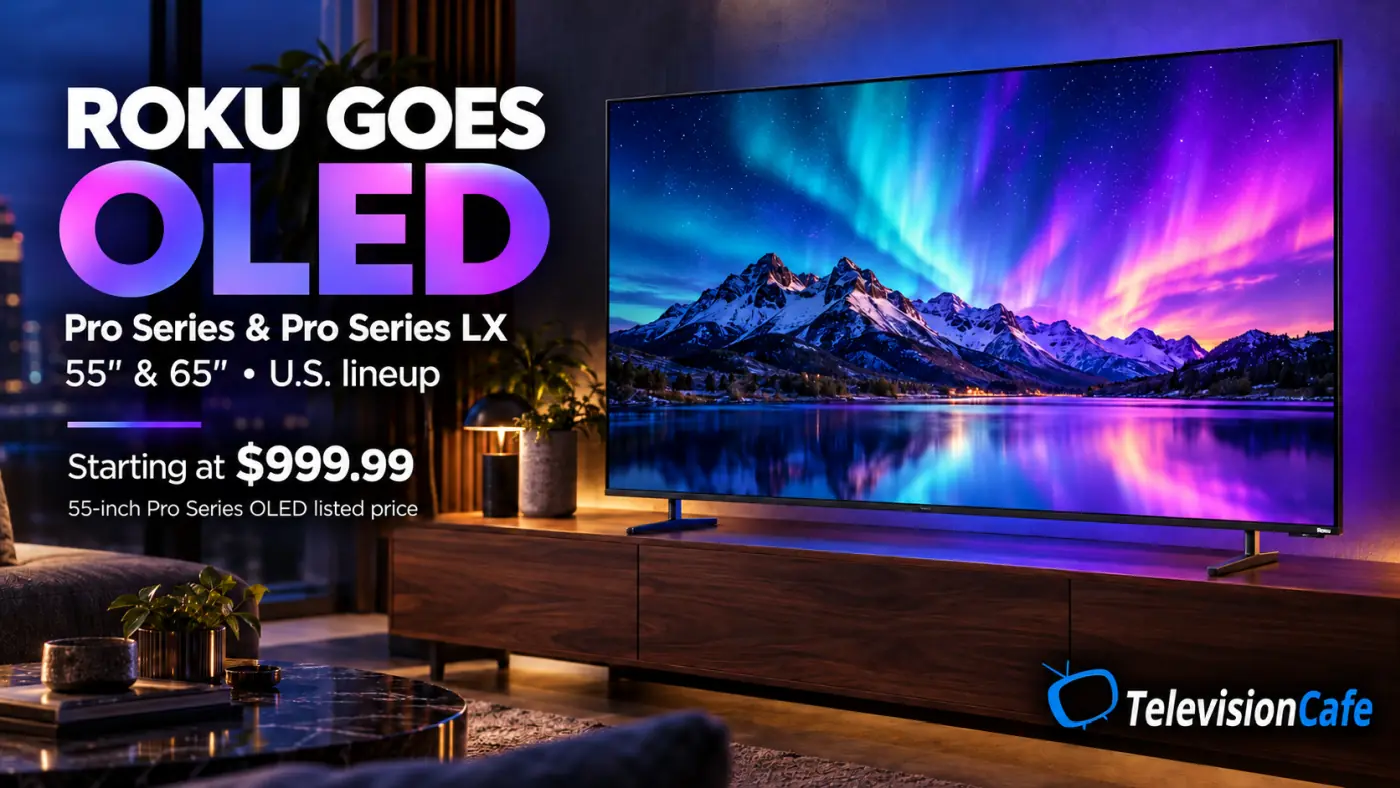
Roku is moving into OLED, and the starting price gives TV shoppers a reason to pay attention. Announced on September 1, 2026, the Roku Pro Series OLED and Pro Series LX OLED bring a new option to the U.S. market for buyers considering an OLED upgrade.
The standard Pro Series starts at $999.99 for 55 inches. The LX starts at $1,299.99 and adds features aimed at buyers who want more brightness and higher refresh rates. Both series also come in 65-inch sizes.
At TelevisionCafe, the interesting question is how these TVs will compete when shoppers put them beside similarly priced alternatives. Roku has an appealing pitch; picture quality will determine how far it goes.
The quick answer: Roku's first OLED lineup offers a 120Hz Pro Series and a step-up LX with up to 144Hz VRR. The launch targets U.S. buyers, with Amazon named as the exclusive retailer in Roku's announcement.
Roku OLED TV Prices: Pro Series vs. Pro Series LX
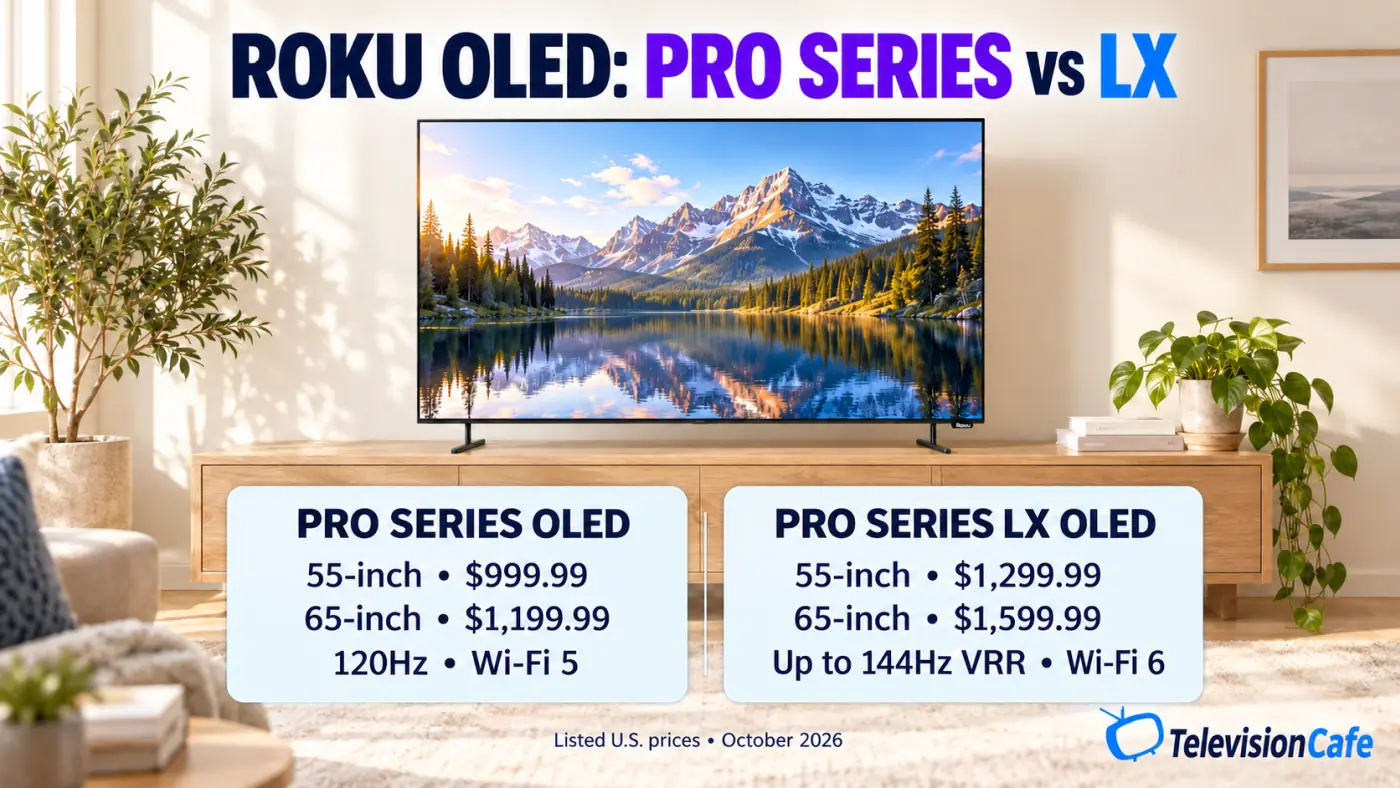
Here is how the two series compare on Roku's U.S. product page:
| Feature | Pro Series OLED | Pro Series LX OLED |
|---|---|---|
| 55-inch price | $999.99 | $1,299.99 |
| 65-inch price | $1,199.99 | $1,599.99 |
| Refresh rate | 120Hz | Up to 144Hz with VRR |
| HDR formats | Dolby Vision, HDR10+, HLG | Dolby Vision, HDR10+, HLG |
| Wi-Fi | Wi-Fi 5 | Wi-Fi 6 |
| Announced availability | September 1, 2026 | Beginning October 2026 |
Prices checked October 14, 2026. These are listed U.S. prices, not guaranteed checkout prices. Discounts, stock and taxes may change the final cost.
What Does the More Expensive LX Add?
Roku describes the Pro Series LX OLED as the brighter option, with a wider range of colors and an advanced polarizer designed to reduce room reflections. It also includes a rechargeable Voice Remote Pro with hands-free voice control.
That makes the LX the more interesting version for a living room used during the day. But a claim of higher brightness does not tell us how bright a football game will look across the whole screen, or how distracting a window reflection will be.
At the listed prices, the LX costs $300 more at 55 inches and $400 more at 65 inches. Our view: reflection handling and sustained brightness would need to justify that premium for everyday viewing. The extra refresh-rate headroom is a more specific benefit for compatible PC gaming.
Why OLED Changes Roku's TV Offering
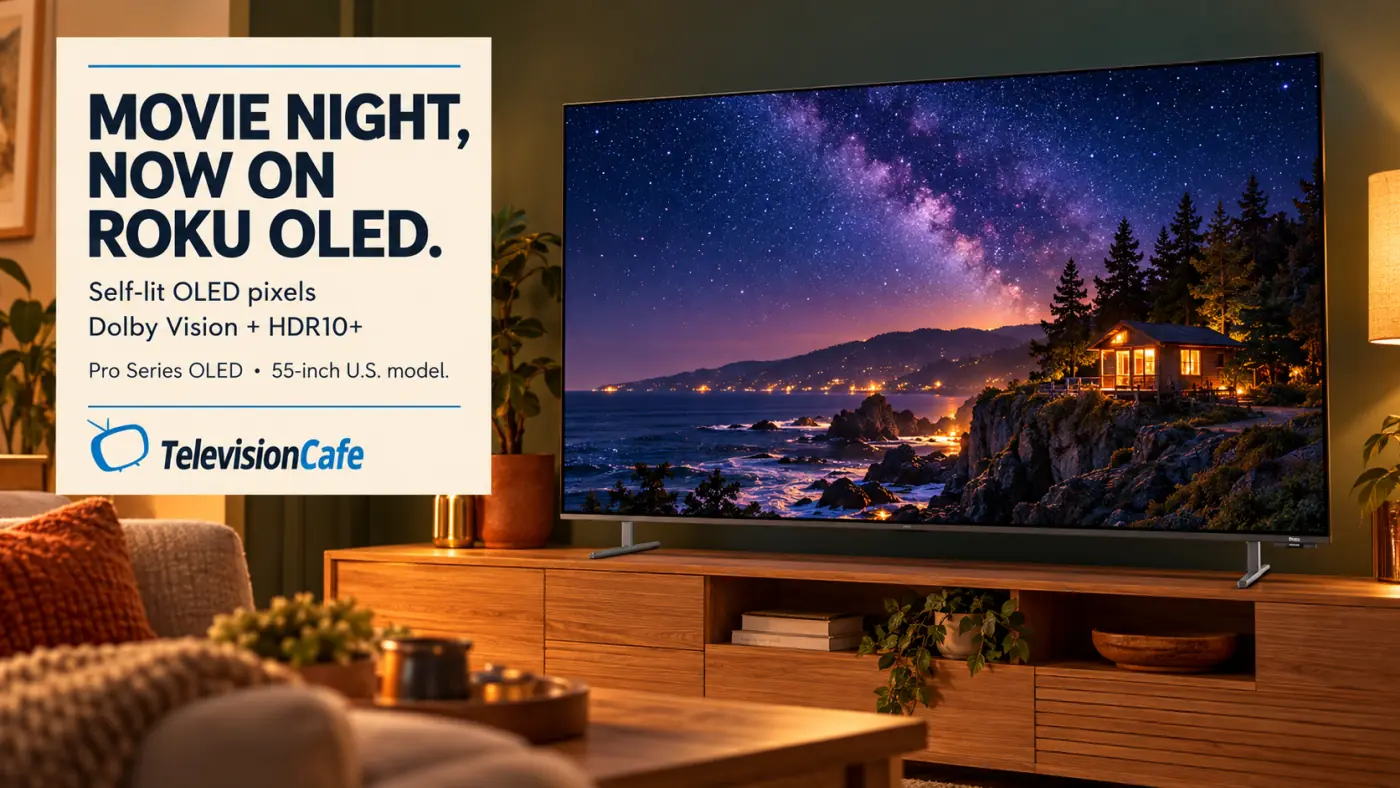
Roku already sells LED televisions, including Mini LED models. OLED gives it a different kind of display: the pixels produce their own light, rather than relying on a backlight behind an LCD panel.
For movie nights, the appeal is easy to understand. A bright object against a dark background can be displayed without a local-dimming zone lighting up the area around it. Wider seating arrangements are another reason to consider OLED.
That does not settle every buying decision. Room lighting, reflections and your usual viewing habits still matter. If you are deciding between technologies, our OLED vs. Mini LED guide explains how to narrow the choice around your room.
120Hz vs. 144Hz: What Gamers Should Know
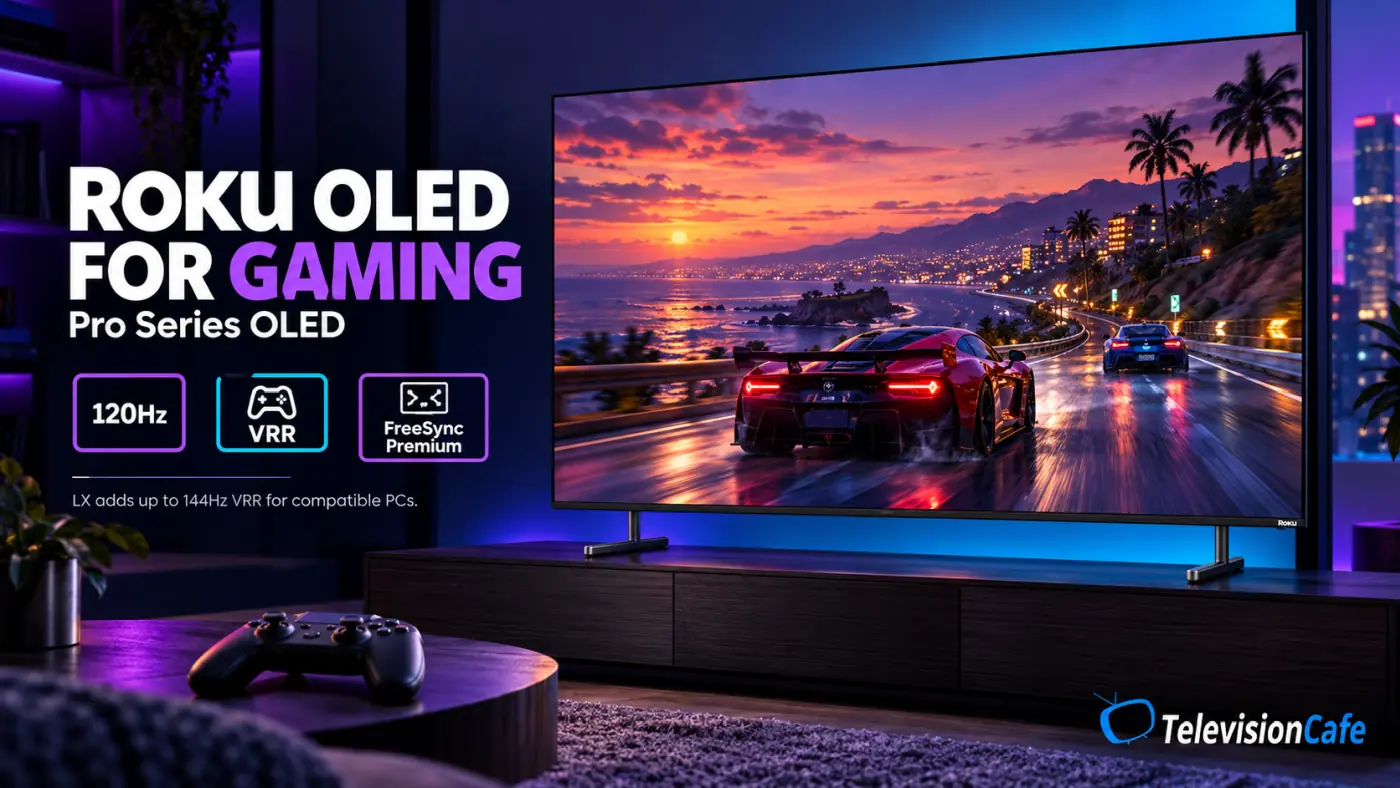
Roku lists FreeSync Premium, variable refresh rate and Automatic Game Mode for the new OLED lineup. The standard series supports 120Hz, while the LX adds up to 144Hz VRR.
For PS5 and Xbox Series X|S owners, verified 4K at 120Hz support is the more relevant target. The LX's higher ceiling is primarily of interest when connecting a gaming PC that can output a compatible 144Hz signal.
Roku's product page lists four HDMI inputs as HDMI 2.1, but its support overview describes two 120Hz-capable HDMI 2.1 ports on the Pro OLED. Check the exact model's manual before planning a setup with several high-refresh-rate devices.
Keep the numbers in perspective: A higher refresh rate does not make every game run faster. Your console or PC, the game itself and the selected output settings determine which modes you can actually use.
Our 60Hz vs. 120Hz vs. 144Hz explainer covers the practical differences.
Roku OS Is a Big Part of the Pitch
The new TVs pair OLED hardware with Roku's streaming interface. Roku Smart Picture Max automatically adjusts the picture for the content being watched, while the home screen brings apps, shortcuts and recommendations together.
Roku also includes practical touches such as Bluetooth headphone listening, backlit remote buttons and an on-TV remote finder. The stand uses tool-free, dual-position feet, with built-in cable management.
Those features may sound small next to a panel specification, but they are things you use every evening. Finding the remote in a dark room or connecting headphones without another box can matter more than a feature you never switch on.
Automatic picture adjustment is a convenience feature. It should not be treated as proof of reference-level accuracy, which requires measurement.

Can Roku Compete With LG and Samsung OLED TVs?
Roku has given buyers another OLED option to put on the shortlist. Whether it is the better buy depends on the actual alternatives available at checkout.
Comparing a new TV's launch price with a rival's original MSRP can be misleading. An established model on sale may offer a very different value proposition.
We would compare the same screen size and look at:
- Movie performance: shadow detail, HDR tone mapping and color accuracy.
- Daytime viewing: sustained brightness and reflection handling.
- Gaming: verified input modes, input lag and VRR behavior.
- Ownership: warranty terms, software support and the interface you prefer.
Our assessment of the announcement is that Roku's strongest opportunity is making OLED appealing to buyers who already like its software. A specification list alone cannot establish a picture-quality win over LG or Samsung.
OLED Care Still Matters
Roku's move into OLED also brings the usual care considerations. Repeated static elements, such as news tickers and game interfaces, can cause uneven pixel wear over time.
Roku's guidance recommends varied content, avoiding long periods with paused images, and allowing the television's automatic screen-refresh routine to finish. Do not unplug it while that maintenance is running.
For someone who mainly watches movies and a mix of shows, the decision is different from buying a screen that will display the same dashboard all day. Choose around the routine the TV will actually have.
Where Are Roku's OLED TVs Launching?
Roku's September announcement names Amazon as the exclusive retailer for the U.S. launch. The standard Pro Series OLED launched first, with the LX announced for availability beginning in October 2026.
The cited launch materials do not establish a European or Croatian release date. U.S. pricing should therefore be read as U.S. pricing, rather than converted into an assumed local retail price.
This article covers the announcement and published specifications. It is not a hands-on review, and the announced launch window does not guarantee stock for every size.
Why This Launch Is Worth Watching
Roku's OLED debut gives TV buyers a fresh question: would you choose a familiar streaming platform if its OLED hardware delivers at the right price?
The standard Pro Series is the lower-cost entry point. The LX asks buyers to pay more for the promise of better bright-room performance and additional PC-gaming flexibility.
For now, both deserve a place on the comparison list. Before calling either a bargain, we would want to see measured performance, exact-model connection support and the prices of competing TVs on the same day.
Roku OLED TV FAQ
Has Roku launched its own OLED TVs?
Yes. Roku announced its first OLED televisions on September 1, 2026: the Pro Series OLED and Pro Series LX OLED.
How much do Roku OLED TVs cost?
Roku lists the 55-inch Pro Series at $999.99 and the 65-inch at $1,199.99. Listed LX prices are $1,299.99 for 55 inches and $1,599.99 for 65 inches in the U.S.
What is the difference between Pro Series OLED and LX?
The LX adds up to 144Hz VRR, Wi-Fi 6 and a rechargeable hands-free voice remote. Roku also describes it as brighter, with improved reflection handling.
Is the Roku Pro Series OLED the same as the Mini LED model?
No. Roku has used Pro Series branding for Mini LED televisions too. Check that the listing explicitly identifies the display as OLED.
Are Roku OLED TVs confirmed for Europe?
The cited announcement covers the U.S. launch. It does not confirm a European release date.