
Best TVs for Bright Rooms in 2026: 6 Picks That Beat Glare
A bright living room can make a great TV look surprisingly ordinary. A window appears across a dark movie scene, the score graphic washes out during an afternoon game, and the advertised peak brightness suddenly feels beside the point.
The best TVs for bright rooms in 2026 solve different parts of that problem. Some scatter sharp reflections; some keep the whole image bright enough to read; the strongest choices do both while preserving convincing blacks. These six picks are based on published manufacturer specifications and independent screen tests, with attention to the exact sizes those tests cover.
Short answer: Choose the Sony BRAVIA 9 II in 65, 75, or 85 inches for the hardest daylight conditions. Choose the Samsung S95H if a window faces the screen and you want OLED. The Hisense U7SG is the more affordable glare-focused option in 55 to 85 inches.
What Makes a TV Good in a Bright Room?
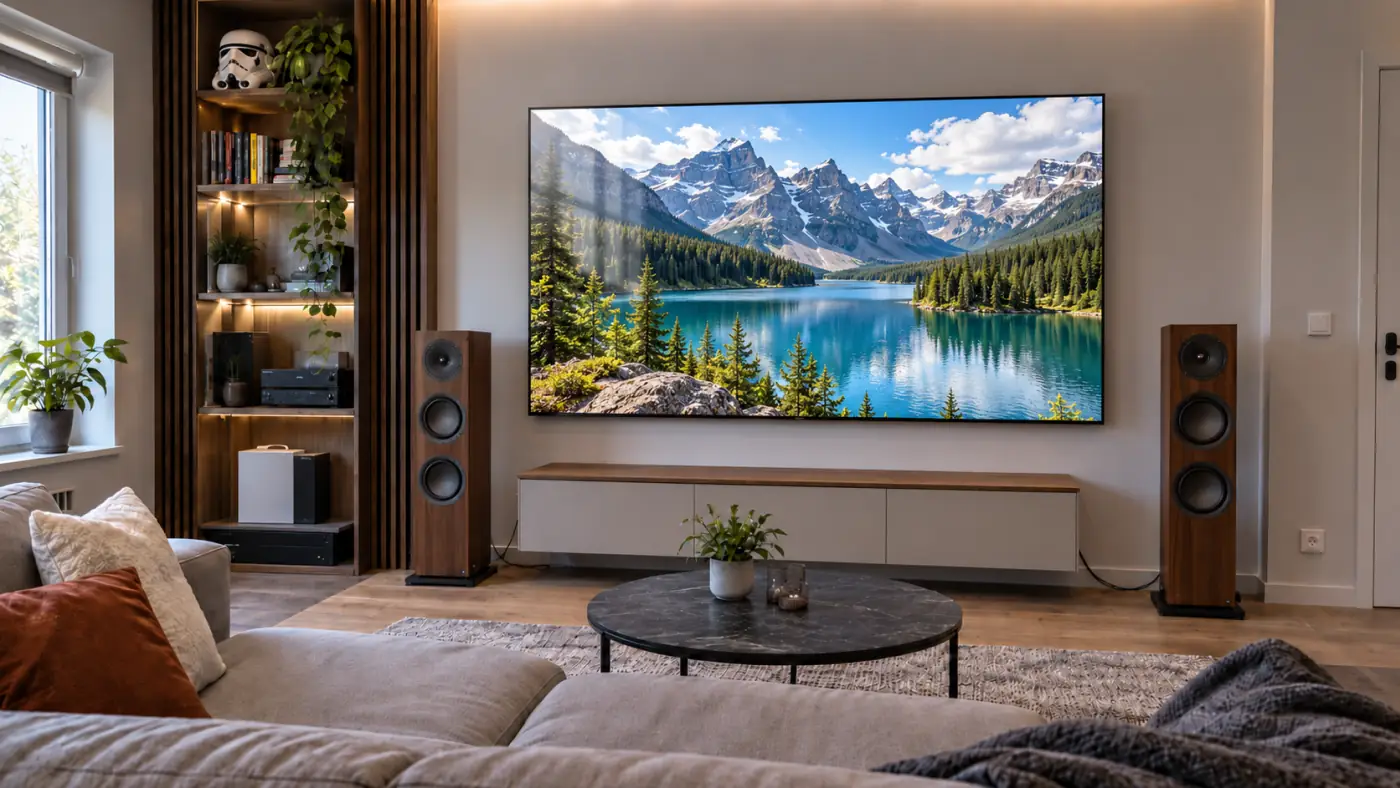
Direct reflections are the windows and lamps you can see mirrored in the panel. A good anti-reflective treatment can make them much less distracting. Everyday brightness matters for news, sports, and streaming menus; a spectacular peak HDR measurement alone does not tell you how readable the whole picture will be at noon. Black levels under room lighting determine whether a nighttime scene still has depth when sunlight fills the room.
Where the light lands matters as much as how much light there is. A TV facing a large window needs unusually strong reflection control. A room that is bright but has no window directly opposite the screen gives you more freedom to prioritize picture quality, viewing angles, or price.
Those differences explain why an OLED can be an excellent daytime TV without being the best choice for every sunlit space. For a broader comparison, see our OLED vs. Mini LED guide.
The Best Bright-Room TVs of 2026 at a Glance
| TV | Best for | Watch out for |
|---|---|---|
| Sony BRAVIA 9 II | Demanding, sunlit living rooms | 115-inch version has different reflection handling |
| Samsung S95H OLED | An OLED facing a window | Blacks can look raised in strong ambient light |
| LG G6 OLED | Daytime shows and nighttime movies | 97-inch panel differs from smaller G6 models |
| Sony BRAVIA 7 II | Bright rooms without a facing window | Direct reflections remain noticeable |
| Hisense U7SG | Glare control for less money | 100- and 116-inch versions use glossy screens |
| Hisense U6SF Pro | Budget daytime viewing | Motion and screen uniformity are weaker |
Sony BRAVIA 9 II: Best Overall for Tough Daylight
If the TV must sit opposite a window and you still want to watch dark dramas at lunchtime, the BRAVIA 9 II is the first model to consider. Its powerful backlight and effective screen treatment work together: bright scenes remain easy to follow, while shadows hold up better under room lighting than they do on many glare-fighting displays.
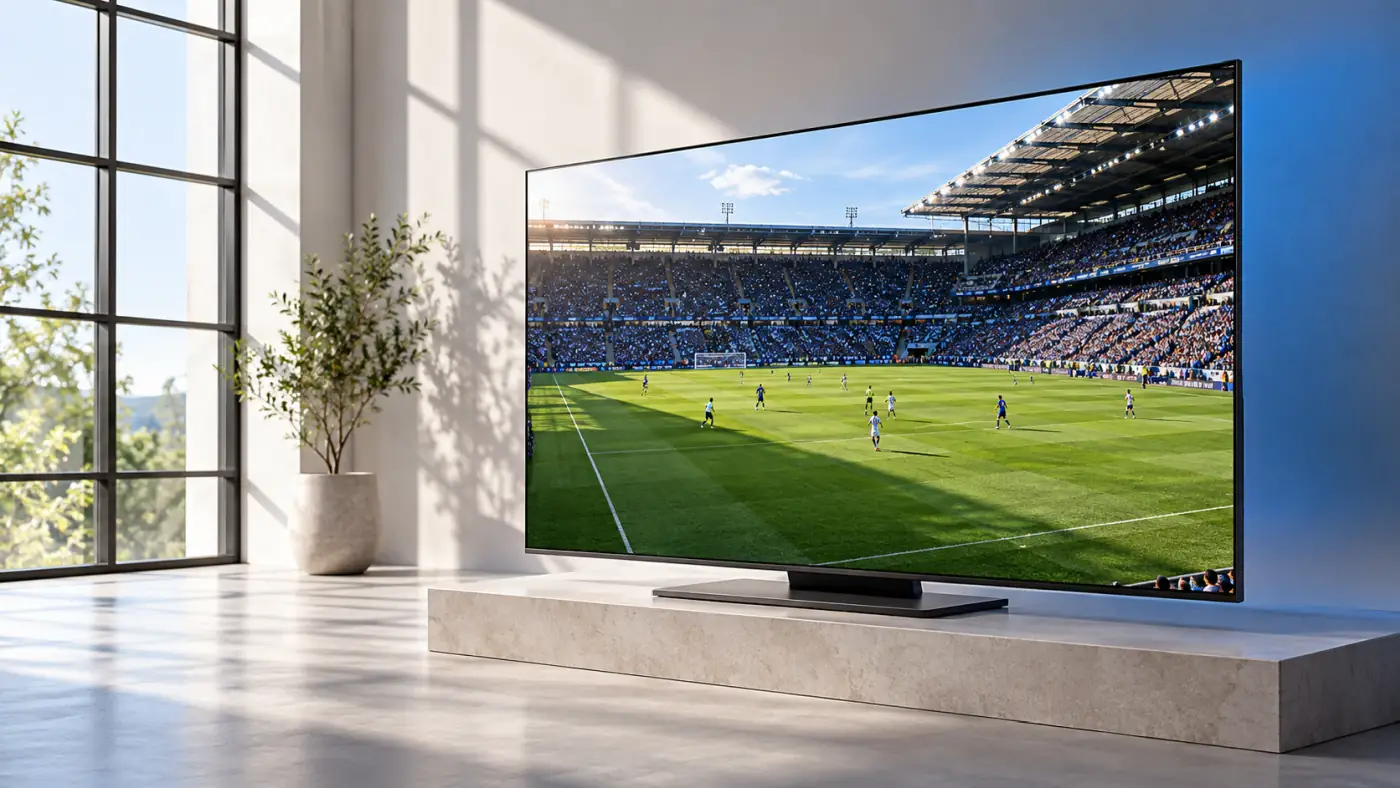
That combination also makes sense for sports. White jerseys, a bright field, and a score ticker remain clear without relying on a dazzling HDR demo clip. Sony's processing is another reason to consider it when much of your viewing comes from regular broadcasts or streaming.
Size warning: Independent testing of the 65-inch model should not be applied blindly to the 115-inch BRAVIA 9 II. The 115-inch version lacks the Black Screen Pro treatment and handles reflections less effectively. Our bright-room recommendation is specifically for the 65-, 75-, and 85-inch versions.
Read the full BRAVIA 9 II review, and compare the independent reflection measurements before choosing a size.
Samsung S95H: Best OLED for a Window Facing the Screen
The S95H is the OLED to put on your shortlist when a window or lamp would otherwise appear as a sharp mirror image. Its matte anti-glare finish spreads those reflections so they are much less recognizable, and its strong brightness keeps daytime programs lively. You also get OLED's fast pixel response and broad viewing angles, useful when people watch from different seats.
The tradeoff appears in very bright ambient light: blacks can look less deep, especially in dark scenes. A glare-free-looking reflection does not always mean the best dark-scene contrast in daylight. If that is your priority, compare it with the BRAVIA 9 II and the LG G6 in your actual room.
Check the size: The independently tested 77-inch S95H is representative of the 55- and 65-inch versions, but the 83-inch version uses a different OLED panel. Do not assume its brightness and glare behavior match the smaller sets exactly.
See our Samsung S95H review and the independent size-by-size test notes.
LG G6: Best OLED for Bright Days and Movie Nights
The LG G6 takes a more balanced route. It gets bright, controls reflections well, and keeps blacks convincing when the room lights are on. After sunset, it delivers the rich contrast you expect from a high-end OLED. Dolby Vision support is a useful bonus if your favorite movies and streaming services offer it.
Compared with the S95H, a hard reflection from a directly facing window can be easier to notice. Compared with a bright LCD such as the BRAVIA 9 II, it has less headroom for the most punishing sunlit rooms. But for a living room used equally often in the afternoon and at night, the G6 is a remarkably easy choice to live with.
Size note: The 97-inch G6 uses a different panel from the smaller sizes and does not reach the same brightness. Read our LG G6 review and the independent test and size notes.
Sony BRAVIA 7 II: Excellent When the Window Is Off to the Side
The BRAVIA 7 II shows why brightness and reflection control deserve separate checks. It has plenty of punch for daytime sports and television, and its picture retains depth under ambient light. Yet a bright window reflected directly in its screen remains distracting, especially over a dim scene.
Choose it when you can place the TV on a wall perpendicular to the main window, use a shade at peak sunlight, or mostly watch brighter content during the day. If the window must be directly behind your sofa, the BRAVIA 9 II or a well-treated Hisense U7SG is the safer glare choice. See the independent BRAVIA 7 II test.
Hisense U7SG: Strong Glare Control for Less
In its 55-, 65-, 75-, and 85-inch versions, the U7SG offers an appealing answer to the most annoying bright-room problem: a window reflected right in the middle of a show. Its matte finish disperses that reflection, and its bright image keeps everyday TV watchable without buying a flagship.
There are compromises. People sitting far to the side will see a weaker picture, and unevenness or blur may stand out during fast sports. If your living room is built around a big game with seats spread across the room, check those issues before buying.
Large-screen trap: The 100- and 116-inch U7SG models have a glossy finish rather than the matte coating on smaller versions. They do not deliver the same protection against direct reflections. See the our U7SG review for the size distinction.
Hisense U6SF Pro: Budget Pick for Daytime Viewing
When a flagship is out of reach, the U6SF Pro combines useful brightness with an anti-reflective screen. It is a sensible choice for a straightforward living-room setup: shows, news, casual streaming, and the occasional movie while the blinds are open. The built-in platform is Fire TV, which is worth knowing if you prefer another smart TV interface.
This is a more qualified recommendation for sports and action-heavy viewing. Independent tests flag motion blur and screen uniformity, and the viewing angle is narrow. A higher-tier model is worth the extra money if those flaws bother you. Make sure the listing says U6SF Pro; results for the Pro should not be assumed for the standard U6SF. Check the independent review and Hisense's model listing.
Our Hisense U6SF Pro review takes a closer look at its daytime picture, reflection handling, and the motion limitations worth checking before you buy.
Matte or Glossy: Which Screen Works Better Near a Window?
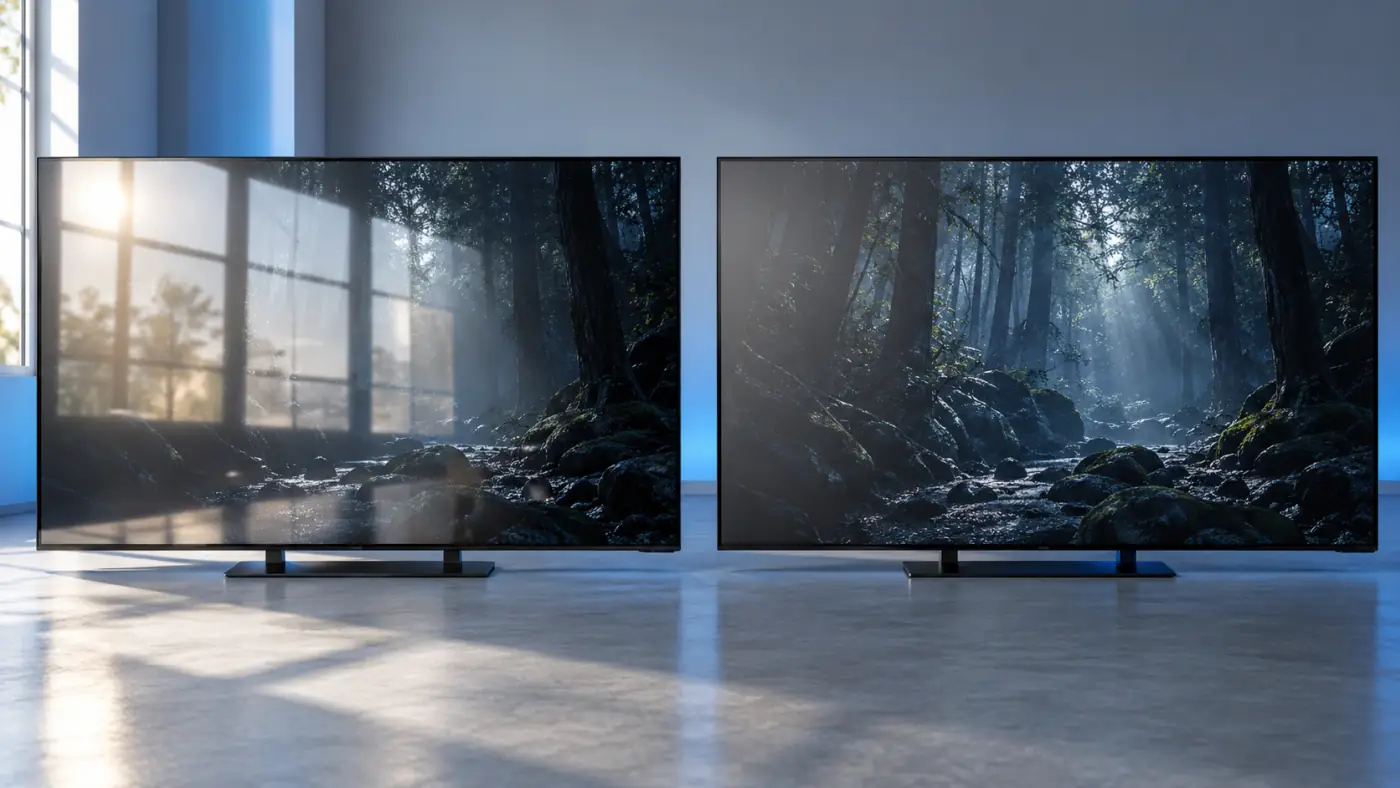
A matte finish spreads a sharp reflection over a wider area. The outline of a window or lamp becomes harder to see, which can be a major relief during daytime viewing. That scattered light can still put a veil over dark parts of the picture, however. A glossy panel may look cleaner when reflections are controlled but can show a much sharper mirror image when the window is in the wrong place.
Neither finish wins in every room. Before buying, sit where you normally watch and look at the screen position around the time sunlight is strongest. If a window would appear in the center of the screen, favor proven direct-reflection handling. If the window falls beside the TV, weigh overall picture quality and black-level performance more heavily. For a closer look at the tradeoff, read the reflection-treatment research.
Three Changes That Help Any TV Handle Glare
- Move the reflection, not just the TV. A wall perpendicular to the main window often works better than a wall directly opposite it. Even a small adjustment to the TV's angle can shift a bright reflection away from your usual seat.
- Use a light-filtering shade for the worst hour. You do not have to turn your living room into a theater. Taking the edge off direct sunlight gives every screen more room to show shadow detail.
- Set picture brightness for the time of day. Try an accurate but brighter picture preset or increase the panel's brightness for afternoon TV; return to a gentler setting at night. Turning up brightness cannot remove the reflection of a window, so tackle placement first.
Quick test: Hold a dark phone screen at the proposed TV position while sitting on the sofa. If you can clearly see the window reflected in it, prioritize a TV with strong direct-reflection results or change the setup before you buy.
Which Bright-Room TV Should You Buy?
For the room that gets blasted by daylight, pick the 65-, 75-, or 85-inch Sony BRAVIA 9 II. For an OLED with a window directly opposite the screen, start with the Samsung S95H in 55, 65, or 77 inches. For a room that switches between afternoon viewing and nighttime movies, the LG G6 is the most appealing OLED balance in its smaller sizes.
Working with a tighter budget? The Hisense U7SG in 55 to 85 inches is the more convincing reflection-focused buy, while the U6SF Pro covers casual daytime watching for less. The BRAVIA 7 II belongs on the list when a facing window is not part of the problem.
The smartest purchase begins with your window, your usual seat, and the exact screen size you plan to buy. Those three details tell you more about real-world glare than a single peak-brightness number.
Frequently Asked Questions
Is Mini LED always better than OLED in a bright room?
No. A strong Mini LED can supply more brightness for difficult daylight, but OLED models such as the Samsung S95H and LG G6 can also work extremely well. Reflection treatment and the way black levels hold up under room lighting vary by model.
Will an anti-glare screen eliminate a reflected window?
It can make the window much less distinct, but the light has not vanished. Depending on the finish, the reflection may spread into a broader haze. Moving the TV or using a shade can still make a substantial difference.
Should I shop by peak HDR brightness in nits?
Use it as one clue, not the whole decision. For daytime news and sports, check everyday SDR brightness, direct reflections, and how dark scenes look under ambient light. The room's window position can matter more than a headline peak figure.
Does screen size change glare performance?
Sometimes. The 115-inch BRAVIA 9 II and the 100- and 116-inch Hisense U7SG do not have the same reflection treatment as their smaller counterparts. The 83-inch Samsung S95H and 97-inch LG G6 also use different panels from the smaller tested sizes. Check the exact model before ordering.