
Hisense U7SG Review (2026): The Mini-LED Sweet Spot?
The Hisense U7SG has a pretty clear pitch: give sports fans and gamers a bright, fast Mini-LED TV without sending them straight to the flagship aisle. The 2026 U7 series combines a 4K LCD panel, full-array Mini-LED local dimming, a native 165Hz refresh rate, Google TV, and screen sizes from 55 to 116 inches.
That combination makes it easy to put on a shortlist. The harder question is whether the U7SG makes sense for your room, especially if you watch movies at night or have people sitting far off to the sides. Here is what the confirmed U.S. specifications tell us, where the size-specific differences matter, and what you should check before buying.
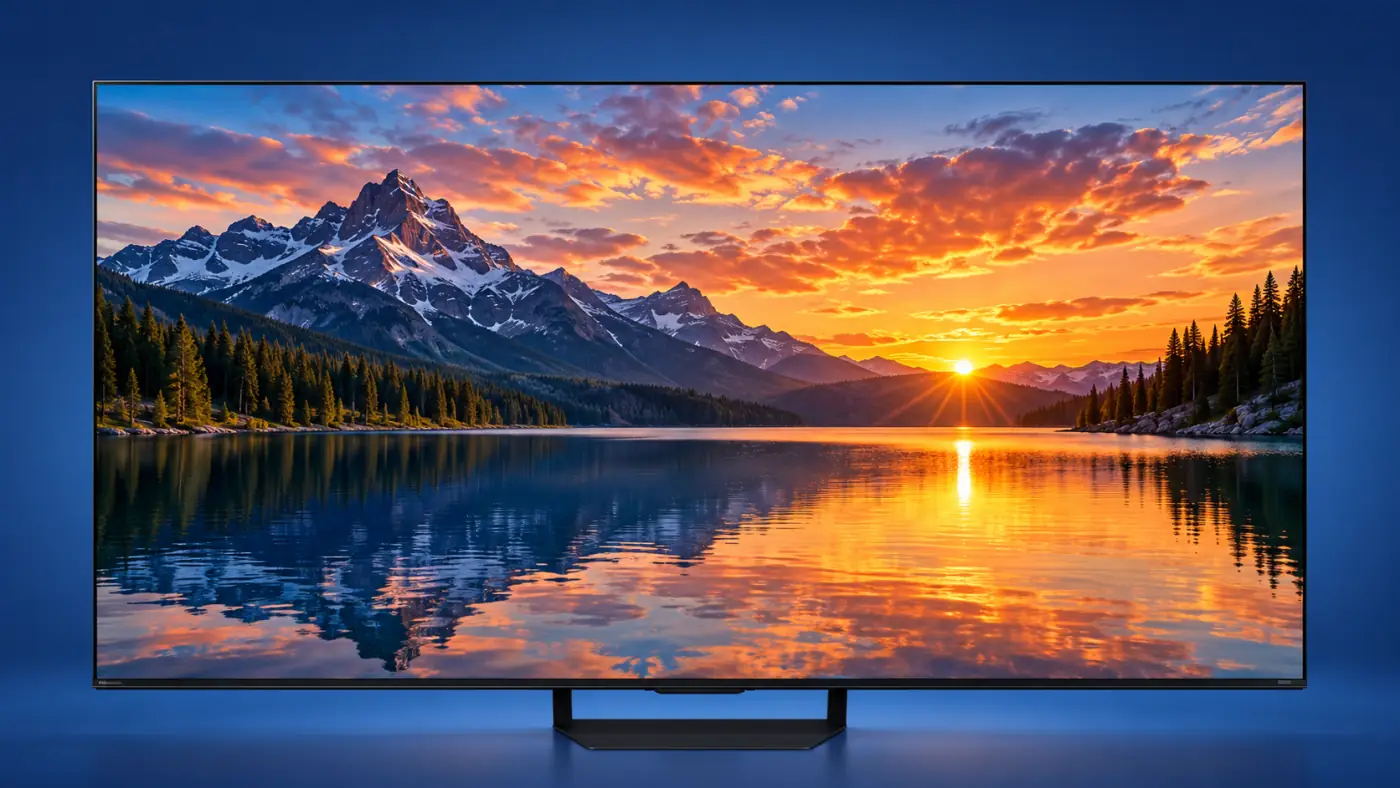
Hisense U7SG at a Glance
The short answer: The U7SG looks especially well equipped for a bright living room with sports, streaming, and modern gaming in the mix. Its anti-reflection treatment, Mini-LED backlight, native 165Hz panel, broad HDR support, and unusually large size range give it a compelling set of tools. If your priority is perfect blacks, very wide seating angles, or known performance in difficult scenes, compare independent measurements of the exact size you want before ordering.
- Best fit: Daytime TV, sports, mixed-use living rooms, and PC or console gaming.
- Look closer if: You watch mostly dark-room movies, sit far off-axis, or plan a multi-device setup with a soundbar.
- Big shopping trap: The 116-inch model does not have the same HDMI port count or speaker system as the smaller U7SGs.
Hisense U7SG Specs: The Details That Matter
| Feature | U.S. U7SG specification |
|---|---|
| Screen sizes | 55, 65, 75, 85, 100, and 116 inches |
| Display | 4K LCD with quantum-dot color, Mini-LED Pro backlight, and full-array local dimming |
| Native refresh rate | 165Hz |
| HDR | Dolby Vision, Dolby Vision IQ, HDR10, HDR10+, HDR10+ Adaptive, and HLG |
| Gaming | VRR, ALLM, AMD FreeSync Premium Pro, Game Bar, and Dolby Vision/HDR10+ gaming support |
| Smart platform | Google TV |
| HDMI | Four HDMI 2.1 inputs on 55–100 inches; three HDMI 2.1 inputs plus USB-C DisplayPort on 116 inches; eARC on HDMI 3 |
| Built-in sound | 50W 2.1.2 (55–85 inches); 60W 2.1.2 (100 inches); 110W 6.2.2 (116 inches) |
Specifications reflect Hisense's U.S. sheets. Features and physical design can vary by screen size; verify the exact model number before purchasing.
Picture Quality: Why the Mini-LED Backlight Matters
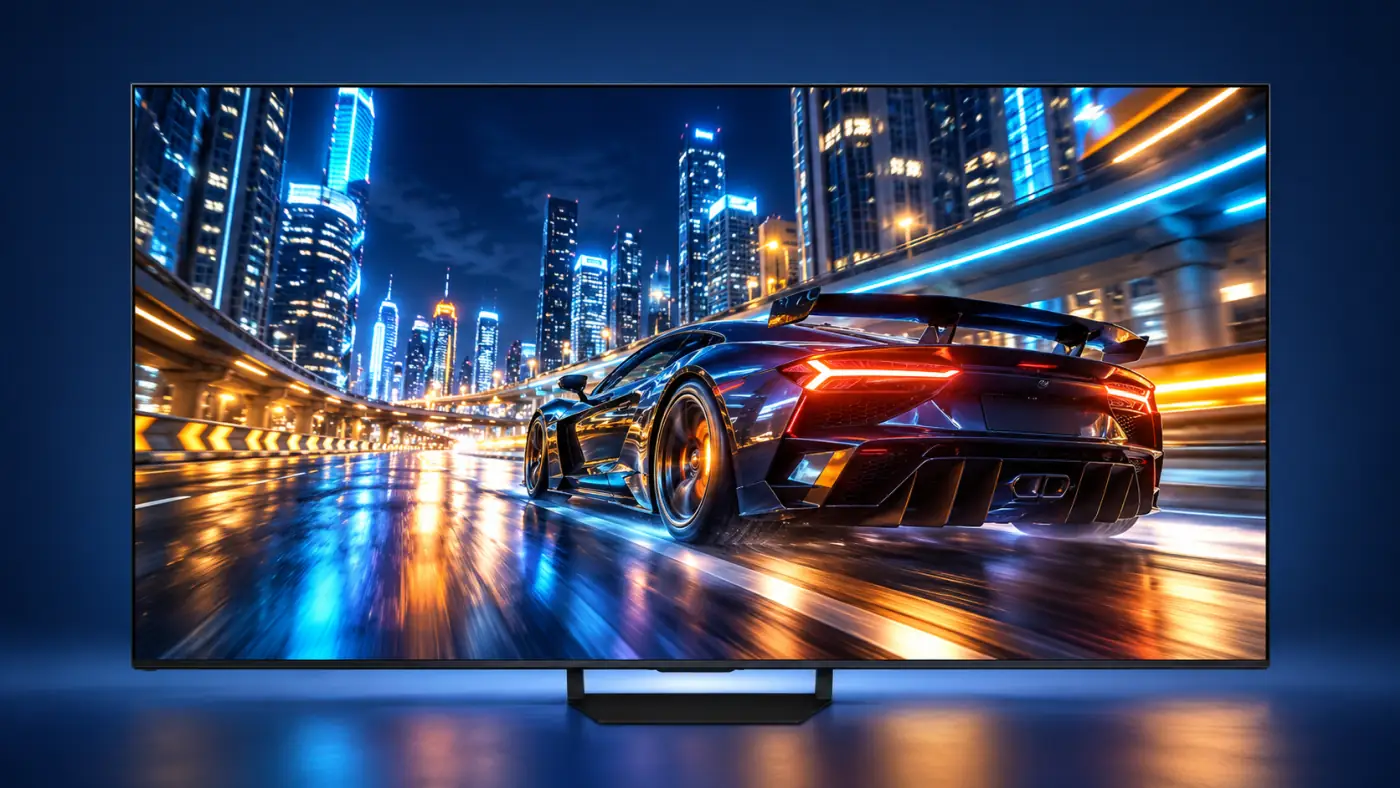
The U7SG is an LCD TV with a Mini-LED backlight, not an OLED or an RGB Mini-LED model. Small LEDs behind the panel are grouped into dimming zones, allowing the TV to brighten highlights while keeping darker parts of the image under tighter control than a basic backlit LCD. Quantum dots help produce a wider range of colors, while Hisense's Hi-View AI Engine Pro handles picture processing.
Hisense advertises up to 3,000 nits of peak brightness for the series. Treat that as a manufacturer claim under unspecified marketing conditions, not a promise that every screen size, picture mode, or full-screen image will reach 3,000 nits. The number of dimming zones and the way they behave around subtitles, stars, and other small bright objects are more useful questions for a movie-focused buyer.
Hisense lists a low-reflection screen treatment, which is relevant if lamps or windows regularly show up on your TV. A matte-looking surface can cut distracting mirror-like reflections, but its effect on perceived black levels and picture texture depends on the room and the screen. For a broader look at the trade-offs, read our OLED vs. Mini LED guide.
HDR Movies and Streaming: A Welcome Format List
There is no HDR format guessing game here. The U7SG supports Dolby Vision and HDR10+, along with HDR10 and HLG. That gives it a practical advantage if your subscriptions, discs, and streaming boxes use different formats. Filmmaker Mode and IMAX Enhanced are also listed in Hisense's U.S. specifications.
Format support is only the starting point, though. In a dim room, a backlit LCD can still show a halo around a bright object against black; how visible that halo is depends on the local-dimming implementation and your seating position. If you watch almost exclusively in darkness and are sensitive to blooming, compare the U7SG with a similarly priced OLED in person or consult measurements for the size you intend to buy.
Sports and Bright Rooms: The U7SG's Natural Habitat
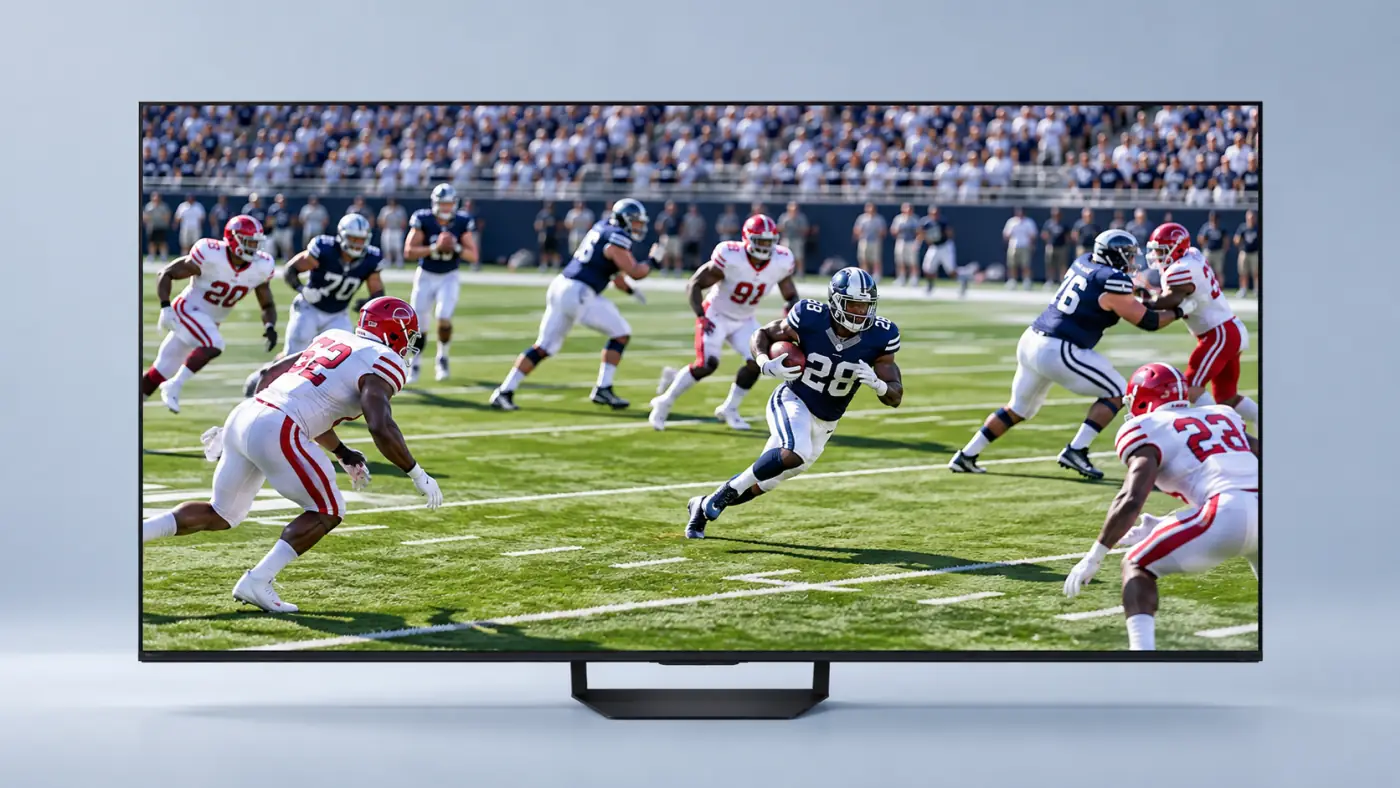
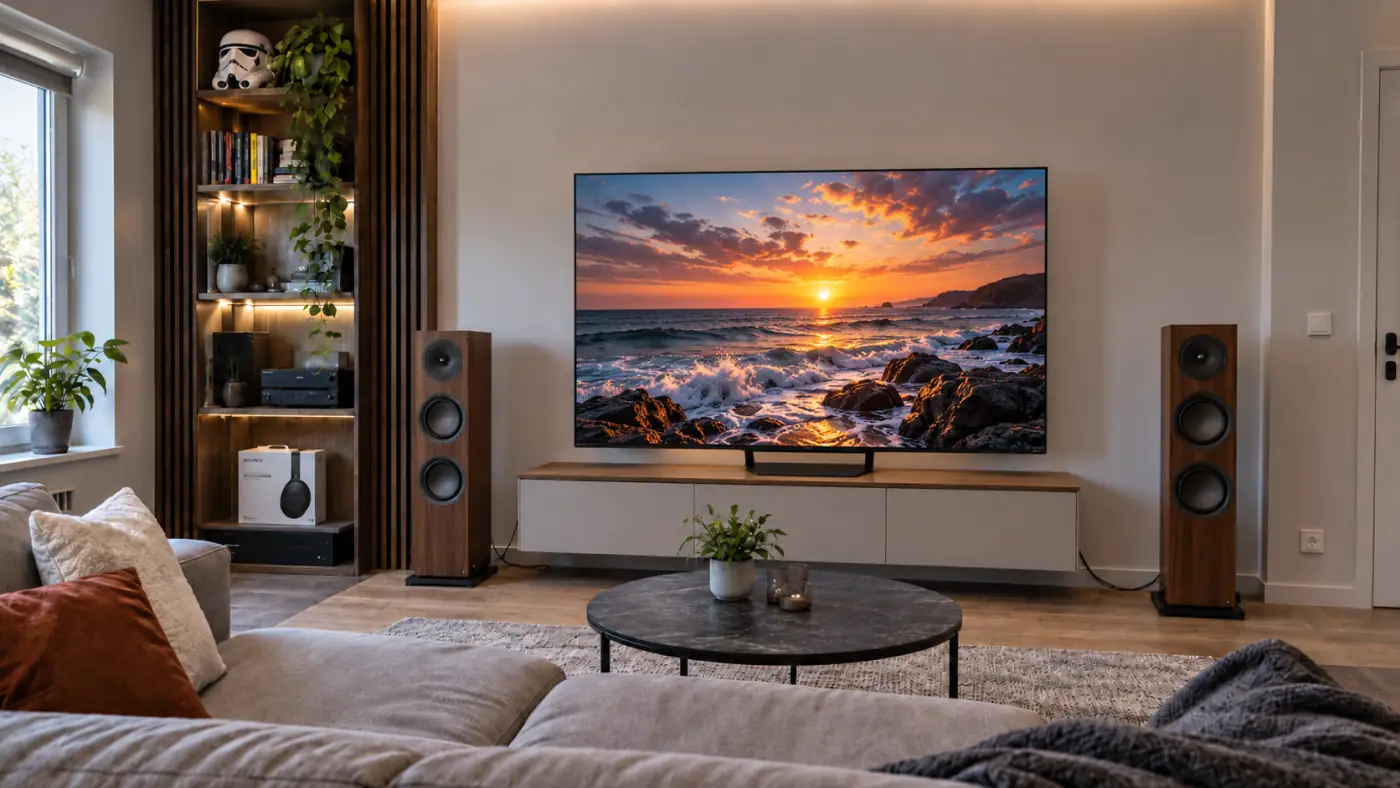
Sports make a TV work hard: white uniforms, fast camera pans, a bright field, and a room that often has the lights on. The U7SG's high-refresh panel, Mini-LED backlight, and anti-reflection coating are all relevant to that setting. Its 55-to-116-inch range also lets you choose between a regular living-room setup and a genuine crowd-sized screen.
Keep one distinction in mind: a 165Hz panel does not turn a 60fps broadcast into native 165fps video. Motion processing can insert or interpolate frames, but some viewers dislike the artificial look or artifacts it can introduce. Start with a natural-looking preset, then adjust motion settings only if panning shots or ball tracking bother you. Our bright-room TV guide puts the U7SG in the context of other screens built to handle glare.
Gaming: 165Hz Is for PC Players, Too
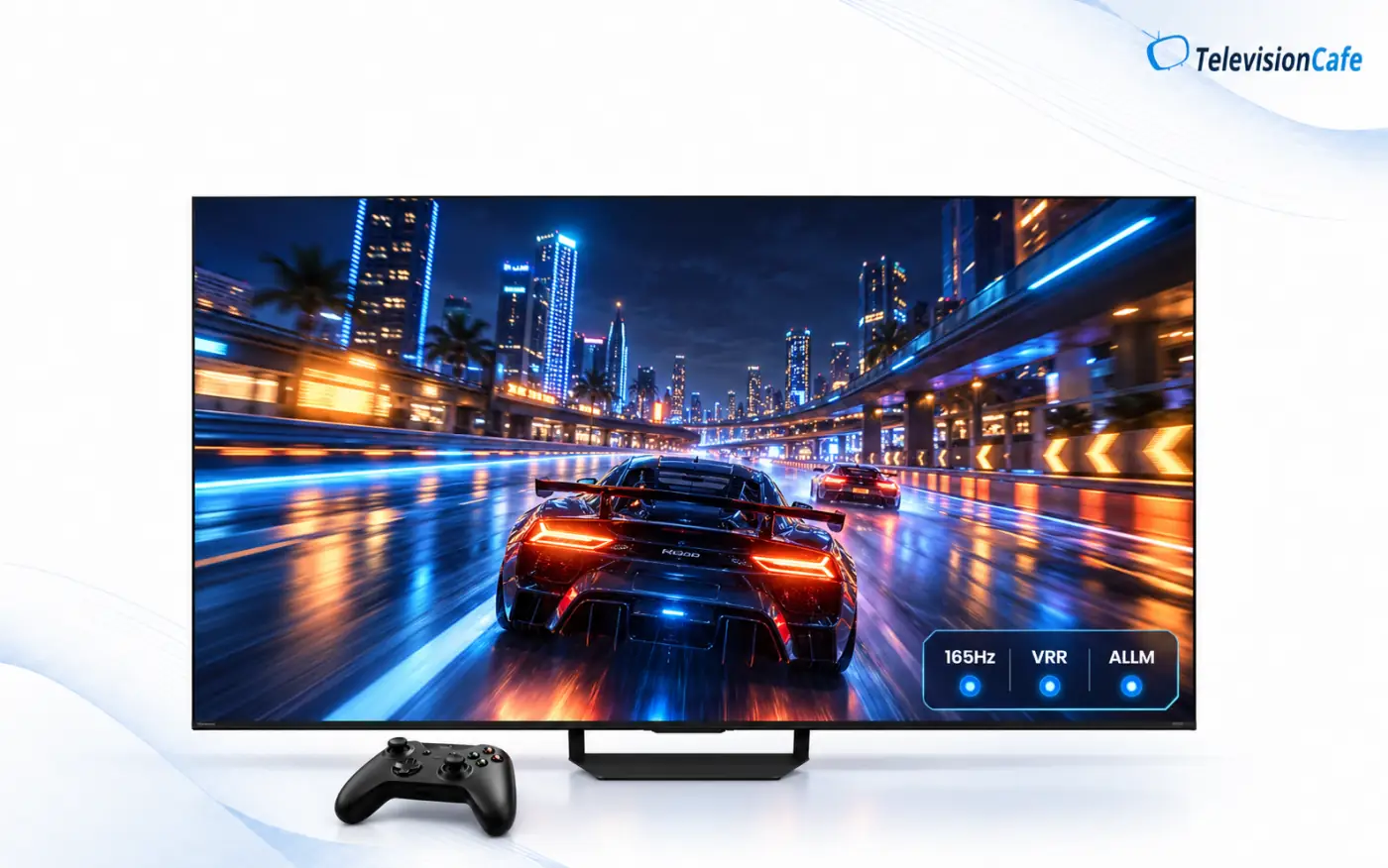
The native 165Hz panel gives PC gamers more headroom than a standard 120Hz television, provided their computer, cable, settings, and game can actually feed it at that rate. Console players can still make good use of 4K at up to 120Hz, VRR, and automatic low-latency mode; a PS5 or Xbox will not suddenly output 165fps just because the panel can refresh at 165Hz.
Hisense also lists AMD FreeSync Premium Pro, an enhanced Game Bar, Dolby Vision gaming, and HDR10+ gaming. The advertised Game Booster figures need context: Hisense specifies 330 VRR for 55–85 and 116 inches, but 288 VRR for the 100-inch model. These boosted modes trade resolution for a higher refresh figure. For 4K gaming, use the native 165Hz specification as the relevant ceiling, then check the source device's limits.
All HDMI inputs are labeled HDMI 2.1 on the 55–100-inch U7SGs, while the 116-inch model lists three HDMI 2.1 inputs and a USB-C DisplayPort connection. Hisense places eARC on HDMI 3. If a soundbar takes that input, count the remaining ports before you connect a console, gaming PC, and streaming box. Our ARC/eARC troubleshooting guide can help if the audio handshake gets stubborn.
Google TV, Remote, and Everyday Use
The G in U7SG is worth paying attention to: this is the Google TV version of the 2026 U7. Hisense also sells U7SF variants with Fire TV, depending on the retailer. Do not assume that a deal for a similarly named U7 is the same operating-system experience.
Google TV organizes shows and movies across supported services, and the U.S. spec sheets list Google Assistant, AirPlay, Apple HomeKit compatibility, Wi-Fi 6E, Bluetooth 5.4, and a backlit voice remote. App availability and software behavior can change, so check a particular service before buying if it is central to your setup.

Sound: The Size You Choose Changes the Hardware
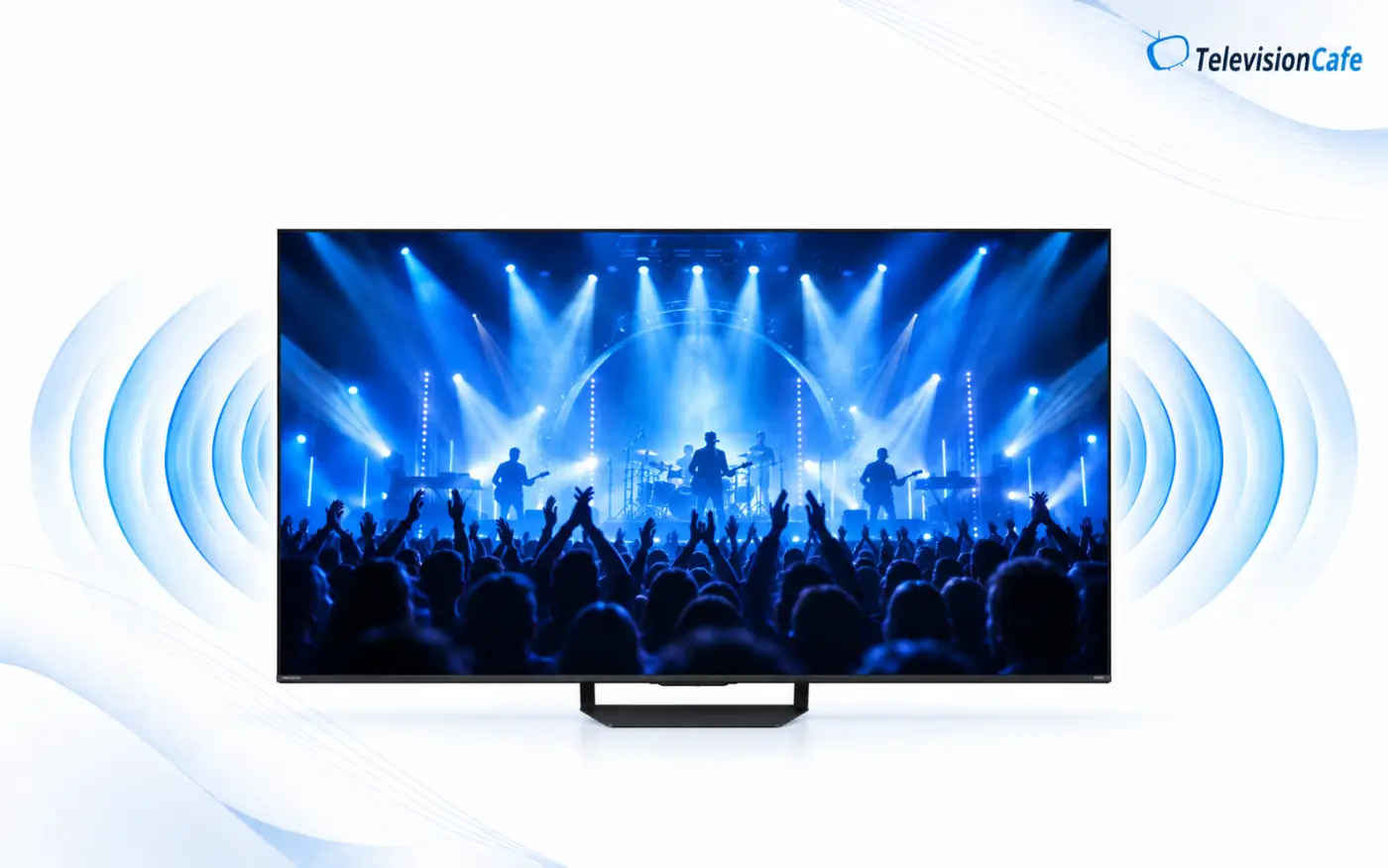
The 55-, 65-, 75-, and 85-inch versions have a 50W 2.1.2-channel speaker system; the 100-inch version steps up to 60W with the same channel layout. The 116-inch U7SG is in another class on paper, with a 110W 6.2.2-channel system. Hisense lists Dolby Atmos and DTS Virtual:X throughout the series and promotes Devialet tuning.
Those numbers suggest a more ambitious built-in audio setup than the thin speakers on many TVs, especially at 116 inches. They do not establish how clear dialogue sounds in your room or replace a proper surround setup by themselves. If you already own a soundbar or receiver, the important practical detail is that eARC uses HDMI 3.
Which Hisense U7SG Size Should You Buy?
55 and 65 inches: The sensible starting point for most smaller spaces and mixed-use living rooms. You get the core U7SG feature set without the installation challenges of an oversized screen.
Shopping for the 65-inch model? See how the U7SG compares with other options in our guide to the best 65-inch TVs under $1,000 in 2026.
75 and 85 inches: These sizes make the most immediate sense if sports are the main event and your seating is farther back. Measure the wall and furniture first; screen width matters as much as the advertised diagonal.
100 inches: A big-screen choice with 60W 2.1.2 audio, four HDMI 2.1 inputs, and a dual-position stand. Its listed Game Booster mode is 288 VRR rather than the 330 VRR figure on the 55–85-inch models.
116 inches: A serious installation project with 110W 6.2.2 sound, three HDMI 2.1 inputs, and USB-C DisplayPort. Hisense lists a 215.6-pound weight without the stand, so check mounting hardware, wall construction, delivery access, and seating distance before falling in love with the diagonal.
Hisense U7SG Pros and Things to Check
| Why it makes the shortlist | What deserves a closer look |
|---|---|
|
|
Is the Hisense U7SG Worth Buying?
If you want one TV for Sunday games, weekday streaming, and a gaming PC or console, the U7SG deserves a close look. Hisense gives it the right ingredients for that job: bright-room-minded screen treatment, local dimming, a fast native panel, modern gaming tools, and unusually flexible size choices.
The purchase decision comes down to the exact screen size and the price you can get. A strong discount makes this package much easier to recommend; a price close to a better-tested step-up model makes comparison shopping sensible. For a dark-room cinema setup, pay particular attention to independent blooming and viewing-angle tests rather than buying on the 3,000-nit headline. For a sunny family room with lots of sports and games, the U7SG's priorities are much easier to appreciate.
At TelevisionCafe, our advice is to compare the complete model number, your real seating layout, and the current price. Those three details will tell you more than the spec-sheet superlatives.
Could you spend less and still get the TV you need? Our Hisense U6SF Pro vs U7SG comparison explains what the step-up model adds for movies, sports, and gaming.
Considering TCL instead? Read our Hisense U7SG vs TCL QM7L comparison to see how the two stack up for your room, gaming setup and budget.
Hisense U7SG FAQ
Is the Hisense U7SG an OLED TV?
No. It is a 4K LCD TV with a quantum-dot layer, Mini-LED backlight, and full-array local dimming. OLED controls light at the individual pixel level; the U7SG controls its backlight in zones.
What is the difference between the U7SG and U7SF?
The U7SG uses Google TV, while Hisense markets U7SF variants with Fire TV. Check the exact size and model specifications separately rather than assuming every other feature is identical.
Does the U7SG support 4K at 165Hz?
Hisense lists a native 165Hz 4K panel. To use refresh rates above 120Hz, you need a compatible PC and connection; current consoles top out at 120Hz output. Hisense's 288/330 Game Booster figures refer to modes that lower the resolution.
How many HDMI ports does the Hisense U7SG have?
The U.S. 55-, 65-, 75-, 85-, and 100-inch models list four HDMI 2.1 inputs. The 116-inch model lists three HDMI 2.1 inputs plus USB-C DisplayPort. HDMI 3 handles eARC.
Does the Hisense U7SG support Dolby Vision?
Yes. Hisense lists Dolby Vision, Dolby Vision IQ, HDR10, HDR10+, HDR10+ Adaptive, and HLG in its U.S. specification sheets.
Is the Hisense U7SG good for bright rooms?
Its Mini-LED backlight and low-reflection treatment make it a promising bright-room option on paper. How well a particular size handles sunlight and black levels still depends on independent testing and your room's window placement.