
Samsung S95H OLED Review (2026): The OLED TV to Beat?
Samsung S95H OLED: Samsung Pushes QD-OLED Even Further in 2026
The Samsung S95H OLED is Samsung's flagship OLED TV for 2026, and on paper it looks like a television designed to remove many of the remaining compromises associated with premium OLED displays.
It combines self-emissive OLED blacks with extremely vivid color, high HDR brightness, Samsung's Glare Free screen treatment and gaming support at up to 4K 165Hz. The S95H also introduces a striking new FloatLayer design, Samsung Art Store support and optional Wireless One Connect connectivity.
None of those features matter if the picture does not deliver, of course. Fortunately, the S95H is not just a design exercise. Independent testing places it among the strongest televisions of 2026, with exceptional HDR color, excellent brightness, near-instantaneous gaming response and some of the best reflection handling available on an OLED TV.
There are still important compromises. Samsung continues to leave out Dolby Vision, the matte coating changes how blacks appear in a bright room, and not every S95H size or regional version necessarily uses the same OLED panel technology.
So is the Samsung S95H actually the OLED TV to beat in 2026? The answer is closer to yes than ever, but the details matter.
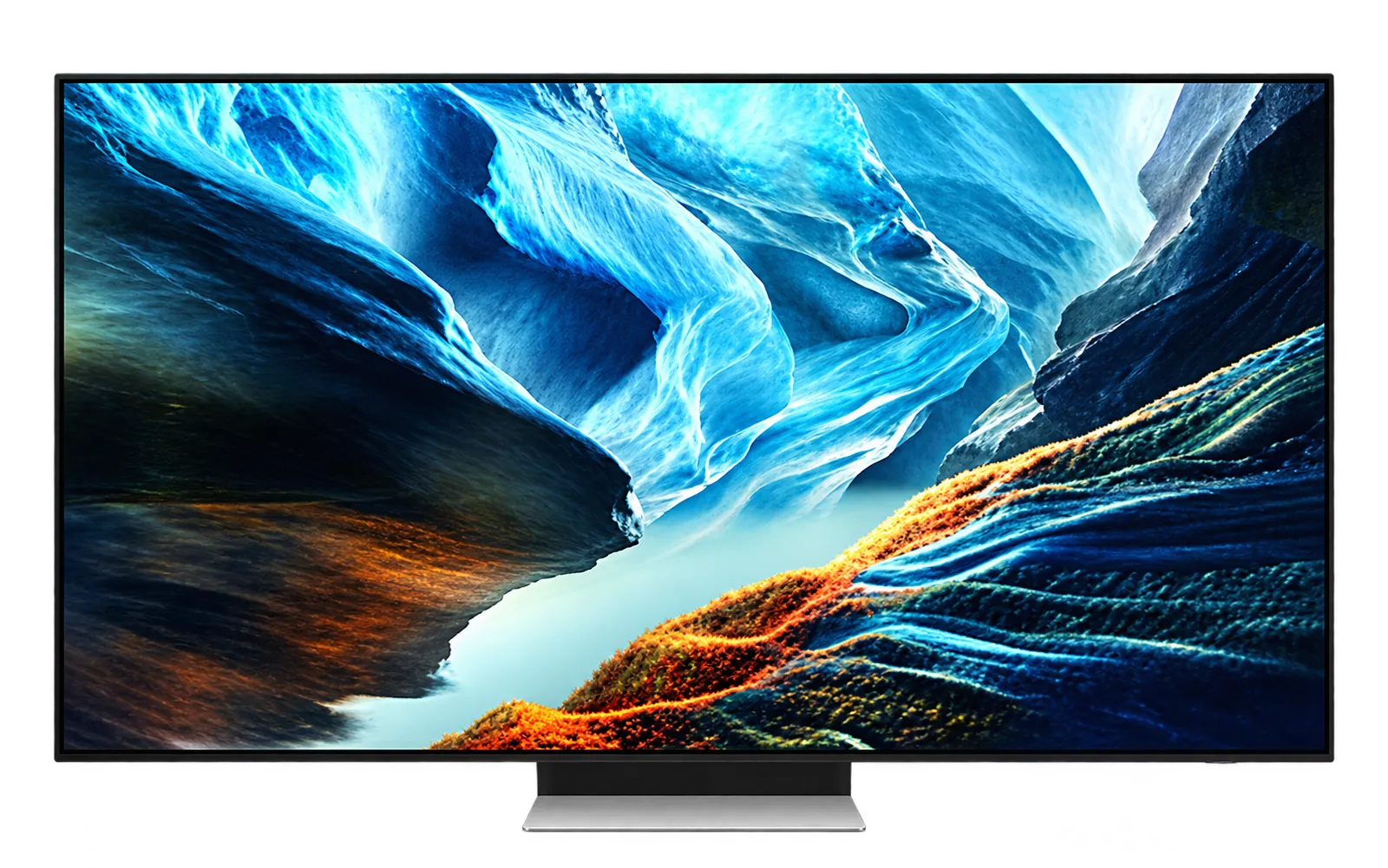
Samsung S95H Quick Verdict
The Samsung S95H is one of the best all-round OLED TVs of 2026.
Its strongest qualities are immediately obvious: perfect OLED blacks in a dark room, exceptionally vivid HDR colors, excellent peak brightness and a matte Glare Free coating that does an outstanding job of suppressing reflections.
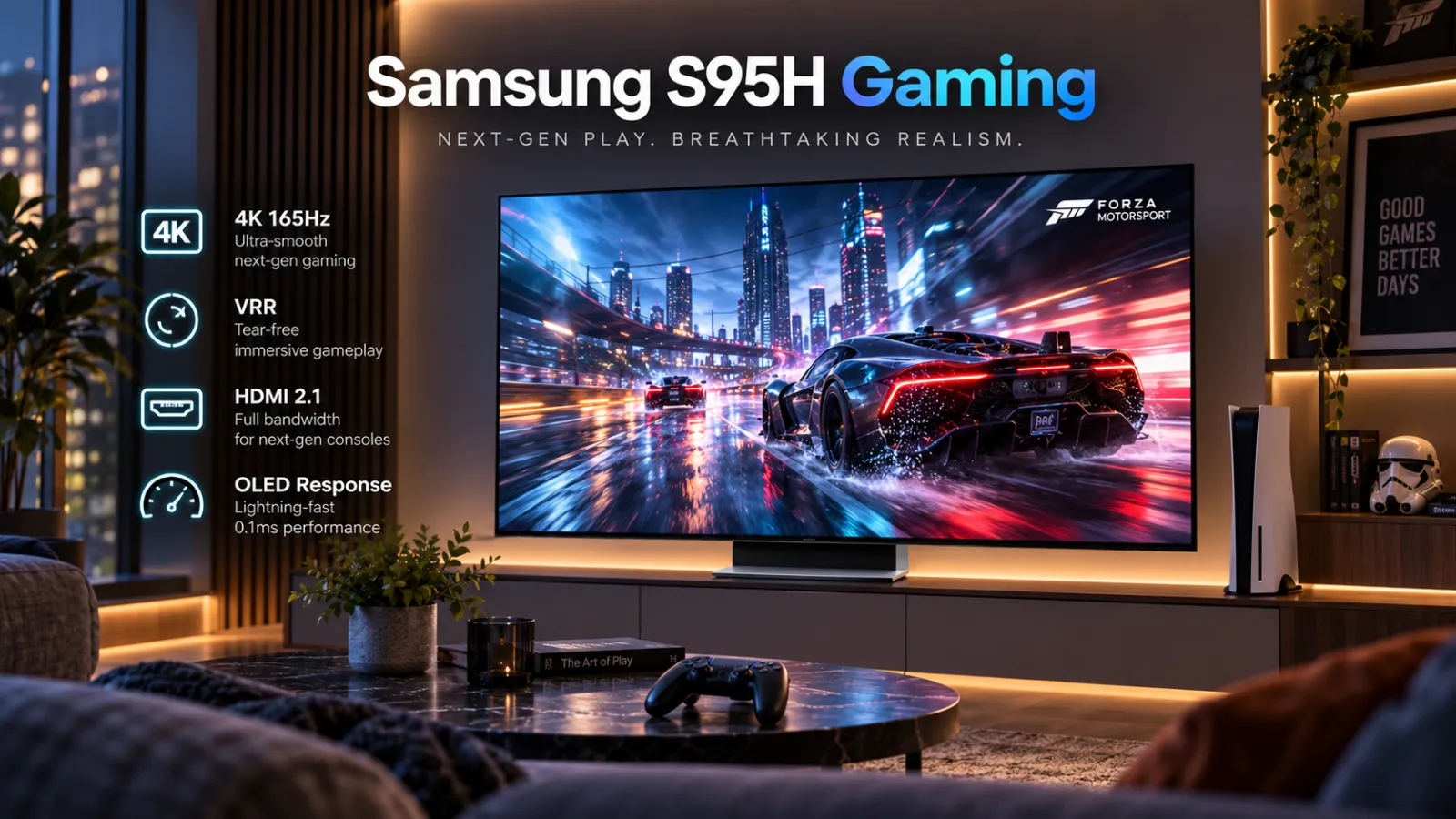
Gaming performance is equally impressive. Four HDMI 2.1 inputs, VRR, very low input lag and support for refresh rates up to 165Hz make the S95H equally comfortable with a PlayStation 5, Xbox Series X or high-end gaming PC.
The biggest reason not to buy it is Samsung's continued refusal to support Dolby Vision. There is also an unusual bright-room trade-off: reflections are handled exceptionally well, but ambient light can raise the apparent black level of the QD-OLED panel.
If you want brilliant HDR color, exceptional gaming performance and an OLED that can comfortably live in a bright room, however, the S95H deserves a place near the very top of your shortlist.
Samsung S95H Specifications at a Glance
| Feature | Samsung S95H |
|---|---|
| Model year | 2026 |
| Display technology | OLED; QD-OLED on selected sizes and markets |
| Resolution | 3840 × 2160 |
| Processor | NQ4 AI Gen3 Processor |
| Maximum gaming refresh rate | Up to 165Hz |
| HDR | HDR10, HDR10+, HLG |
| Dolby Vision | No |
| Anti-reflection | OLED Glare Free |
| Gaming | 4K/120Hz, up to 4K/165Hz PC, VRR, ALLM |
| HDMI | 4 × HDMI 2.1 bandwidth inputs |
| Smart platform | One UI Tizen |
| Audio | 70W, 4.2.2-channel, Dolby Atmos, OTS+ |
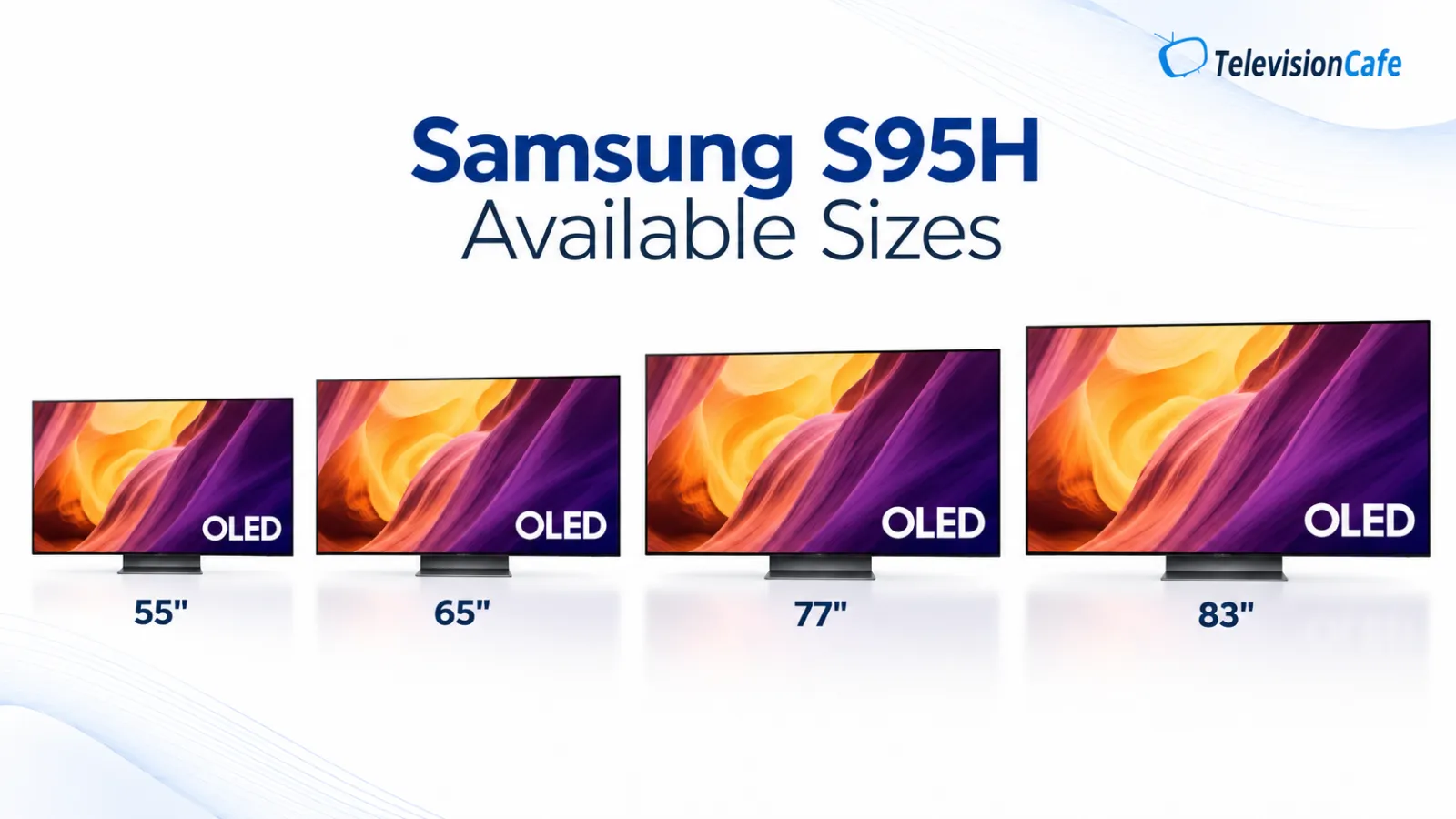
| Sizes | 55, 65, 77 and 83 inches in North America |
Model names, design and panel technology can vary by screen size and region. Always check the complete model number before purchasing.
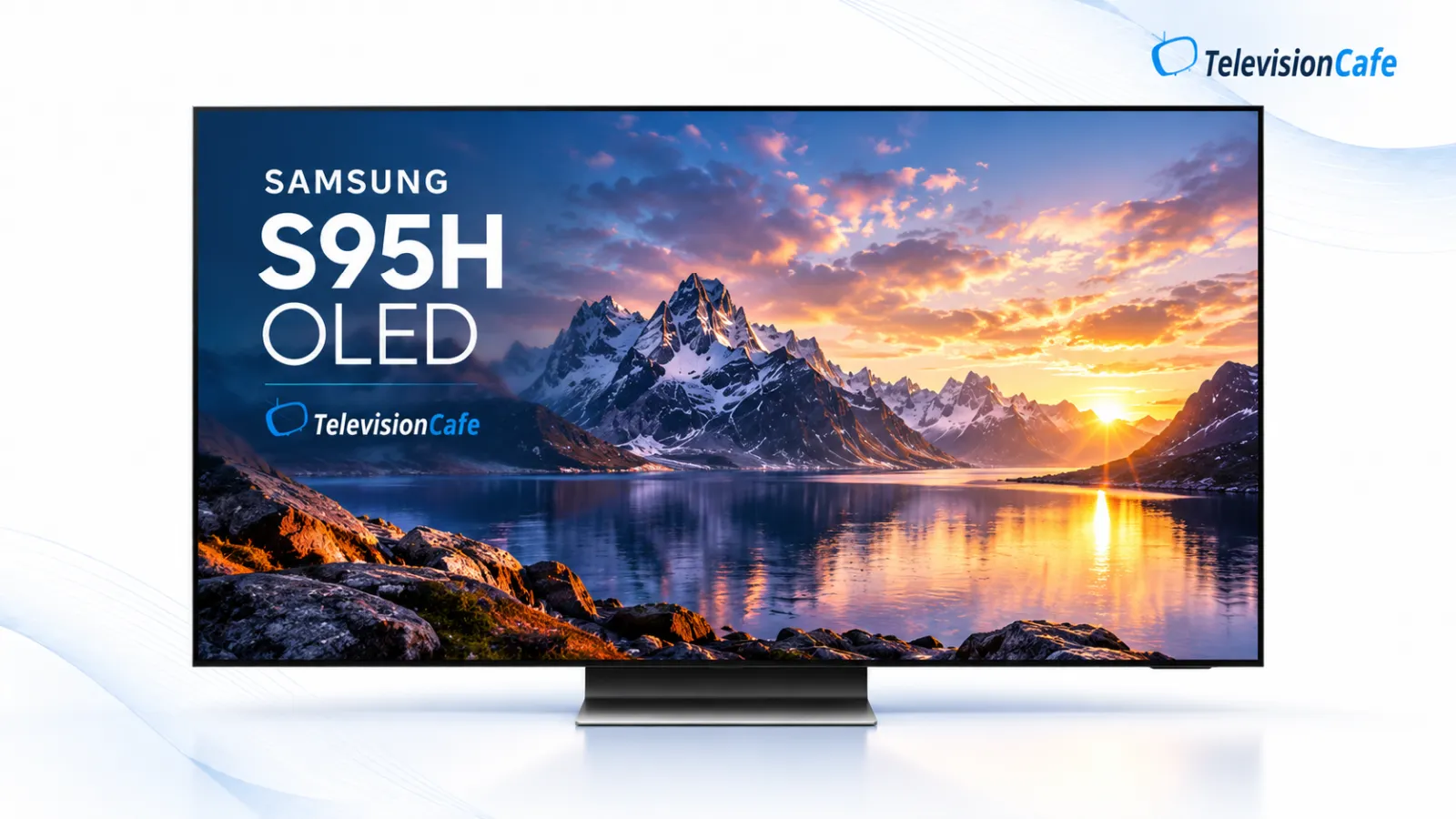
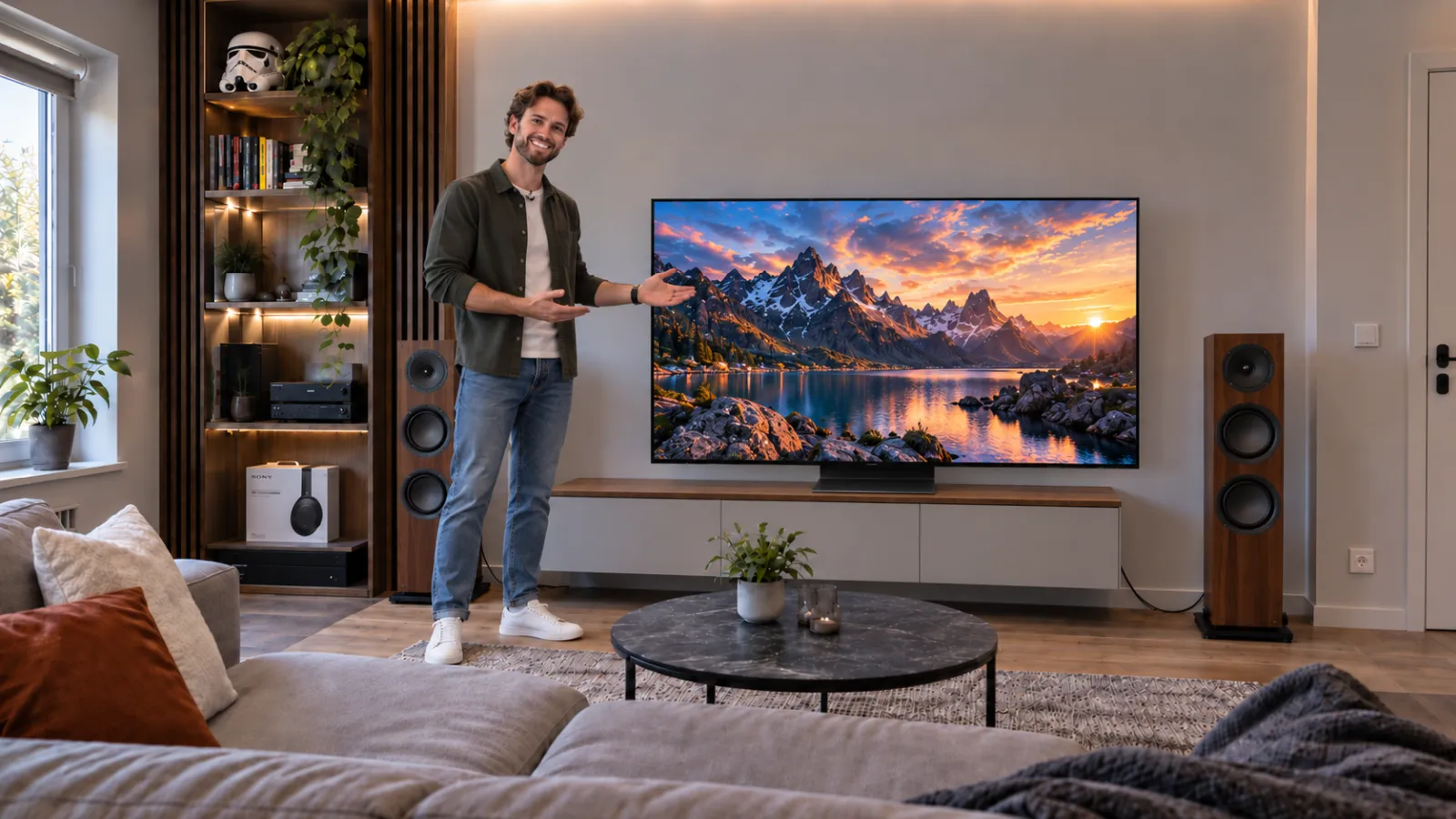
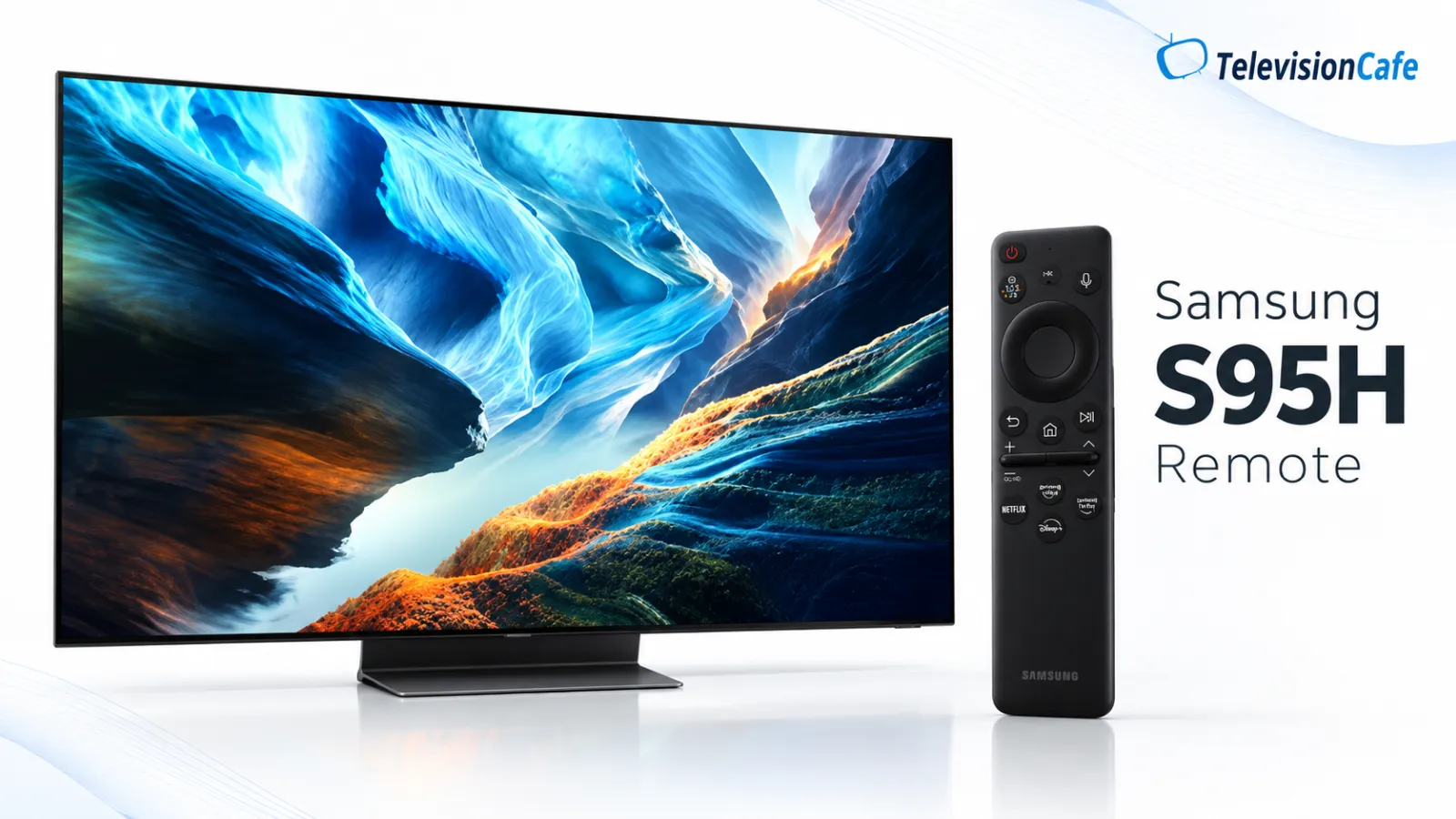
FloatLayer Design: The S95H Wants to Look Like More Than a TV
The S95H looks noticeably different from a conventional flagship television.
Samsung calls its new approach FloatLayer Design. The display appears to sit slightly in front of a metal structural layer, creating the visual impression that the OLED panel is floating rather than simply being attached to a traditional TV chassis.
The result works particularly well when the television is wall-mounted. Samsung has designed the S95H to sit very close to the wall, giving it a cleaner, gallery-style appearance.
Samsung has gone even further by introducing customizable decorative frame options and bringing the Samsung Art Store to its flagship OLED. When the TV is not being used for movies or games, it can display artwork rather than sitting as a large black rectangle in the room.
For buyers who hate visible cables, the S95H is also Wireless One Connect Ready. The optional Wireless One Connect Box can move connected equipment away from the television without forcing every HDMI cable to run directly to the screen.
Unlike the previous S95F, however, the TV still has its own physical inputs. The optional wireless box is an additional choice rather than a requirement.
Important: Not Every Samsung S95H Is Exactly the Same TV
This is one of the most important things to understand before buying the S95H.
In North America, independent testing has confirmed QD-OLED panels in the 55-, 65- and 77-inch S95H models. The 83-inch model, however, uses an RGB Tandem WOLED panel and therefore should not be assumed to perform identically.
Regional naming makes things even more complicated.
In some markets, the television that closely corresponds to the North American flagship S95H is sold as the Samsung S99H. Some regions also sell a separate S95H variant with a more traditional center-mounted stand and different exterior design.
That means two televisions advertised simply as “Samsung S95H” may not necessarily have identical panels, stands or chassis designs depending on where you live.
Always check the complete model code and screen size before buying. This matters much more with the S95H than it does with many competing TVs.
Picture Quality: This Is QD-OLED at Its Most Impressive
The S95H delivers the kind of picture that makes premium OLED technology immediately understandable.
In a dark scene, individual OLED pixels can switch completely off. Black areas therefore remain genuinely black, without the halos or blooming that can appear around bright objects on local-dimming LED televisions.
What separates the QD-OLED versions of the S95H from many traditional OLEDs is color.
Highly saturated reds, greens and blues remain intensely colorful even when they become bright. Neon lights, sunsets, animated movies, colorful games and HDR effects can therefore look unusually vivid without losing the precision associated with self-emissive OLED.
Samsung's NQ4 AI Gen3 processor handles upscaling, picture optimization and image enhancement. High-quality 4K sources look spectacular, while lower-resolution sources are sharpened intelligently enough that older broadcast television and HD streams remain very watchable on a large screen.
The S95H is also impressively accurate with appropriate picture settings, which means its vivid color does not need to come at the expense of a natural-looking image.
HDR Performance: Bright Highlights and Huge Color Volume
HDR is arguably where the Samsung S95H makes its strongest first impression.
Bright highlights can jump out against the OLED panel's perfect black background, while QD-OLED technology allows saturated colors to remain vivid at brightness levels where some other OLED technologies begin losing color intensity.
Fire, neon signs, sunlight, glowing reflections and intensely colored objects therefore have an impressive sense of depth and energy.
Samsung supports HDR10, HDR10+ and HLG. HDR10+ can dynamically optimize tone mapping from scene to scene on compatible content.
The obvious omission remains Dolby Vision.
That does not mean Dolby Vision content cannot be watched. Streaming services and discs typically fall back to HDR10 when Dolby Vision is unavailable. But buyers who specifically want Dolby Vision support should look at alternatives from LG, Sony or other manufacturers.
For anyone less concerned about the HDR format logo and more interested in raw HDR impact, the S95H remains one of the most spectacular OLED displays available in 2026.
Samsung S95H in a Dark Room: Exactly Where OLED Should Excel
Turn the lights off and many of the S95H's strengths become even more obvious.
Black is genuinely black. There are no backlight zones, so subtitles, stars and small bright details can appear directly beside darkness without visible blooming.
This gives movies an enormous sense of contrast and depth, particularly in space scenes, nighttime photography and films with dramatic lighting.
Black uniformity is also excellent because the TV does not need to fight clouding or uneven backlight distribution.
The biggest home-theater complaint remains the lack of Dolby Vision. Some movie enthusiasts will consider that a significant omission, particularly if they own a large Dolby Vision Blu-ray or streaming library.
Picture quality itself, however, is difficult to criticize. In a controlled or dark room, the S95H is an exceptional movie display.
Is the Samsung S95H Good for a Bright Room?
Yes — but with an important OLED-specific trade-off.
Samsung's Glare Free coating is extremely effective at suppressing reflections from windows, lamps and other direct light sources. Instead of seeing a sharp mirror-like reflection on the screen, the reflected light is heavily diffused.
The television is also bright enough in SDR to remain easy to watch during daytime television, sports and streaming.
There is a downside. Strong ambient light can raise the apparent black level of the QD-OLED panel. Instead of maintaining the deep black appearance you see in a dark room, black areas can take on a slightly lighter or purplish appearance.
This is not visible in the same way in every room, and the outstanding anti-reflection treatment still makes the S95H one of the more practical OLED TVs for daytime use.
If maintaining the deepest possible blacks under strong ambient lighting is the highest priority, however, a premium RGB LED or Mini LED model such as the Sony BRAVIA 9 II may have an advantage.
Viewing Angles: Excellent for Wide Seating Areas
The S95H is an excellent choice for living rooms where several people watch television from different seats.
Color, brightness and contrast remain remarkably consistent as you move away from the center of the screen. That is a significant advantage over many VA-based Mini LED televisions, which can look excellent from directly in front but gradually lose contrast or color when viewed from the side.
This makes the Samsung particularly well suited to sports nights, family viewing and large open-plan living rooms.
If your sofa wraps around the room or guests regularly sit well away from the center line of the screen, viewing angle is one area where the S95H has very little to worry about.
Sports and Motion: OLED Speed Works Both Ways
Fast motion looks exceptionally clear on the S95H because OLED pixels change state extremely quickly.
Football, basketball, hockey and motorsport therefore retain excellent clarity during rapid camera movement. The wide viewing angles and strong daytime brightness also make the S95H particularly appealing for sports in a large living room.
There is a flip side to that extremely fast response time.
Low-frame-rate movie content can show noticeable stutter during slow camera pans because each frame is held very cleanly before the next appears. Samsung offers motion interpolation settings to reduce the effect, although aggressive interpolation can introduce the familiar “soap opera” look.
For sports and high-frame-rate gaming, motion is a major strength. For 24fps movies, some viewers may prefer to experiment with the motion settings.
Gaming on the Samsung S95H: One of the Best Gaming TVs of 2026
Gaming is one of the S95H's strongest arguments.
The TV provides four HDMI 2.1 bandwidth inputs, allowing several modern gaming devices to remain connected simultaneously without sacrificing advanced video features.
PlayStation 5 and Xbox Series X users can take advantage of 4K at 120Hz, VRR and Auto Low Latency Mode. PC gamers can go further, with supported refresh rates reaching 4K at up to 165Hz.
The OLED panel's extremely fast response means fast games look exceptionally crisp, while low input lag keeps controls responsive.
Samsung's Game Bar provides quick access to settings such as aspect ratio, refresh rate information and gaming options without requiring users to dig through the entire settings menu.
Samsung also supports AMD FreeSync on compatible hardware, while VRR support helps eliminate screen tearing when frame rates fluctuate.
Whether you play cinematic single-player games, racing titles or competitive shooters, the S95H is one of the most complete gaming televisions currently available.
One UI Tizen: Smart TV Features, Art Store and Samsung Vision AI
The S95H runs Samsung's One UI Tizen smart-TV platform.
All major streaming services are available, while Samsung TV Plus, SmartThings integration and Samsung's gaming features make the television useful even without an external streaming box.
Samsung Vision AI Companion is more prominent in the 2026 generation and can provide contextual information and AI-assisted features directly on the television.
The S95H also gains Samsung Art Store, previously most closely associated with The Frame. Owners can display artwork from a large catalog of museums and artists when the television is not being used for conventional content.
Samsung promises multiple years of Tizen OS upgrades for its 2026 televisions, which is important as premium TVs increasingly remain in homes far longer than the software cycle of a typical streaming device.
Tizen can feel busier than some competing interfaces, but it remains feature-rich and supports virtually every mainstream streaming service most buyers are likely to need.

Sound Quality: Better Than Most Thin OLED TVs
The S95H is extremely thin, but Samsung has still managed to fit a surprisingly capable audio system into the chassis.
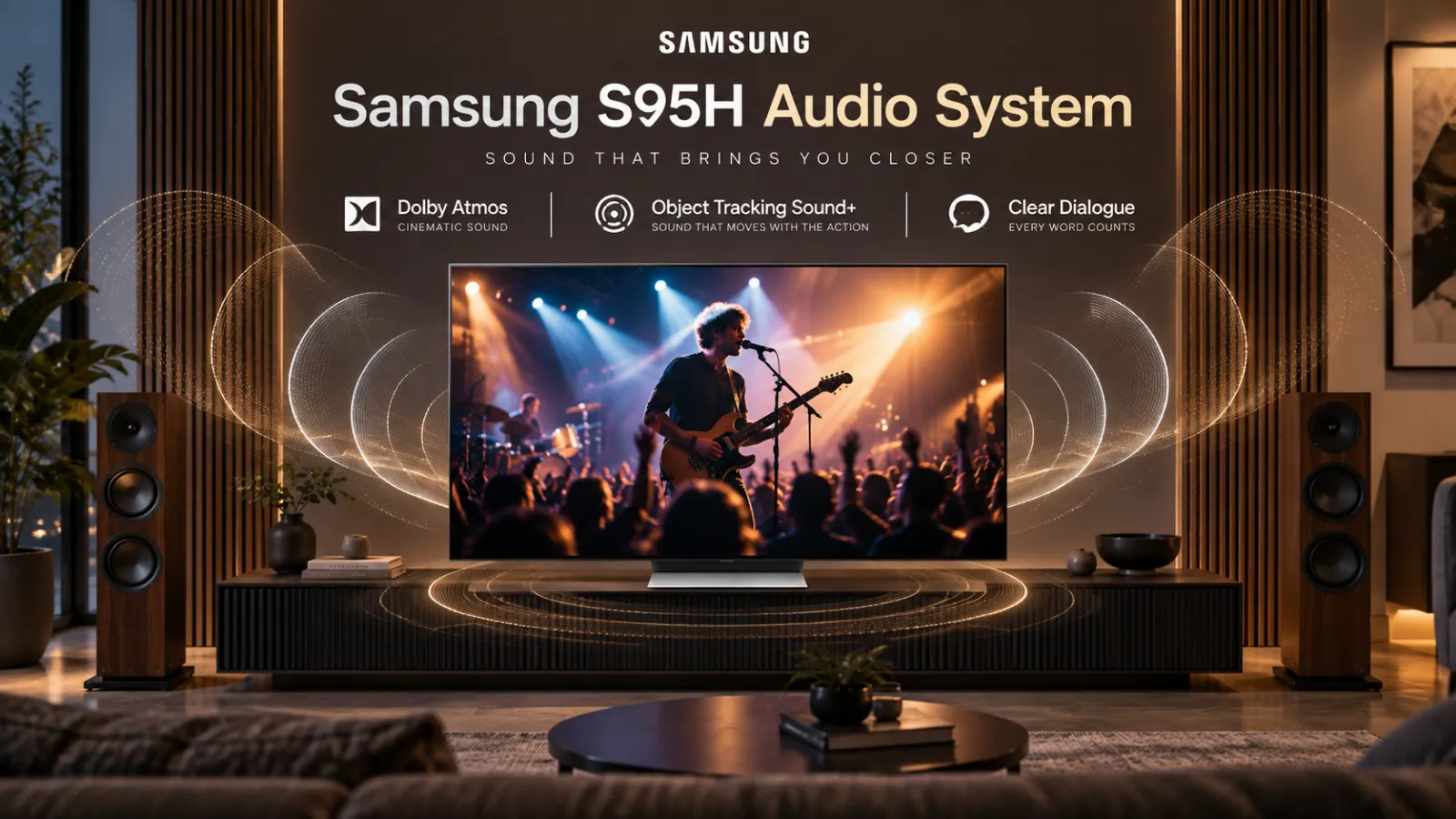
Selected models use a 70W 4.2.2-channel system with Object Tracking Sound+ and Dolby Atmos.
Object Tracking Sound attempts to position effects according to where action is happening on the screen, helping the built-in speakers create a larger and more convincing presentation than a basic stereo setup.
Dialogue remains clear, and Active Voice Amplifier Pro can make speech easier to understand when background noise or a busy soundtrack begins competing with voices.
Samsung's Q-Symphony technology also allows compatible Samsung soundbars and TV speakers to operate together instead of automatically disabling the television speakers.
The built-in audio is good enough for everyday viewing, but a premium television like the S95H still benefits from a good soundbar or dedicated surround system if movies are a priority.
Samsung S95H vs S95F: Is the 2026 Model a Big Upgrade?
The S95H is better than the S95F, but this is an evolutionary upgrade rather than a complete reinvention.
Independent testing shows the newer S95H becoming somewhat brighter, particularly with small HDR highlights. That gives specular details slightly more impact.
The larger change is physical design.
The S95F relies on Samsung's Slim One Connect box for its connections. The S95H moves its inputs back onto the television itself while offering the new Wireless One Connect Box as an optional accessory.
The S95H also introduces the FloatLayer aesthetic and deeper integration with Samsung's Art Store.
If the S95F is available at a major discount, it remains an excellent television. If prices are relatively close, the improved brightness, newer design and more flexible connectivity make the S95H the more attractive choice.
Samsung S95H vs LG G6: Which Flagship OLED Is Better?
The Samsung S95H and LG G6 are two of the most important flagship OLED televisions of 2026, and neither wins every category.
The Samsung produces particularly intense, vibrant color and its matte coating is extremely effective at removing direct reflections. It is also an outstanding gaming television with four HDMI 2.1 ports and support for 165Hz PC gaming.
The LG G6 uses a different OLED approach. Its glossy screen retains darker-looking blacks more effectively under ambient lighting, while its processing is stronger with lower-quality content.
LG also supports Dolby Vision, something Samsung continues to omit. Samsung counters with HDR10+ and particularly impressive QD-OLED color volume on its compatible screen sizes.
If you prioritize vivid HDR color and reflection suppression, the Samsung has a strong case. If Dolby Vision, glossy OLED presentation and picture processing matter more, the LG may be the better match.
This is one comparison where there is no universally correct choice — and it deserves a full side-by-side article of its own.
Samsung S95H Pros and Cons
Pros
- Perfect OLED blacks in a dark room
- Exceptionally bright and vivid HDR colors
- Excellent peak brightness for an OLED
- Outstanding Glare Free reflection handling
- Extremely wide viewing angles
- Very fast pixel response
- Up to 4K/165Hz PC gaming
- Four HDMI 2.1 bandwidth ports
- VRR and ALLM support
- Excellent PlayStation 5 and Xbox Series X performance
- Dolby Atmos and strong built-in audio
- Samsung Art Store support
- Optional Wireless One Connect connectivity
Cons
- No Dolby Vision
- No DTS audio support
- QD-OLED black levels can rise under strong ambient light
- Matte screen look will not appeal to everyone
- Low-frame-rate movies can show noticeable stutter
- 83-inch model can use different OLED panel technology
- Regional S95H variants can differ in design and panel configuration
- Premium flagship pricing
Who Should Buy the Samsung S95H?
Buy the S95H if you want one of the most complete premium OLED televisions available in 2026.
It is particularly well suited to gamers, viewers who love intense HDR color, families with wide seating arrangements and anyone placing an OLED TV in a room where reflections are normally a problem.
Movie enthusiasts will appreciate the perfect blacks and excellent HDR performance, although the lack of Dolby Vision may be a deal-breaker for some home-theater buyers.
You may prefer the LG G6 if Dolby Vision and a glossy OLED presentation are important, or the Sony BRAVIA 9 II if your television spends most of its life in an extremely bright room.
Anyone considering the 83-inch model should also pay particular attention to panel differences rather than assuming that reviews of the 55-, 65- or 77-inch QD-OLED versions apply perfectly to it.
Samsung S95H Frequently Asked Questions
Is the Samsung S95H an OLED TV?
Yes. The Samsung S95H is the company's flagship 4K OLED television for 2026.
Is the Samsung S95H QD-OLED?
The 55-, 65- and 77-inch North American models have been confirmed to use QD-OLED panels. The 83-inch model uses different OLED panel technology. Panel configurations can also vary by region.
What sizes does the Samsung S95H come in?
Samsung offers the North American S95H in 55-, 65-, 77- and 83-inch screen sizes. Regional lineups can differ.
Does the Samsung S95H support Dolby Vision?
No. Samsung continues to support HDR10, HDR10+ and HLG instead of Dolby Vision.
Does the Samsung S95H support 165Hz?
Yes. Compatible PC gaming setups can use refresh rates up to 165Hz.
Is the Samsung S95H good for PS5?
Yes. It supports 4K/120Hz, VRR and Auto Low Latency Mode, making it an excellent match for the PlayStation 5 and PlayStation 5 Pro.
Is the Samsung S95H good for Xbox Series X?
Yes. The S95H supports 4K/120Hz, VRR and ALLM. Xbox users should note that Samsung does not support Dolby Vision gaming.
How many HDMI 2.1 ports does the Samsung S95H have?
The North American S95H provides four HDMI inputs with HDMI 2.1 bandwidth.
Is the Samsung S95H good for bright rooms?
Yes. Its high brightness and Glare Free matte coating make it one of the strongest OLED TVs for daytime viewing, although strong ambient light can raise the apparent black level of QD-OLED panels.
Is the Samsung S95H better than the S95F?
The S95H is somewhat brighter and introduces a new design and connectivity approach. The S95F remains a strong alternative when available at a substantially lower price.
Which is better, Samsung S95H or LG G6?
Both are exceptional flagship OLED TVs. The S95H offers particularly vivid HDR color and superior direct-reflection handling, while the LG G6 supports Dolby Vision and maintains black levels better under ambient lighting.
Does the Samsung S95H use Tizen?
Yes. Samsung's One UI Tizen smart platform provides streaming apps, smart-home integration, gaming features and Samsung Vision AI functions.
Samsung S95H Final Verdict: Is It the OLED TV to Beat?
The Samsung S95H OLED gets remarkably close to being the complete premium television.
It combines everything that already makes OLED attractive — perfect blacks, wide viewing angles and almost instantaneous pixel response — with brightness and color performance that would have seemed unrealistic for an OLED only a few generations ago.
Its Glare Free coating makes it much easier to use in rooms with windows and lamps, while four HDMI 2.1 ports and 165Hz gaming support make it one of the strongest TVs available for modern consoles and gaming PCs.
Samsung has also made the S95H more interesting as a physical product. FloatLayer Design, Art Store integration and optional Wireless One Connect connectivity give the TV an identity beyond pure specifications.
The weaknesses are real. Dolby Vision remains missing, ambient light can reduce the perceived depth of QD-OLED blacks, and panel differences between screen sizes and regions make careful model selection unusually important.
But none of those issues erase what the S95H does exceptionally well.
If vivid HDR color, gaming performance and all-round versatility are your priorities, the Samsung S95H is absolutely one of the OLED TVs to beat in 2026.