
LG C6 vs Samsung S90H: Which OLED TV Is Better in 2026?
LG C6 vs Samsung S90H: Two Excellent OLED TVs With Very Different Strengths
If you're shopping for a premium OLED TV in 2026, there is a good chance the LG C6 and Samsung S90H are both somewhere near the top of your list.
On paper, they look surprisingly similar. Both use self-emissive OLED technology, both offer excellent black levels, both support gaming at up to 4K 165Hz with a compatible PC, and both provide four high-bandwidth HDMI 2.1 ports.
Spend a little more time with their specifications and test results, however, and the differences become much more meaningful.
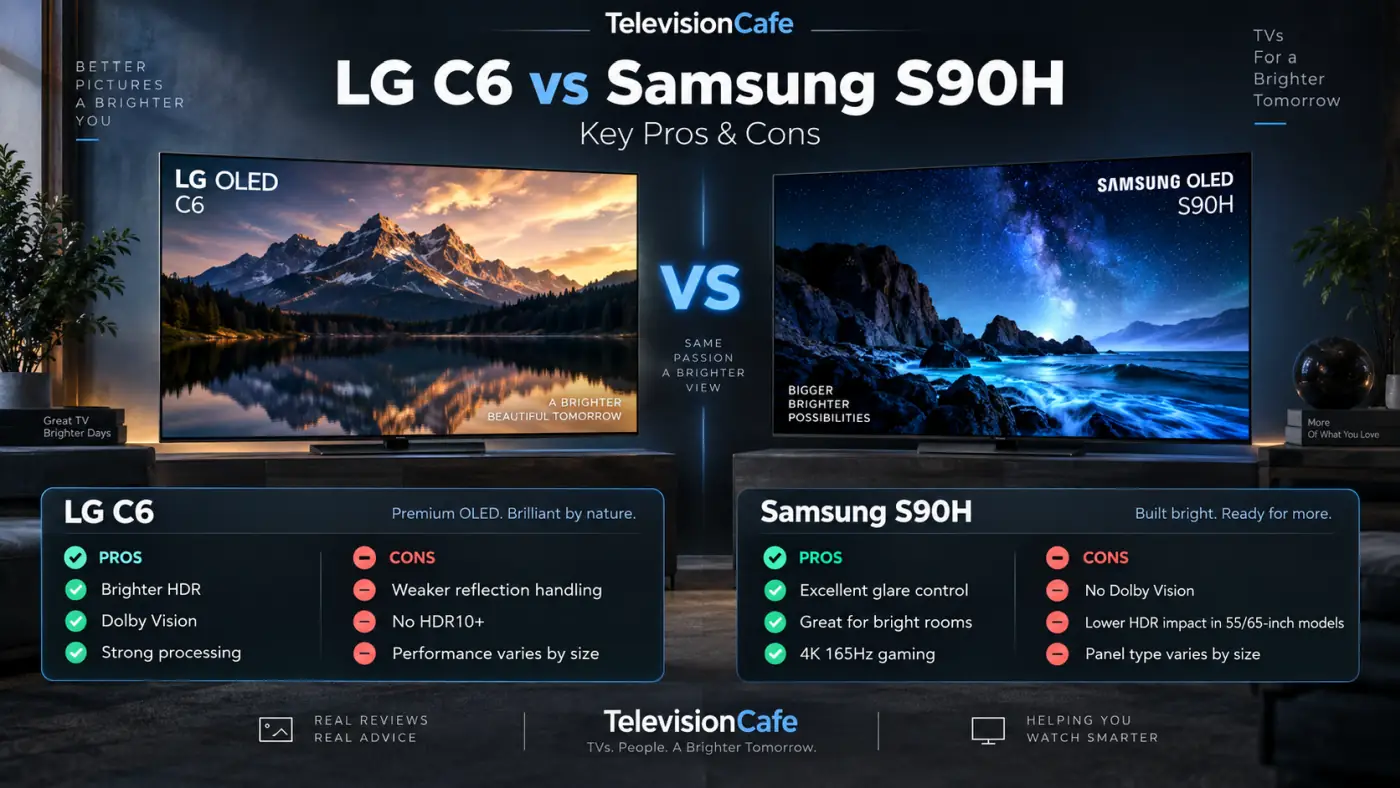
The LG C6 puts greater emphasis on HDR performance, image processing and Dolby Vision support. The Samsung S90H counters with its excellent Glare Free screen treatment, HDR10+ support and one of the strongest bright-room performances you'll find from an OLED.
There is another complication: screen size matters more than usual with both TVs. Certain C6 and S90H sizes use different panel technology, so a 48-inch or 77-inch version may not perform exactly like a 55- or 65-inch model.
If you want a deeper look at either television before deciding, read our full LG C6 OLED review and Samsung S90H review.
This comparison is an editorial analysis based on manufacturer specifications and published independent testing. TelevisionCafe has not conducted a direct hands-on side-by-side test of these two TVs. Specifications and available testing data were checked on September 19, 2026.
LG C6 vs Samsung S90H: Quick Verdict
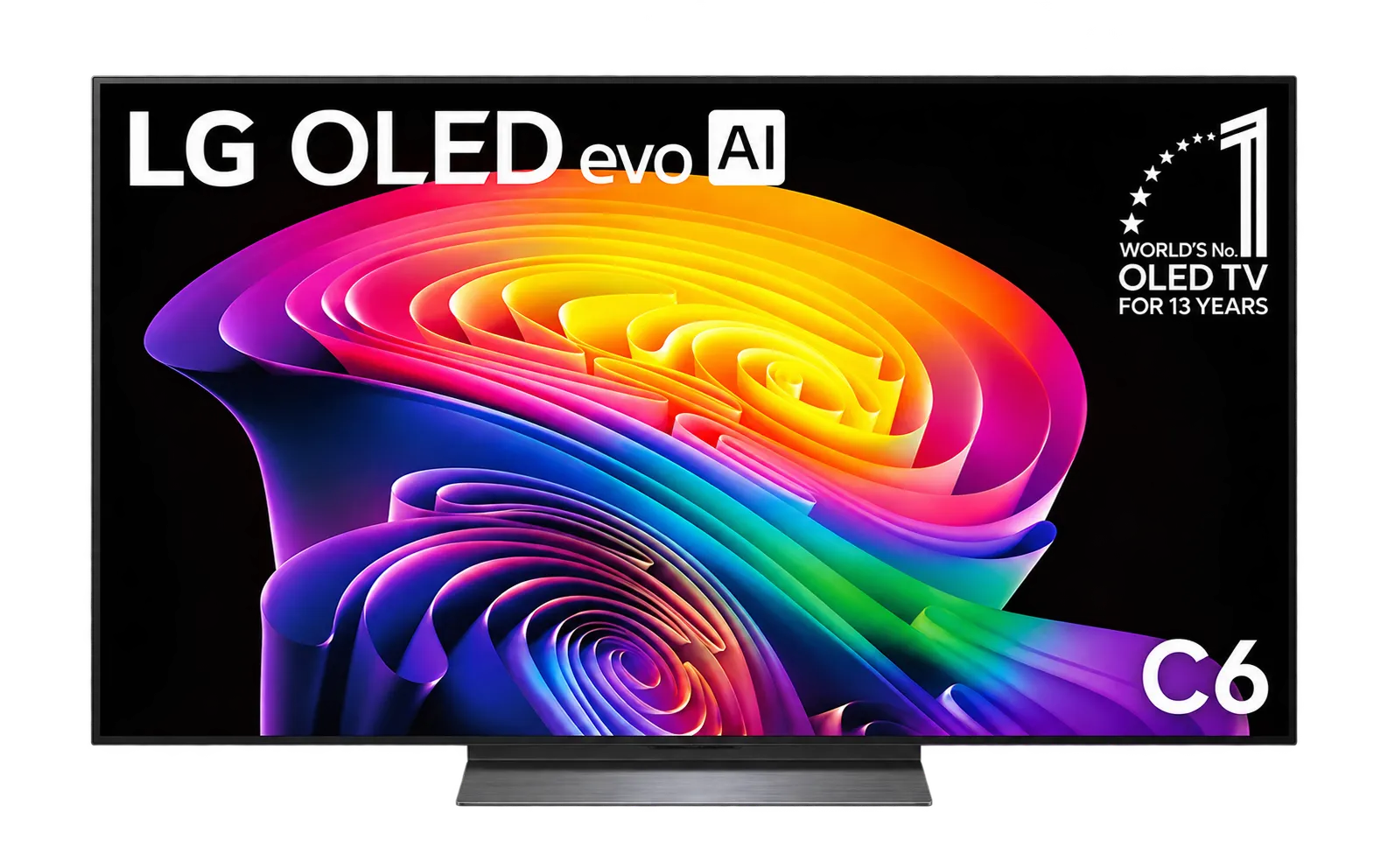
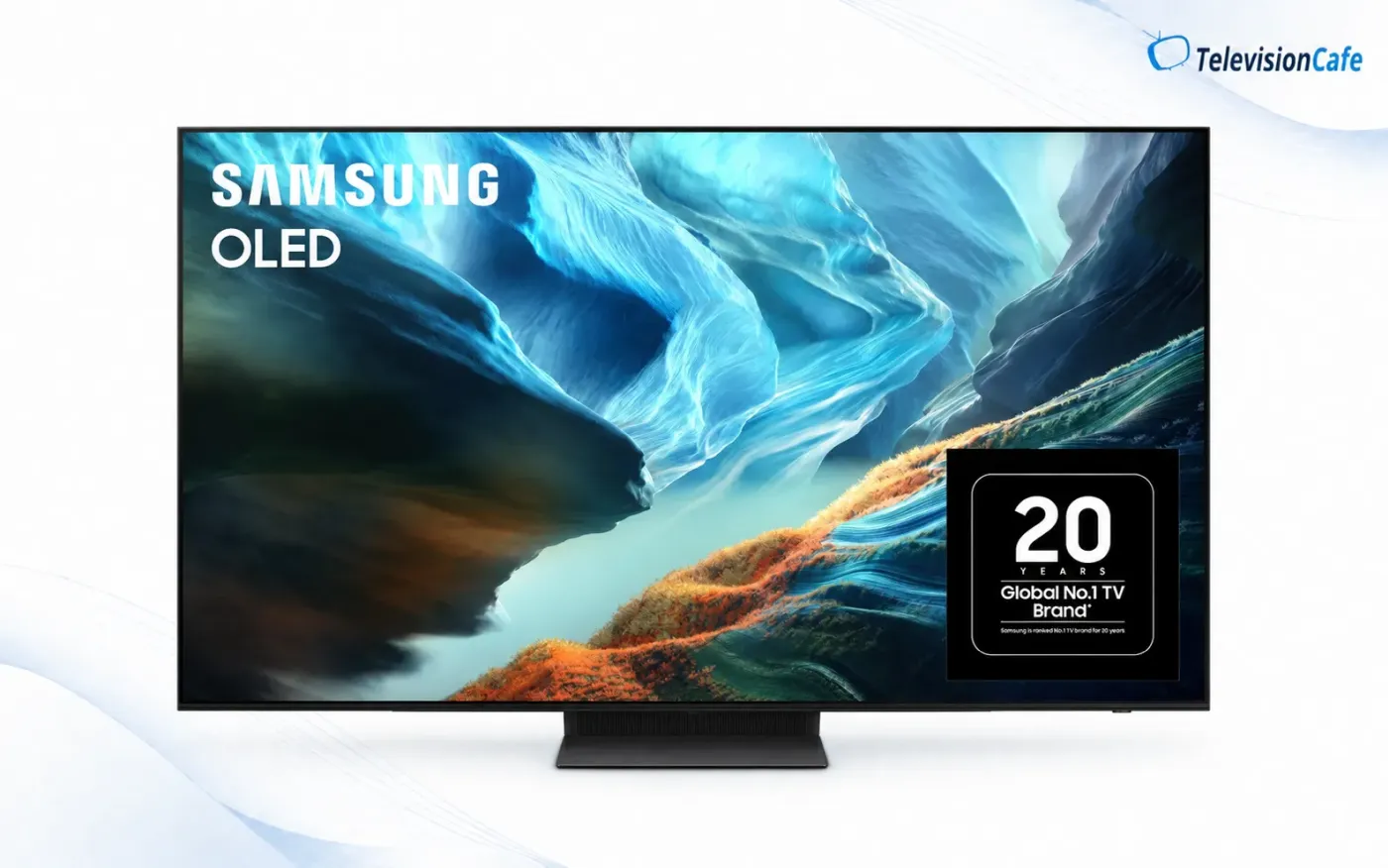
If your priority is movies, HDR and overall home theater performance, the LG C6 has the stronger argument. Independent testing of comparable 65-inch models shows higher HDR brightness from the C6, and LG also supports Dolby Vision, something Samsung continues to omit.
If your TV sits in a bright living room with windows, lamps or other reflections facing the screen, the Samsung S90H becomes extremely compelling. Samsung's Glare Free matte treatment is much more effective at controlling reflections than the C6's screen.
Gaming is remarkably close. Both can reach 4K at 165Hz from a compatible PC, support VRR, FreeSync and G-SYNC, and provide four full-bandwidth HDMI 2.1 connections.
LG C6 vs Samsung S90H Specs Comparison
| Feature | LG C6 | Samsung S90H |
|---|---|---|
| Display | 4K OLED evo | 4K OLED |
| Processor | Alpha 11 AI Processor Gen3 | NQ4 AI Gen3 Processor |
| Maximum refresh rate | Up to 4K 165Hz | Up to 4K 165Hz |
| HDMI | 4 × HDMI 2.1 | 4 × HDMI 2.1 |
| VRR | HDMI VRR, FreeSync, G-SYNC Compatible | HDMI VRR, FreeSync, G-SYNC |
| Dolby Vision | Yes | No |
| HDR10+ | No | Yes |
| Reflection handling | Average for a premium OLED | Excellent Glare Free coating |
| Smart platform | webOS 26 | Tizen 2026 |
| Dolby Atmos | Yes | Yes |
| DTS passthrough | No | No |
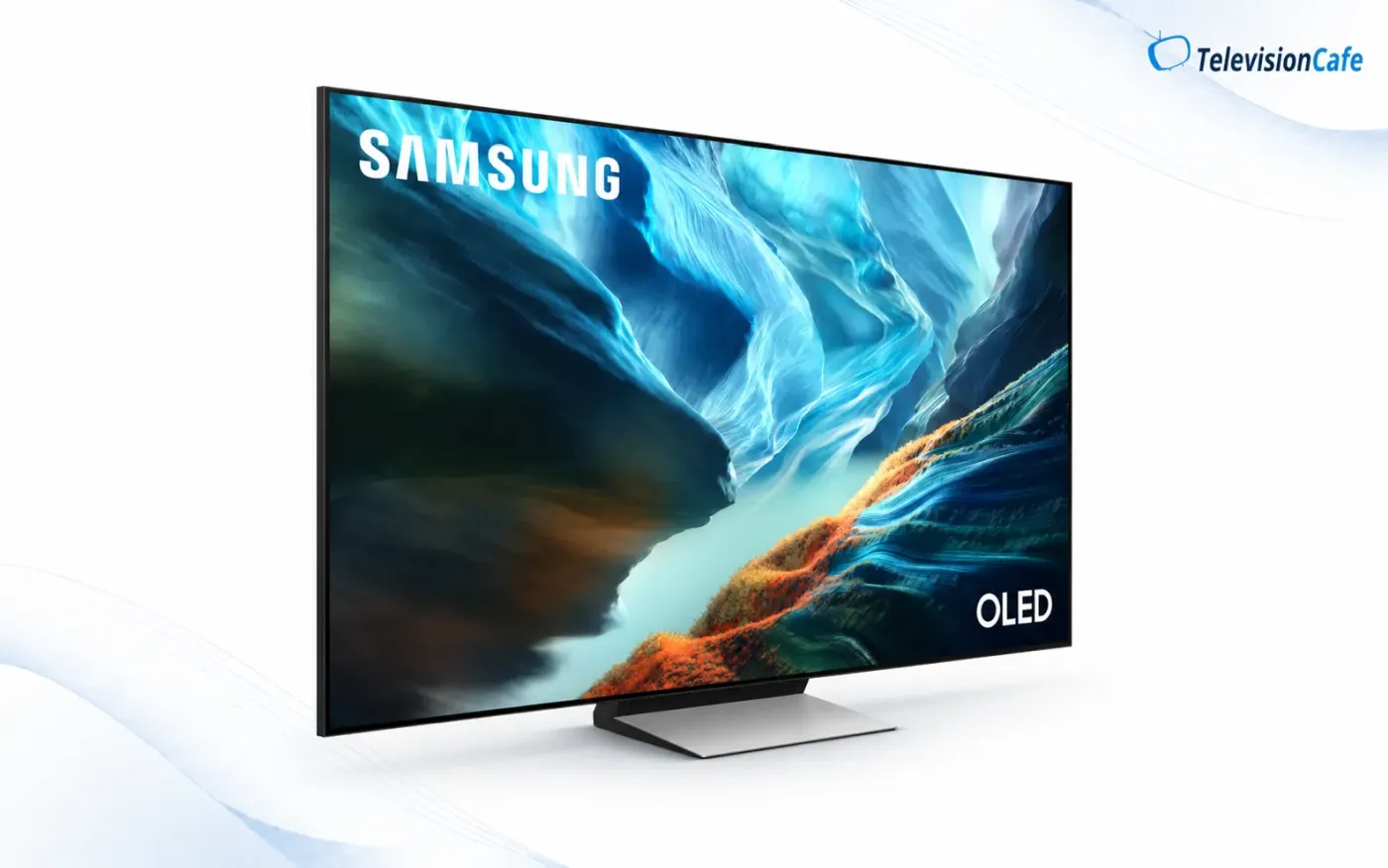
Picture Quality: Both Look Fantastic, but the C6 Has an HDR Advantage
At the most basic level, both TVs deliver exactly what people expect from OLED: individually controlled pixels, essentially perfect blacks and no traditional LCD-style blooming around subtitles, stars or bright objects against dark backgrounds.
Put either television in a dark room and the contrast can look spectacular.
The differences become easier to see once bright HDR content enters the equation.
Independent testing of the standard 65-inch versions found the LG C6 capable of noticeably stronger HDR brightness than the comparable Samsung S90H. That gives small highlights such as sunlight, sparks, lamps and reflections more intensity and can make high-quality HDR movies look more dynamic.
The Samsung is still a very capable HDR television, particularly with smaller bright highlights, but aggressive automatic brightness limiting can become more noticeable when large portions of the screen are bright.
This does not mean that every C6 automatically beats every S90H. As we'll explain later, certain 48- and 77-inch variants use significantly different OLED panel technology.
Dark-Room Movies: LG C6 Is the More Complete Home Theater TV
For movie nights with the lights turned down, the LG C6 is particularly difficult to ignore.
Both TVs provide the deep black level and pixel-level contrast that make OLED ideal for dark-room viewing, but LG combines that foundation with higher HDR brightness in the commonly compared 55- and 65-inch versions, excellent video processing and Dolby Vision support.
Dolby Vision remains widely available across major streaming services and Ultra HD Blu-ray releases, and the C6 can take advantage of its scene-by-scene or frame-by-frame dynamic metadata.
Samsung instead supports HDR10 and HDR10+. HDR10+ also uses dynamic metadata and can produce excellent results when compatible content is available, but Samsung still does not support Dolby Vision.
Bright-Room Viewing: This Is Where the Samsung S90H Fights Back
If your TV room has large windows, ceiling lights or lamps positioned opposite the screen, the Samsung S90H may be the more practical television even though the C6 can produce brighter HDR highlights.
The reason is Samsung's Glare Free screen treatment.
Rather than allowing bright objects in the room to appear as sharp mirror-like reflections, the S90H's matte surface diffuses them across a larger area. Independent testing found its reflection handling to be outstanding.
The LG C6 can get bright enough for normal daytime viewing, but its handling of direct reflections is considerably less impressive. A window directly behind your sofa, for example, is much more likely to become distracting on the LG.
This is a good example of why peak brightness numbers do not tell the entire story. A television that controls reflections effectively can sometimes look easier to watch during the day even when another model is capable of brighter HDR highlights.
Upscaling and Image Processing: LG C6 Has the Edge
Not everything you watch will be pristine 4K HDR, which makes video processing one of the most underrated differences between premium TVs.
The LG C6 uses LG's Alpha 11 AI Processor Gen3, a significant processor for a C-Series model. It handles upscaling, gradient reproduction and cleanup of lower-quality sources particularly well.
This matters when you're watching cable TV, older shows, YouTube videos or heavily compressed streaming content. No processor can turn a poor source into true native 4K, but good processing can make compression artifacts, rough gradients and soft edges considerably less distracting.
Samsung's NQ4 AI Gen3 Processor is also powerful and its 4K upscaling is very good. The difference is not dramatic with high-quality 4K content, where the source itself does most of the work, but LG has an advantage when the content becomes more demanding.
Sports: The Answer Depends on Your Room
Sports are an interesting case because the strengths of these TVs pull in opposite directions.
OLED's extremely fast pixel response means both televisions handle fast movement very well. Hockey, basketball, football and soccer can all look crisp, and the wide viewing angles are useful when several people are watching together.
The C6 offers strong processing and good brightness, but the S90H's Glare Free coating becomes extremely useful for afternoon games in bright living rooms.
If you mostly watch sports during the day with curtains open, we'd lean toward the Samsung. If you watch in a controlled-lighting environment and also care heavily about movies, the C6 becomes the more versatile option.
Keep in mind that very fast OLED response times can also make low-frame-rate movie content appear somewhat stuttery during slow camera pans. That characteristic affects both TVs and is common among modern OLED displays.
Gaming: LG C6 vs Samsung S90H Is Almost a Draw
This is where the comparison gets unusually close.
Both TVs support resolutions up to 4K at 165Hz with a compatible gaming PC. Both offer extremely fast OLED response times, low input lag, HDMI Forum VRR, AMD FreeSync and NVIDIA G-SYNC compatibility.
More importantly, both provide four HDMI connections with full HDMI 2.1 bandwidth. That is excellent news if your setup includes a PlayStation 5, Xbox Series X, gaming PC and an eARC soundbar or AV receiver.
Current consoles do not need 165Hz output, so PS5 and Xbox owners should not buy either TV purely because of the 165Hz figure. The feature is most useful for PC gamers with a graphics card capable of pushing frame rates above 120 fps at 4K.
LG's Game Optimizer is one of the most convenient gaming dashboards available on a television, while Samsung's gaming interface provides similar quick access to refresh-rate, VRR and game-related settings.
There is one notable HDR difference for Xbox users: the LG supports Dolby Vision, while Samsung does not. For most competitive gaming, however, the actual experience on these two TVs is remarkably similar.
webOS 26 vs Tizen 2026
LG and Samsung both use mature smart-TV platforms, and neither television needs an external streaming device for typical use.
The LG C6 runs webOS 26. It provides the major streaming services, LG's Game Optimizer, AirPlay, casting features and LG's familiar Magic Remote interface. LG's Re:New program is also important for long-term ownership because the company has committed to providing multiple webOS upgrades to supported TVs.
The Samsung S90H runs the 2026 version of Tizen. It is fast, app support is extensive, and Samsung integrates its gaming and connected-device features deeply into the interface.
Neither platform is especially minimalist. Both promote recommendations and services on their home screens, so people who prefer an extremely clean interface may still decide to use an Apple TV, Roku or another external streamer.
For most buyers, smart-TV software should not be the deciding factor between these two televisions. Picture quality, reflections, HDR formats and screen size are much more meaningful differences.


Sound Quality: Plan for a Soundbar if You Care About Movies
Both TVs support Dolby Atmos, and their built-in audio systems are perfectly adequate for news, casual television and everyday streaming.
Neither changes the basic physics of an extremely thin OLED television, though. There simply isn't enough cabinet volume to reproduce the deep bass and large cinematic soundstage that a good external audio system can provide.
If you're spending this much on picture quality, adding a capable soundbar or AV receiver makes sense.
One limitation shared by both models is DTS support. Independent testing found that neither TV provides the DTS passthrough support some owners of Blu-ray and UHD Blu-ray collections may expect.
For streaming-focused households this is unlikely to matter much. Physical-media enthusiasts should pay closer attention to the audio capabilities of their player, receiver and soundbar.
The Most Important Detail: Screen Size Changes the Comparison
This is the section we would read twice before ordering either television.
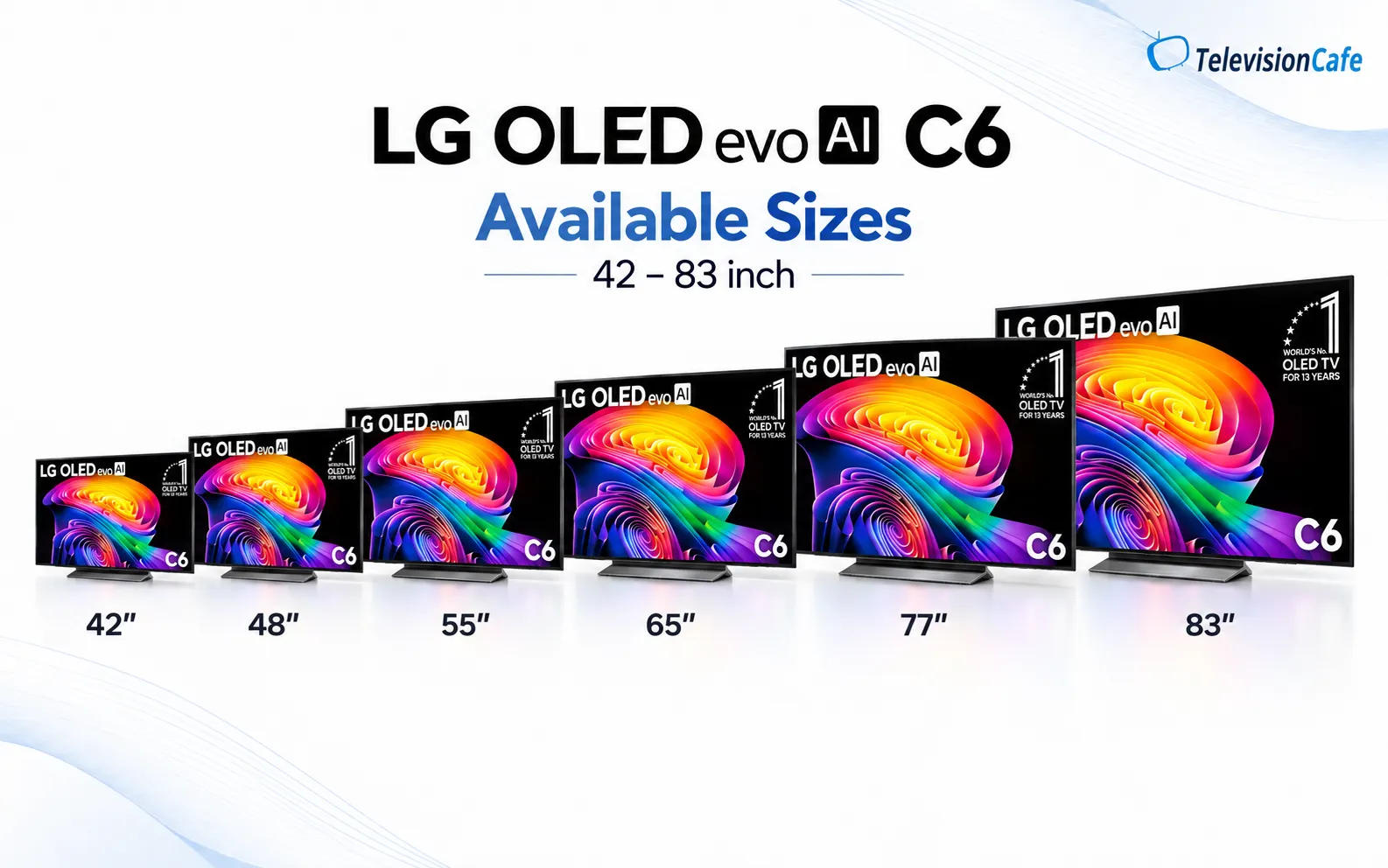
In the United States, the standard LG C6 lineup tested independently does not use exactly the same panel configuration at every size. The 42-inch model lacks LG's Brightness Booster, while the 48-inch model uses a more advanced tandem OLED panel and can provide stronger brightness and color performance than the standard 55- and 65-inch C6.
The situation changes again at 77 and 83 inches. In the U.S., LG sells those larger versions as the LG C6H, which uses its more advanced Hyper Radiant OLED technology rather than simply being an oversized version of the regular 65-inch C6.
Samsung makes things equally interesting.
In North America, independently verified S90H configurations show standard WOLED panels in the 42-, 55-, 65- and 83-inch sizes. The 48- and 77-inch S90H models instead use RGB Tandem OLED panels, which can provide higher brightness and improved color volume.
48-Inch LG C6 vs 48-Inch Samsung S90H
The 48-inch battle is particularly interesting because both manufacturers use more advanced panel technology at this size.
LG's 48-inch C6 uses a tandem OLED configuration along with Brightness Booster technology, making it meaningfully different from the regular 55- and 65-inch models.
Samsung's 48-inch S90H also uses an RGB Tandem panel rather than the standard WOLED configuration found in several other S90H sizes.
That means shoppers looking for a premium 48-inch OLED should be especially careful about applying general reviews of the 65-inch versions to their decision.
Both also make exceptionally interesting large-format PC gaming displays thanks to 4K resolution, HDMI 2.1 and refresh rates up to 165Hz.
55- and 65-Inch Models: The Cleanest Head-to-Head Comparison
For most U.S. shoppers, the 55- and 65-inch versions provide the most straightforward LG C6 vs Samsung S90H comparison.
At these sizes, independently tested 65-inch samples show a clear pattern.
The LG C6 produces stronger HDR brightness, supports Dolby Vision and has stronger overall video processing. The Samsung S90H has substantially better reflection handling thanks to the Glare Free screen.
That makes your room surprisingly important.
A 65-inch TV in a darker home theater or controlled-lighting living room favors the C6's strengths. Put the same television opposite large windows in a bright open-plan living area, and the S90H's reflection control becomes much harder to ignore.
77-Inch Models: Be Careful With Generic Comparisons
At 77 inches, you're no longer simply scaling up the 65-inch TVs.
The U.S. LG lineup moves to the C6H with its more advanced panel technology, while Samsung's 77-inch S90H uses an RGB Tandem OLED panel.
Both therefore have the potential to perform differently from the standard versions discussed in many reviews and comparison charts.
If you're specifically shopping for a 77-inch OLED, compare the 77-inch LG C6H against the 77-inch Samsung S90H rather than relying exclusively on results from 55- or 65-inch televisions.
LG C6 vs Samsung S90H: Which Is Better for Movies?
LG C6.
For a traditional home theater setup, its combination of perfect OLED blacks, stronger HDR brightness in the standard 55/65-inch comparison, Dolby Vision support and excellent processing gives it the more complete feature set.
The Samsung still looks excellent in a dark room, but its lack of Dolby Vision remains a meaningful omission for movie enthusiasts whose favorite streaming services and discs use the format.
Which Is Better for a Bright Living Room?
Samsung S90H.
Samsung's Glare Free coating is the deciding factor. Reflections from windows and lights can be far less distracting, making the S90H particularly attractive for rooms that are difficult to darken during the day.
This is one area where choosing a TV based only on peak brightness specifications can lead you in the wrong direction.
Which Is Better for Gaming?
It's effectively a tie.
Both provide four HDMI 2.1 connections, VRR, FreeSync, G-SYNC support, very low input lag, extremely fast OLED response and 4K gaming at up to 165Hz from compatible PCs.
Console gamers will get the key 4K/120Hz features from either television. PC gamers can push beyond 120Hz.
The C6 gets an additional advantage for anyone specifically interested in Dolby Vision gaming, while the Samsung's screen coating may be more valuable to someone gaming in a bright room.
Who Should Buy the LG C6?
The LG C6 makes the most sense if you watch a lot of movies and premium streaming content, especially in the evening or in a room where lighting can be controlled.
It is also an excellent choice if Dolby Vision matters to you, if you frequently watch lower-quality sources that benefit from strong video processing, or if you want one TV that performs extremely well across movies, shows and gaming.
Gamers lose almost nothing compared with the Samsung. You still get four high-bandwidth HDMI ports, up to 165Hz PC gaming and broad VRR compatibility.
The main reason to hesitate is a room with persistent reflections. If a large window is directly opposite your television, the Samsung's screen treatment may have more impact on your everyday experience than LG's advantages elsewhere.
Who Should Buy the Samsung S90H?
The Samsung S90H is particularly easy to recommend for bright multipurpose living rooms.
If daytime reflections are one of the things you dislike most about your current television, the Glare Free treatment is not a minor feature. It fundamentally changes how distracting reflected windows and lights can appear.
The S90H is also an exceptional gaming television, supports HDR10+, and offers the deep blacks and near-instantaneous response associated with OLED technology.
You should think twice if Dolby Vision is important to your movie collection or streaming habits. Samsung continues to support HDR10+ instead, and there is no indication that the S90H will suddenly gain Dolby Vision later.
LG C6 vs Samsung S90H: Final Verdict
The LG C6 and Samsung S90H are close enough that there is no sensible one-size-fits-all answer.
For the typical 55- or 65-inch buyer, however, the decision can be simplified considerably.
Choose the LG C6 if your priorities are HDR movies, Dolby Vision, strong image processing and home theater performance.
Choose the Samsung S90H if your TV will live in a bright room where reflections are a constant problem.
Gamers can confidently choose either. Both offer the connectivity, refresh rates, VRR support and responsiveness expected from a premium gaming TV in 2026.
The one thing you should not do is buy purely by series name. Both LG and Samsung use different OLED configurations at certain screen sizes, and that can meaningfully change the comparison.
LG C6 vs Samsung S90H FAQ
Is the LG C6 better than the Samsung S90H?
For HDR movies and home theater use, the LG C6 has several advantages, including higher HDR brightness in independently tested comparable models, Dolby Vision support and strong image processing. The Samsung S90H is the stronger choice when reflection handling is the priority.
Which TV is better in a bright room?
The Samsung S90H. Its Glare Free screen treatment handles reflections considerably better than the LG C6, making it particularly useful in rooms with windows or strong lighting.
Which TV is better for gaming?
Both are excellent. The LG C6 and Samsung S90H support 4K at up to 165Hz, VRR, FreeSync, G-SYNC and four high-bandwidth HDMI 2.1 connections.
Does the Samsung S90H support Dolby Vision?
No. Samsung supports HDR10, HDR10+ and HLG on the S90H but does not support Dolby Vision.
Does the LG C6 support HDR10+?
No. The LG C6 supports Dolby Vision, HDR10 and HLG but not HDR10+.
Do all LG C6 sizes use the same panel?
No. Panel and brightness configurations vary by screen size. In the U.S., the 48-inch C6 uses tandem OLED technology, while the larger 77- and 83-inch versions are sold as C6H models with more advanced panel technology.
Do all Samsung S90H sizes use the same OLED panel?
No. In North America, the 48- and 77-inch S90H models use RGB Tandem OLED panels, while several other sizes use standard WOLED panels. Configurations may also differ outside North America.
Which is better for PS5 and Xbox Series X?
Both are excellent console TVs and support the important 4K/120Hz, VRR and low-latency gaming features. LG additionally supports Dolby Vision, which may matter more to Xbox users.
Which is better for PC gaming?
Both are among the more capable TV options for a high-end gaming PC because they support 4K at up to 165Hz, VRR and chroma 4:4:4 through HDMI 2.1.
Should I buy the LG C6 or Samsung S90H?
Choose the LG C6 if movies, HDR performance and Dolby Vision are your priorities. Choose the Samsung S90H if your room is bright and reflection handling is more important. At 48 and 77 inches, compare the exact size-specific versions because their panel technology differs from several other models in each lineup.